Peter's Confession at Caesarea Philippi
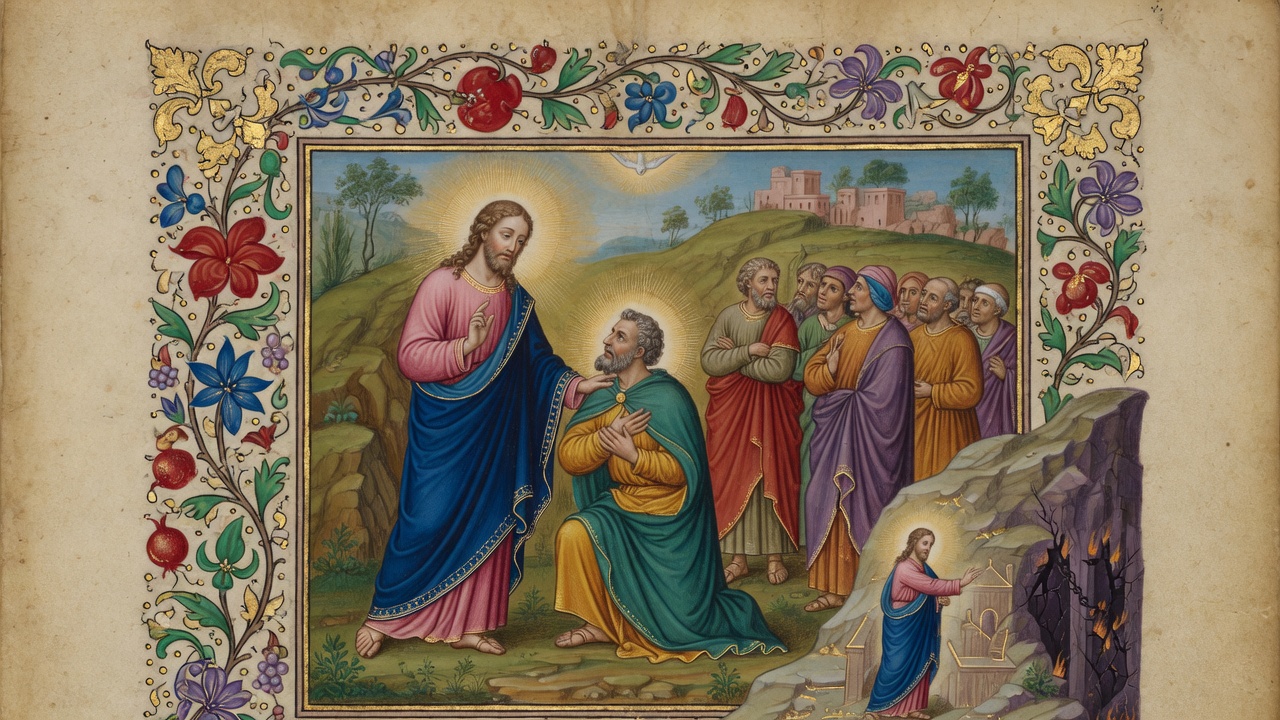
Near Caesarea Philippi, Jesus asked his disciples who people said he was, then pressed them personally: 'But whom say ye that I am?' Peter answered for the group with the pivotal confession, 'Thou art the Christ, the Son of the living God,' which Jesus declared had been revealed to him not by human insight but by the Father himself. On this confession of Jesus' true identity, Jesus announced he would build his church, giving it authority that even the gates of hell could not overcome - one of the turning points of the Gospels, after which Jesus began openly teaching his disciples about his coming death and resurrection in Jerusalem.
Did You Know?
Jesus asked, 'Whom say ye that I am?'
Peter answered, 'Thou art the Christ, the Son of the living God.'
Jesus said this truth was revealed by the Father, not by flesh and blood.
It came at Caesarea Philippi and marked a turning point in the Gospels.
Key Passage
Peter's Confession at Caesarea Philippi
Matthew 16:13-20
 13hen Jesus came into the coasts of Caesarea Philippi, he asked his disciples, saying, Whom do men say that I the Son of man am?
Meanwhile in the World
The Roman Empire is at its peak under Augustus and Tiberius (Pax Romana). Rome controls the entire Mediterranean world. Roads, common language (Greek), and peace make travel and communication easy - the 'fullness of time.' Herod the Great rules Judea as a client king.