Psalms 39 KJV
The Brevity of Life
About This Psalm
Reflecting on life's brevity. We're just a breath, a shadow. What matters when you realize how short life really is?
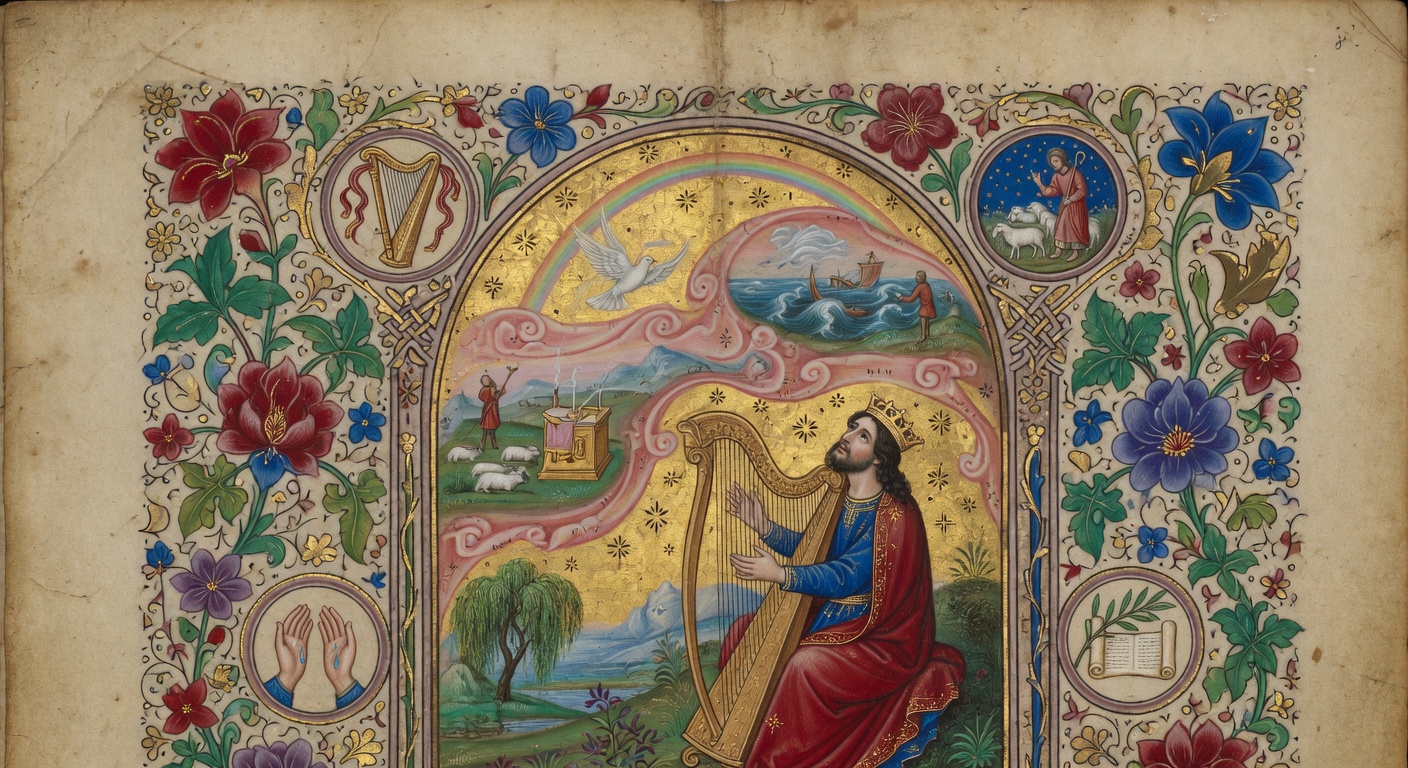
 1 said, I will take heed to my ways, that I sin not with my tongue: I will keep my mouth with a bridle, while the wicked is before me.
2 I was dumb with silence, I held my peace, even from good; and my sorrow was stirred.
3 My heart was hot within me, while I was musing the fire burned: then spake I with my tongue,
4 LORD, make me to know mine end, and the measure of my days, what it is: that I may know how frail I am.
5 Behold, thou hast made my days as an handbreadth; and mine age is as nothing before thee: verily every man at his best state is altogether vanity. Selah.
6 Surely every man walketh in a vain shew: surely they are disquieted in vain: he heapeth up riches, and knoweth not who shall gather them.
7 And now, Lord, what wait I for? my hope is in thee.
8 Deliver me from all my transgressions: make me not the reproach of the foolish.
9 I was dumb, I opened not my mouth; because thou didst it.
10 Remove thy stroke away from me: I am consumed by the blow of thine hand.
11 When thou with rebukes dost correct man for iniquity, thou makest his beauty to consume away like a moth: surely every man is vanity. Selah.
12 Hear my prayer, O LORD, and give ear unto my cry; hold not thy peace at my tears: for I am a stranger with thee, and a sojourner, as all my fathers were.
13 O spare me, that I may recover strength, before I go hence, and be no more.
← → arrow keys to navigate chapters · spacebar to play/pause audio
Did You Know?
The dedication to Jeduthun, David's appointed temple musician and gatekeeper from 1 Chronicles, implies the psalm was composed for a specific Levitical musical style emphasizing meditative reflection rather than public performance.
Its opening resolve to muzzle the tongue like a bridle before the wicked directly anticipates the New Testament imagery in James 3, yet here the restraint ultimately fails, revealing that silence before humans cannot be maintained before God.
The rare phrase 'every man walketh in a vain shew' employs the Hebrew concept of a fleeting shadow or breath (hebel), linking the psalm not to Greek philosophy but to the patriarchal laments over life's brevity found in Genesis 47.
Positioned between Psalms 38 and 40, it forms a deliberate triptych tracing the progression from penitential suffering through existential silence to renewed trust, a literary structure unique among the Davidic collections.
The final petition to 'spare me' so that strength may return before departing 'and be no more' offers a rare biblical glimpse of mortality without explicit afterlife hope, underscoring raw dependence on the eternal God amid human transience.
In old age David could not keep warm even under heavy blankets, prompting his officials to bring the young Shunammite Abishag to lie beside him as a human heat source without becoming his wife.
Despite completing the temple, Solomon later built shrines to foreign deities like Ashtoreth, Chemosh, and Molech on the Mount of Olives for his 700 wives and 300 concubines, directly contributing to the kingdom's division after his death.
This location became the focal point of national worship and divine promises, later extending symbolically to encompass the Temple Mount where Solomon built the house of the Lord.
Three major world religions consider Jerusalem a holy city.
Commentary & Study Notes Jamieson-Fausset-Brown (1871) · Public Domain I said — or, "resolved." will take heed — watch. ways — conduct, of which the use of the tongue is a part (Jas 1:26). bridle — literally, "muzzle for my mouth" (compare De 25:4). w…
Classic verse-by-verse commentary on Psalms 39 from Jamieson, Fausset & Brown (1871). Covers: To jeduthun (1ch 16:41, 42), one of the chief singers. His name mentioned, perhaps, as a special honor. Under depressing views of his frailty and the prosperity of the wicked, the psalmist, tempted to murmur, checks the expression of his feelings, till, led to regard his case aright, he prays for a proper view of his condition and for the divine compassion.
- 1
- I said — or, "resolved." will take heed — watch. ways — conduct, of which the use of the tongue is a part (Jas 1:26). bridle — literally, "muzzle for my mouth" (compare De 25:4). while... before me — in beholding their prosperity (Ps 37:10, 36).
- 2
- even from good — (Ge 31:24), everything.
Read all 9 notes on Psalms 39 →