David Becomes King
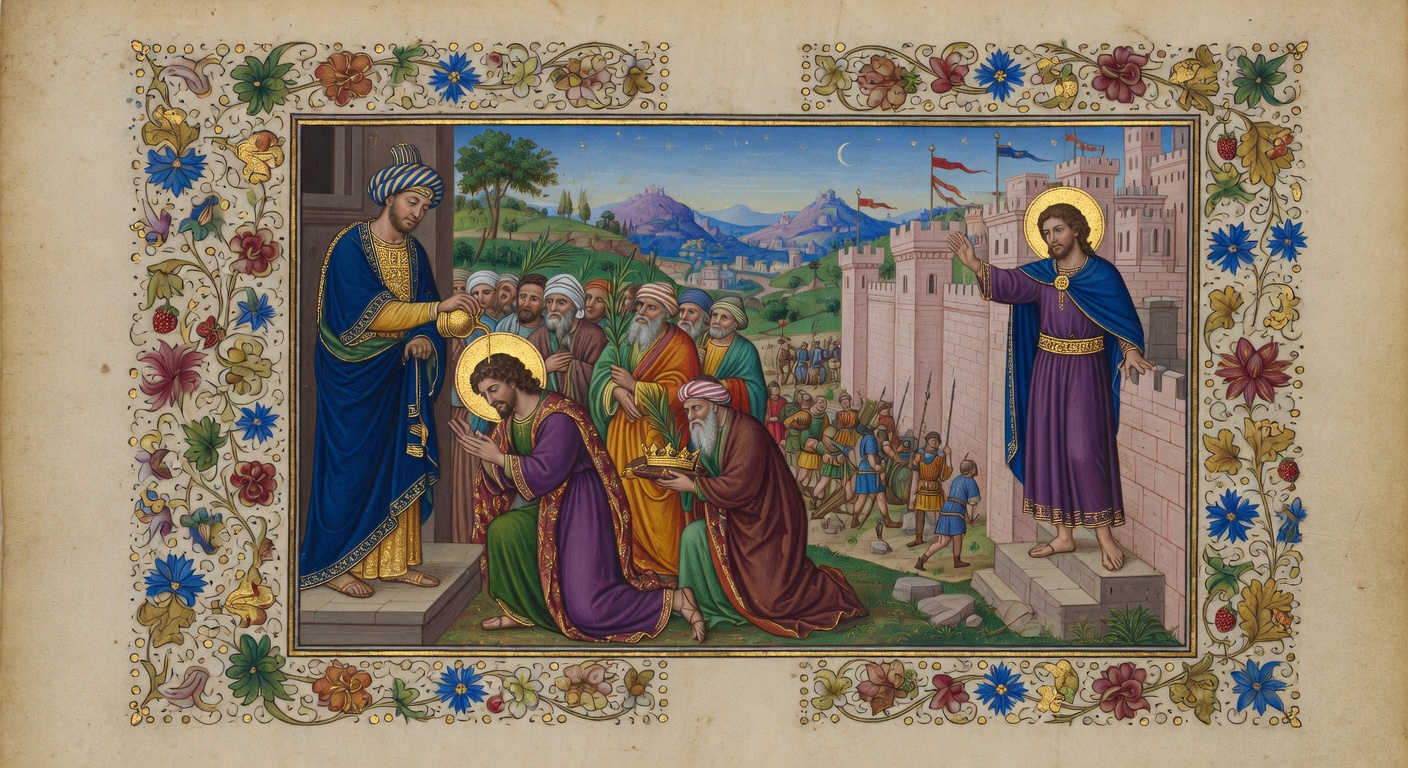
After years of running, hiding, and waiting, the shepherd boy finally sat on the throne.
After the death of King Saul, the elders of Israel came to David at Hebron and anointed him king over all twelve tribes, ending a period of civil division and unifying the nation under a single ruler chosen by God. David subsequently captured the fortified Jebusite city of Jerusalem, which he established as his capital and developed into a central political hub for the united kingdom. This consolidation strengthened Israel's defenses and centralized governance, setting the stage for military successes and national stability. In Scripture, the event fulfills earlier promises of David's rise, initiates the Davidic covenant, and positions Jerusalem as the enduring spiritual and royal center from which the messianic line would emerge.
Did You Know?
David subsequently captured the fortified Jebusite city of Jerusalem, which he established as his capital and developed into a central political hub for the united kingdom.
This consolidation strengthened Israel's defenses and centralized governance, setting the stage for military successes and national stability.
This event is dated to approximately c. 1010 BC in biblical chronology.
This took place at or near Jerusalem and Hebron.
Key Passage
David Becomes King
2 Samuel 5:1-12
 1hen came all the tribes of Israel to David unto Hebron, and spake, saying, Behold, we are thy bone and thy flesh.
Meanwhile in the World
Egypt is in decline (Third Intermediate Period). Phoenicia dominates Mediterranean trade. The Greek Dark Age continues. Assyria is rising in Mesopotamia. Homer may be composing the Iliad and Odyssey. This is the era of the great Phoenician alphabet spreading.