David Anointed
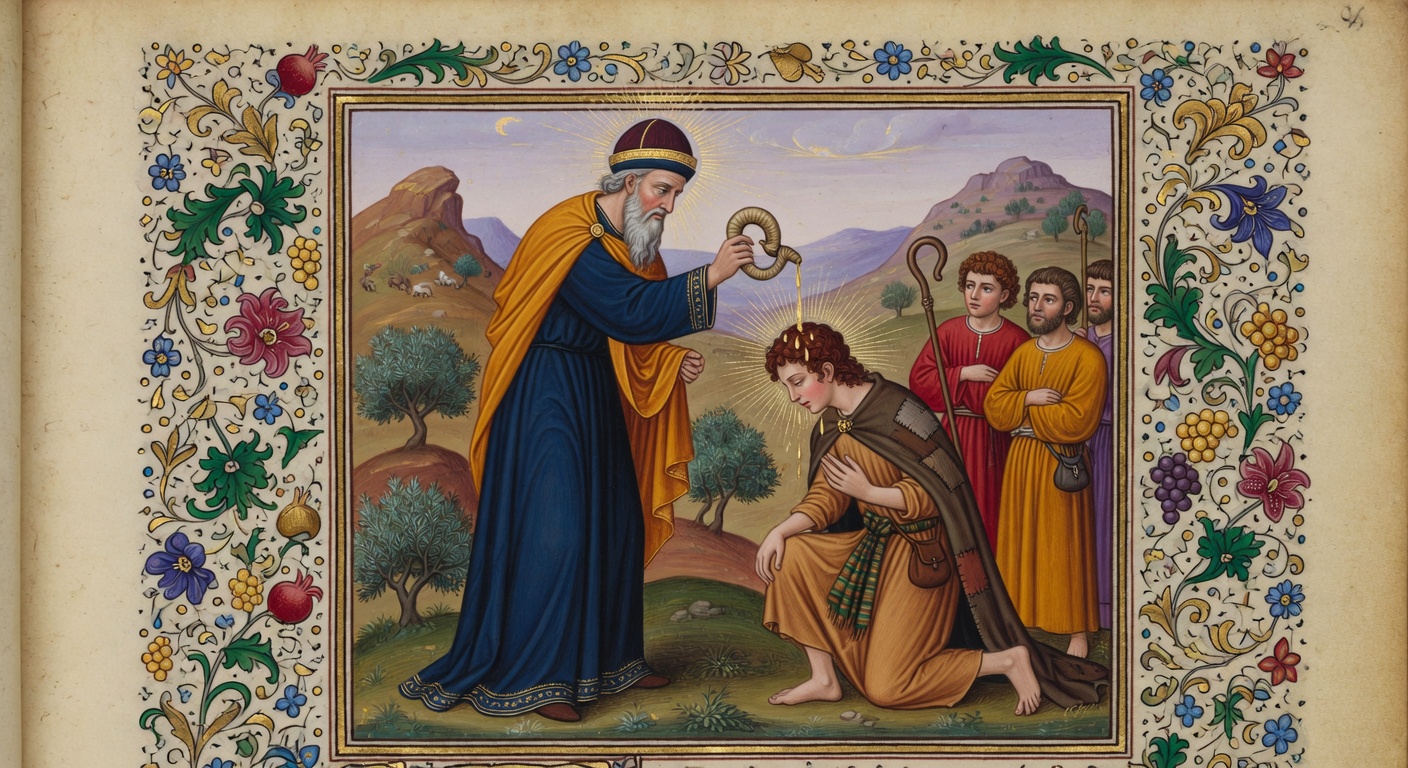
After God rejected King Saul for his disobedience, the prophet Samuel was directed to the house of Jesse in Bethlehem to anoint a new king from among his sons. Although David's older brothers appeared more suitable, God instructed Samuel to choose the young shepherd David, recognizing the condition of his heart rather than his outward appearance. Samuel poured oil on David's head, anointing him as the future king of Israel, and from that day the Spirit of the Lord came powerfully upon him. This event is significant because it marks the beginning of David's journey to the throne and establishes the Davidic line through which the Messiah would eventually come.
Did You Know?
Although David's older brothers appeared more suitable, God instructed Samuel to choose the young shepherd David, recognizing the condition of his heart rather than his outward appearance.
Samuel poured oil on David's head, anointing him as the future king of Israel, and from that day the Spirit of the Lord came powerfully upon him.
This event is dated to approximately c. 1025 BC in biblical chronology.
This took place at or near Bethlehem.
Key Passage
David Anointed
1 Samuel 16:1-13
 1nd the LORD said unto Samuel, How long wilt thou mourn for Saul, seeing I have rejected him from reigning over Israel? fill thine horn with oil, and go, I will send thee to Jesse the Bethlehemite: for I have provided me a king among his sons.
Meanwhile in the World
Egypt is in decline (Third Intermediate Period). Phoenicia dominates Mediterranean trade. The Greek Dark Age continues. Assyria is rising in Mesopotamia. Homer may be composing the Iliad and Odyssey. This is the era of the great Phoenician alphabet spreading.