The Good Shepherd Discourse
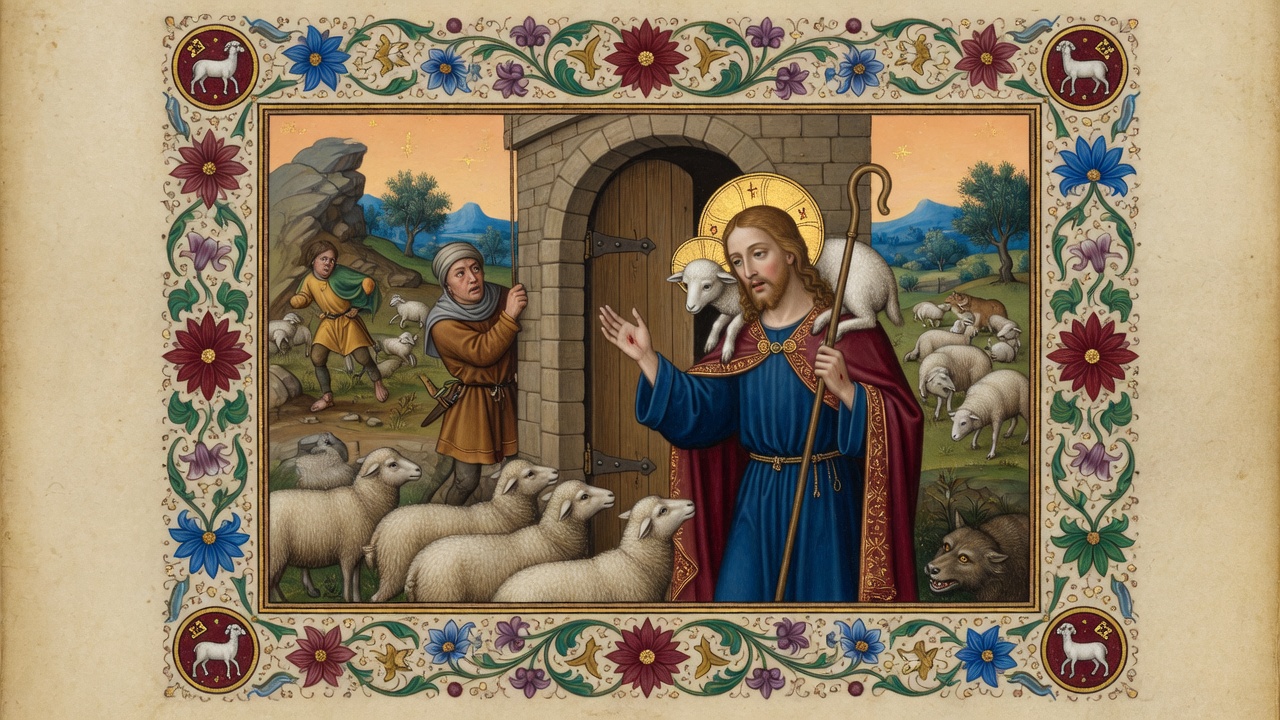
Jesus describes himself as both the door of the sheep and the good shepherd who lays down his life for the flock, in contrast to thieves, robbers, and hirelings who exploit or abandon the sheep. He knows his own and is known by them, and he has 'other sheep' to gather into one flock. The discourse reveals his self-giving love and his authority to lay down and take up his life.
Key Passages
The Good Shepherd
John 10:1-16
Jesus contrasts himself with thieves and hirelings as the shepherd who knows his sheep and dies for them.
 1erily, verily, I say unto you, He that entereth not by the door into the sheepfold, but climbeth up some other way, the same is a thief and a robber.
Did You Know?
Jesus is both the 'door of the sheep' and the 'good shepherd' in the same talk.
It draws on Ezekiel 34's promise that God himself would shepherd his people.
'I lay down my life for the sheep' foretells the cross.
His mention of 'other sheep' points to the Gentiles joining one flock.