Leviticus 5 KJV
The Guilt Offering
The Guilt Offering
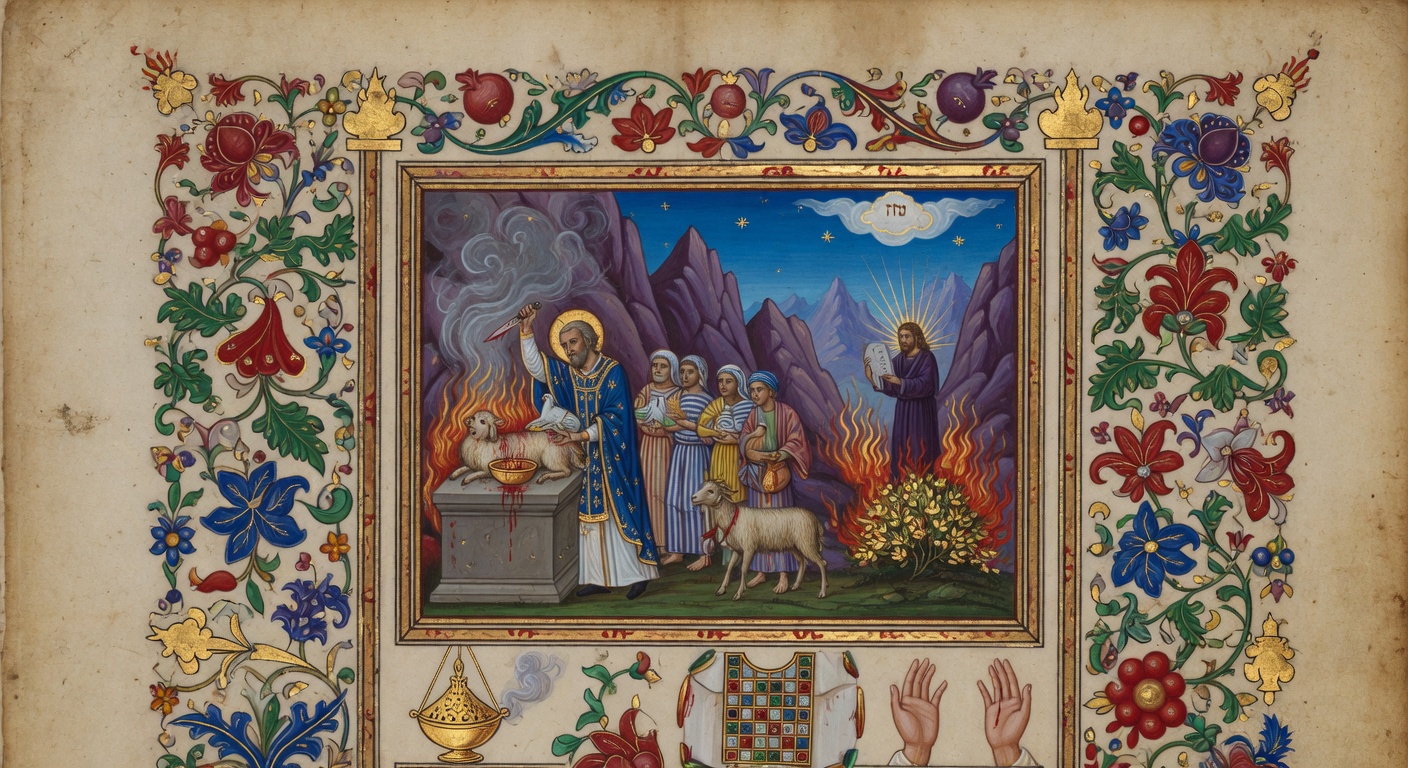
The chapter uniquely requires not only a sacrificial animal but also full restitution plus an added fifth to the injured party before atonement is complete, linking ritual expiation directly to concrete economic reparation for property violations or misuse of holy things.
 1nd if a soul sin, and hear the voice of swearing, and is a witness, whether he hath seen or known of it; if he do not utter it, then he shall bear his iniquity.
2 Or if a soul touch any unclean thing, whether it be a carcase of an unclean beast, or a carcase of unclean cattle, or the carcase of unclean creeping things, and if it be hidden from him; he also shall be unclean, and guilty.
3 Or if he touch the uncleanness of man, whatsoever uncleanness it be that a man shall be defiled withal, and it be hid from him; when he knoweth of it, then he shall be guilty.
4 Or if a soul swear, pronouncing with his lips to do evil, or to do good, whatsoever it be that a man shall pronounce with an oath, and it be hid from him; when he knoweth of it, then he shall be guilty in one of these.
5 And it shall be, when he shall be guilty in one of these things, that he shall confess that he hath sinned in that thing:
6 And he shall bring his trespass offering unto the LORD for his sin which he hath sinned, a female from the flock, a lamb or a kid of the goats, for a sin offering; and the priest shall make an atonement for him concerning his sin.
7 And if he be not able to bring a lamb, then he shall bring for his trespass, which he hath committed, two turtledoves, or two young pigeons, unto the LORD; one for a sin offering, and the other for a burnt offering.
8 And he shall bring them unto the priest, who shall offer that which is for the sin offering first, and wring off his head from his neck, but shall not divide it asunder:
9 And he shall sprinkle of the blood of the sin offering upon the side of the altar; and the rest of the blood shall be wrung out at the bottom of the altar: it is a sin offering.
10 And he shall offer the second for a burnt offering, according to the manner: and the priest shall make an atonement for him for his sin which he hath sinned, and it shall be forgiven him.
11 But if he be not able to bring two turtledoves, or two young pigeons, then he that sinned shall bring for his offering the tenth part of an ephah of fine flour for a sin offering; he shall put no oil upon it, neither shall he put any frankincense thereon: for it is a sin offering.
12 Then shall he bring it to the priest, and the priest shall take his handful of it, even a memorial thereof, and burn it on the altar, according to the offerings made by fire unto the LORD: it is a sin offering.
13 And the priest shall make an atonement for him as touching his sin that he hath sinned in one of these, and it shall be forgiven him: and the remnant shall be the priest’s, as a meat offering.
14 And the LORD spake unto Moses, saying,
15 If a soul commit a trespass, and sin through ignorance, in the holy things of the LORD; then he shall bring for his trespass unto the LORD a ram without blemish out of the flocks, with thy estimation by shekels of silver, after the shekel of the sanctuary, for a trespass offering:
16 And he shall make amends for the harm that he hath done in the holy thing, and shall add the fifth part thereto, and give it unto the priest: and the priest shall make an atonement for him with the ram of the trespass offering, and it shall be forgiven him.
17 And if a soul sin, and commit any of these things which are forbidden to be done by the commandments of the LORD; though he wist it not, yet is he guilty, and shall bear his iniquity.
18 And he shall bring a ram without blemish out of the flock, with thy estimation, for a trespass offering, unto the priest: and the priest shall make an atonement for him concerning his ignorance wherein he erred and wist it not, and it shall be forgiven him.
19 It is a trespass offering: he hath certainly trespassed against the LORD.
← → arrow keys to navigate chapters · spacebar to play/pause audio
Did You Know?
The chapter uniquely requires not only a sacrificial animal but also full restitution plus an added fifth to the injured party before atonement is complete, linking ritual expiation directly to concrete economic reparation for property violations or misuse of holy things.
Verse 1 imposes liability on anyone who hears a public adjuration to testify yet remains silent, treating failure to provide judicial testimony as a sin requiring a guilt offering and thereby merging forensic duty with cultic atonement in a way that anticipates later Jewish and Christian ethical traditions.
Unlike the sin offering of chapter 4, the guilt offering here explicitly accommodates the economically destitute by permitting an offering of fine flour without oil or frankincense when even birds are unaffordable, revealing a sliding scale calibrated to the offerer’s means rather than the offense’s gravity.
The text treats both unintentional contact with uncleanness and rash oaths as equivalent triggers for the guilt offering, collapsing ritual impurity and verbal transgression into a single sacrificial category that underscores the objective, almost contagious character of covenant breach regardless of intent.
By allowing the priest to retain the remainder of the flour offering after burning a handful on the altar, the legislation quietly integrates the support of the priesthood into the mechanism of atonement itself, transforming the guilt offering into an indirect provision for those who mediate between God and the people.
Although the Bible explains Moses' name through a Hebrew etymology as "drawn out" of the water, it closely matches the Egyptian term for "son" found in royal names like Thutmose, reflecting his adoption into Pharaoh's household during the New Kingdom period.
Aaron's budding rod was not only a sign during Korah's rebellion but was later stored in the Ark of the Covenant alongside the stone tablets and a jar of manna, serving as an enduring witness to God's choice of the Aaronic priesthood.
Eleazar was specifically tasked with hammering the bronze censers from Korah's 250 rebels into an altar covering as a perpetual warning against unauthorized offerings, turning instruments of rebellion into sacred memorials.
Jewish tradition says the mountain was chosen because it was the humblest. Not the tallest.
Commentary & Study Notes Jamieson-Fausset-Brown (1871) · Public Domain 1. if a soul... hear the voice of swearing — or, according to some, "the words of adjuration." A proclamation was issued calling any one who could give information, to come before…
Classic verse-by-verse commentary on Leviticus 5 from Jamieson, Fausset & Brown (1871). Covers: Trespass offerings for concealing knowledge; Touching any thing unclean; For swearing.
- 4
- if a soul swear — a rash oath, without duly considering the nature and consequences of the oath, perhaps inconsiderately binding himself to do anything wrong, or neglecting to perform a vow to do something good. In all such cases a person might have transgressed one of the divine commandments unwittingly, and have been afterwards brought to a sense of his delinquency.
- 5
- it shall be, when he shall be guilty... that he shall confess that he hath sinned in that thing — make a voluntary acknowledgment of his sin from the impulse of his own conscience, and before it come to the knowledge of the world. A previous discovery might have subjected him to some degree of punishment from which his spontaneous confession released him, but still he was considered guilty of trespass, to expiate which he was obliged by the ceremonial law to go through certain observances.
Read all 5 notes on Leviticus 5 →