Akeldama (Field of Blood)
Ask about Akeldama (Field of Blood)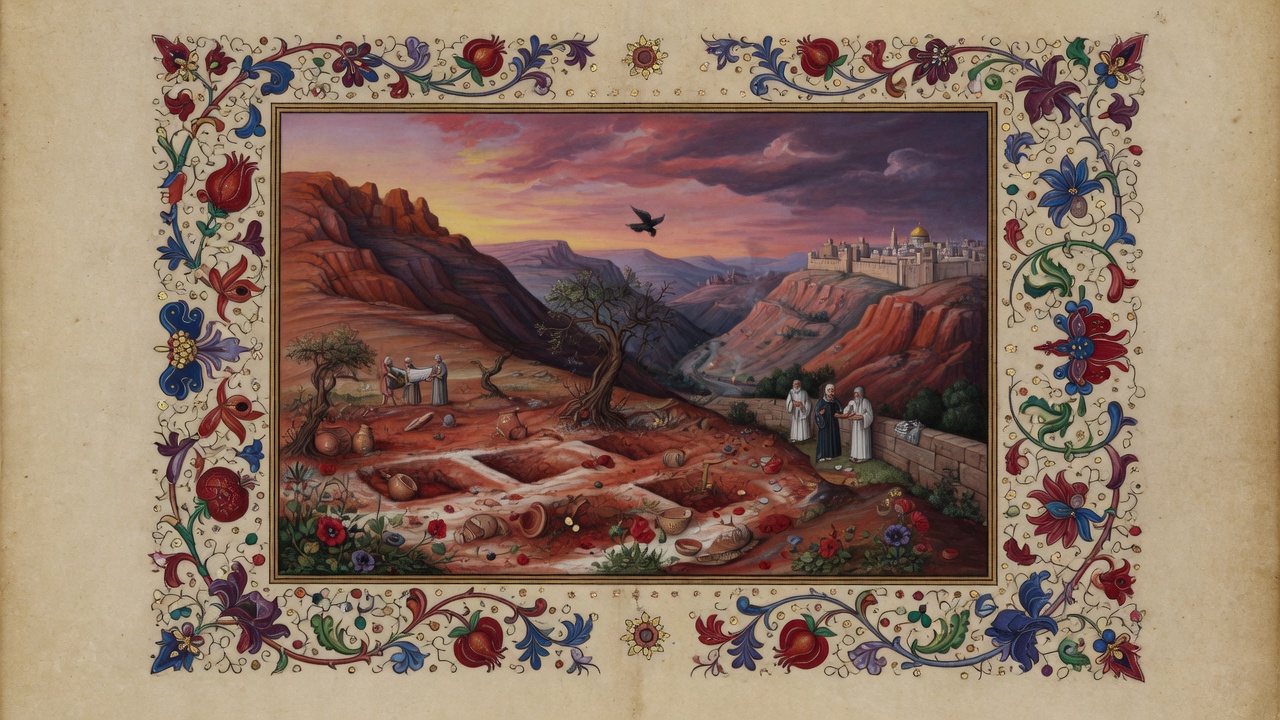
Akeldama - Aramaic for 'field of blood' - was a plot of ground in the Hinnom Valley south of Jerusalem, bought with the thirty pieces of silver Judas received for betraying Jesus. Matthew records that the chief priests, unwilling to return blood money to the treasury, used it to buy 'the potter's field, to bury strangers in,' fulfilling the prophets' words about the thirty pieces of silver and the potter's field. Peter, speaking in Acts, ties the field to Judas's gruesome end - falling headlong, he 'burst asunder in the midst' - and notes the name was known to every dweller in Jerusalem. A burial ground for foreigners, purchased with the price of betrayal, in a valley already associated with judgment: few places in Scripture carry so much dark symbolism in a single acre, and the traditional site is still pointed out today.
Details
- Region
- Jerusalem
- Modern Location
- Hinnom Valley, Jerusalem
Key Passages
The Potter's Field Purchased
Matthew 27:6-8
The priests' scruple - blood money cannot enter the treasury that paid it out - buys a graveyard for strangers with the price of the Messiah.
 6nd the chief priests took the silver pieces, and said, It is not lawful for to put them into the treasury, because it is the price of blood.
Peter Recalls the Field of Blood
Acts 1:18-19
All Jerusalem knew the field and its name - the betrayal's price left a permanent, publicly known scar on the city's geography.
 18ow this man purchased a field with the reward of iniquity; and falling headlong, he burst asunder in the midst, and all his bowels gushed out.
Did You Know?
Matthew and Acts describe the purchase differently - the priests bought it in Judas's name, resolving how Judas both 'purchased' the field and died before using the money.
The field lay in the Hinnom Valley - the same valley whose fires gave Scripture its word 'Gehenna' for hell; betrayal money bought ground in the valley of judgment.
For centuries Akeldama's soil was believed to decompose bodies unusually fast, and shiploads of it were carried to Europe for cemetery ground.