Fair Havens
Ask about Fair Havens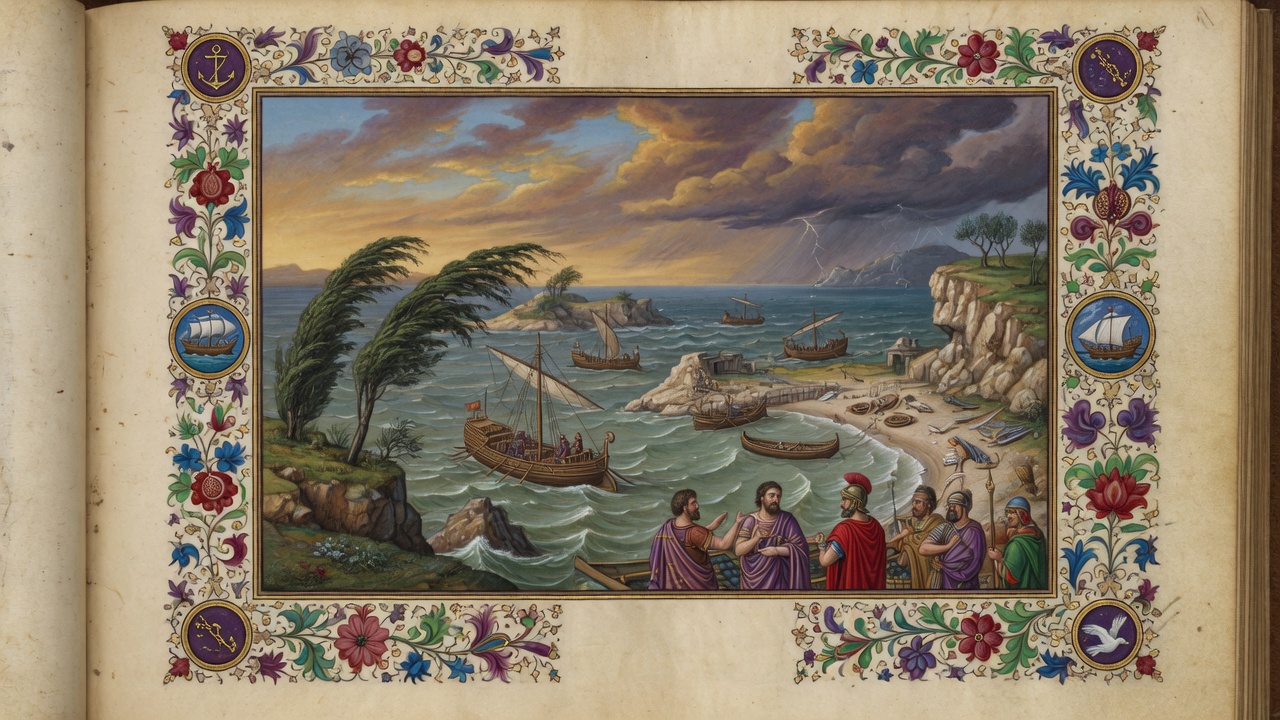
Fair Havens was a small, exposed harbor on the southern coast of Crete where the ship carrying Paul as a prisoner to Rome took refuge as sailing had already become dangerous with the approach of winter. Paul warned the ship's centurion and crew that continuing the voyage would end in disaster, loss of cargo, and lives, but the harbor's poor shelter and the majority opinion favored trying to reach the better harbor of Phenice instead. That decision led directly to the ship being caught by the violent northeaster wind called Euroclydon and eventually wrecked on Malta - making Fair Havens the last point at which the disaster Paul had prophesied could still have been avoided.
Details
- Region
- Mediterranean
- Modern Location
- Near Kaloi Limenes, Crete, Greece
Key Passages
Paul Warns of Danger at Fair Havens
Acts 27:8-12
Paul's warning, ignored in favor of reaching a more comfortable harbor, sets in motion the shipwreck that Acts describes in such vivid detail.
 8nd, hardly passing it, came unto a place which is called The fair havens; nigh whereunto was the city of Lasea.
Did You Know?
Fair Havens survives with the same name today - Kaloi Limenes in Greek - one of the few biblical places never renamed in two thousand years.
Paul's shipwreck warning at Fair Havens was ignored partly because the harbor was 'not commodious to winter in' - comfort outvoted the prophet.
Acts notes 'the fast was now already past' - the Day of Atonement, dating the voyage to dangerous October seas; Luke embeds the shipping calendar in one clause.