Claudius Lysias
Ask about Claudius Lysias
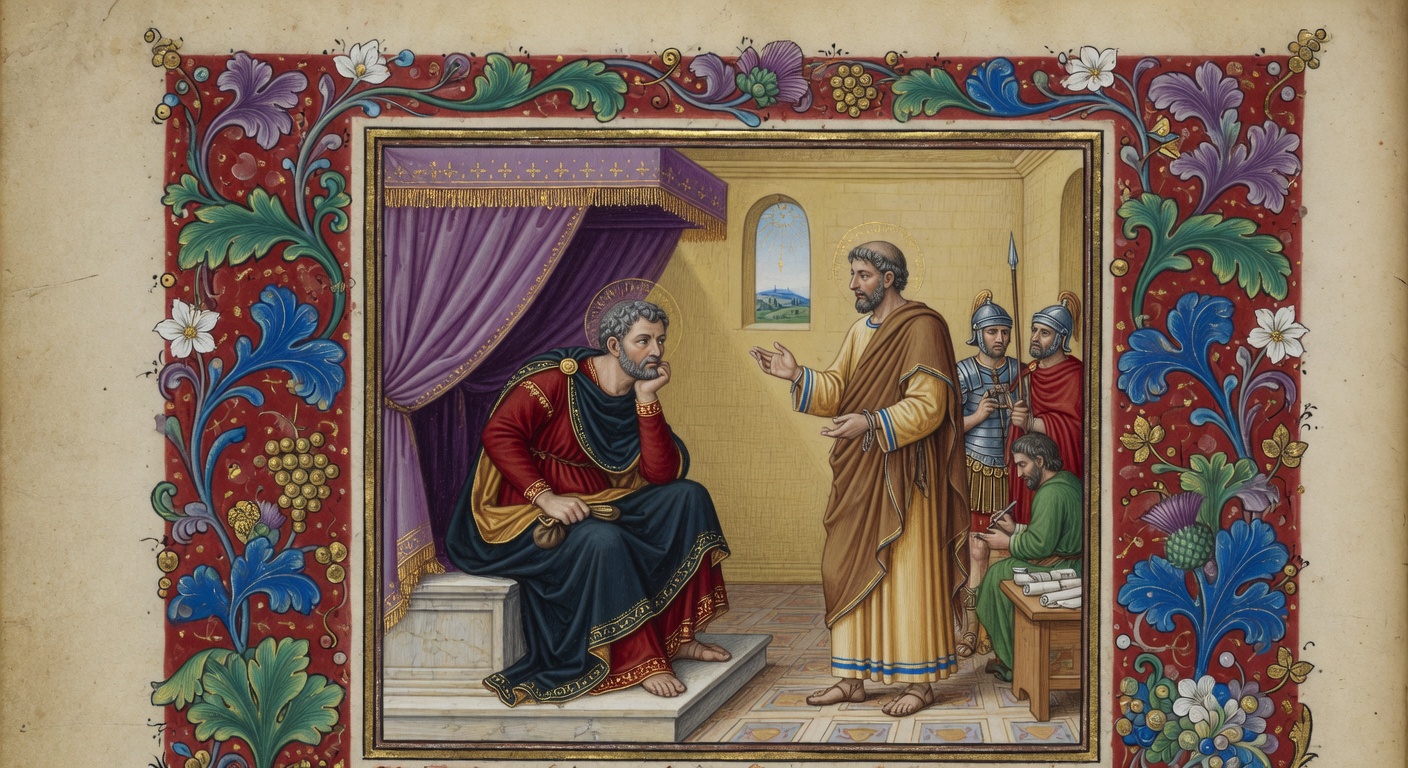
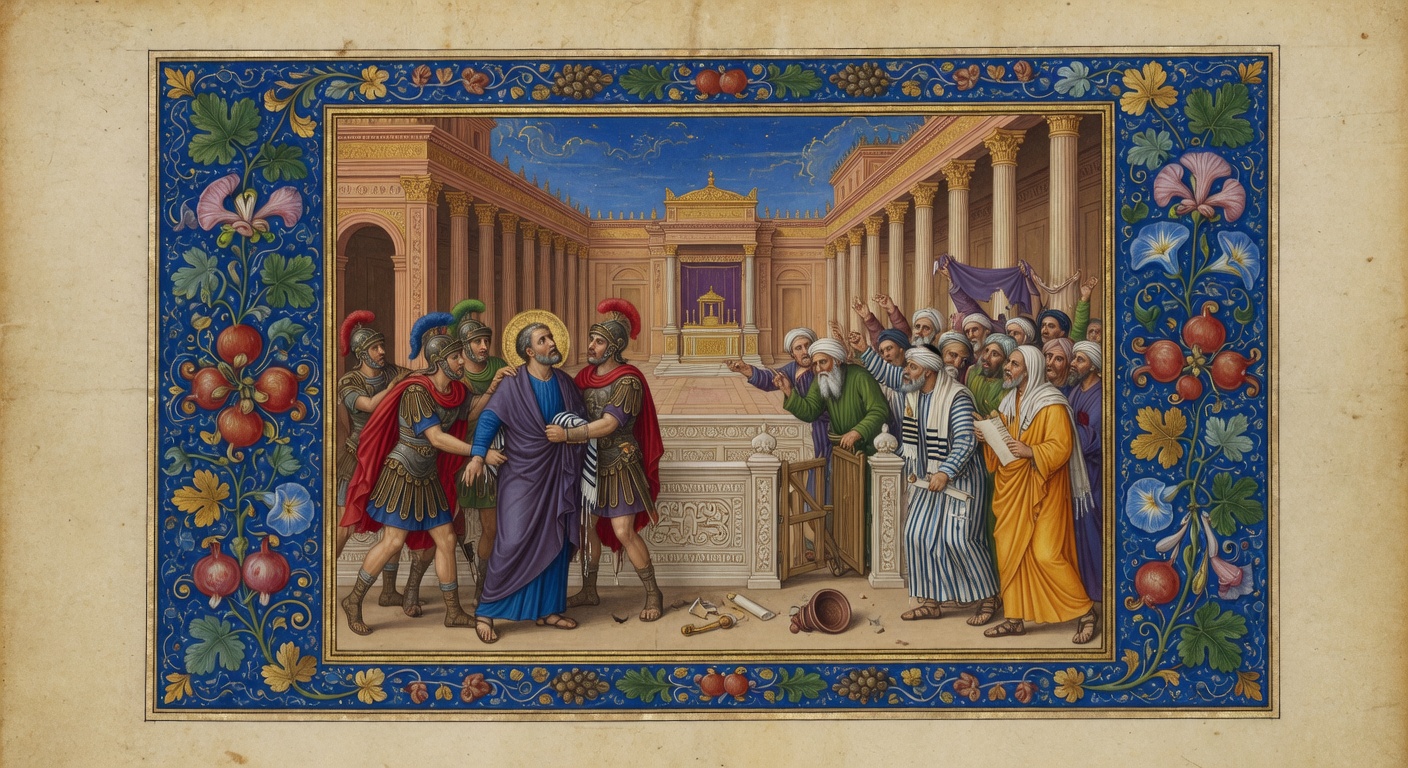
Claudius Lysias was the chief captain (a Roman tribune) commanding the garrison in Jerusalem when a mob seized Paul in the temple. He rescued Paul from being beaten to death, bound him with two chains, and at first mistook him for an Egyptian rebel. He was about to have Paul examined by scourging when he learned that Paul was a Roman citizen by birth, while Lysias had bought his own citizenship 'with a great sum.' After a near riot in the council and the discovery of a plot by more than forty men to kill Paul, he sent him by night under heavy guard to the governor Felix at Caesarea, with a letter stating that Paul had done nothing worthy of death or of bonds.
Biography
- Occupation
- Chief captain (tribune) of the Roman garrison in Jerusalem
- Era
- New Testament (Acts)
- Nationality
- Roman (citizenship purchased)
- Also Known As
- Lysias
Did You Know?
His letter to Felix tells the story in his own favor: he writes that he rescued Paul 'having understood that he was a Roman' (Acts 23:27), though Acts 22 shows he learned of Paul's citizenship only after ordering him scourged.
His Roman name Claudius alongside the Greek name Lysias suggests he took the name of the emperor Claudius when he bought his citizenship, a common practice for new citizens of that time.
The escort he sent with Paul to Caesarea was large: two hundred soldiers, seventy horsemen, and two hundred spearmen, setting out 'at the third hour of the night' (Acts 23:23).
Key Chapters
Key Passages
Rescue from the Mob
Acts 21:31-36
Roman order becomes God's instrument to preserve Paul's life when the crowd is set on killing him.
 31nd as they went about to kill him, tidings came unto the chief captain of the band, that all Jerusalem was in an uproar.
Canst Thou Speak Greek?
Acts 21:37-40
The commander's mistaken assumption gives way to curiosity, and Paul gains a hearing before the people.
37nd as Paul was to be led into the castle, he said unto the chief captain, May I speak unto thee? Who said, Canst thou speak Greek?
A Roman Citizen
Acts 22:24-29
Paul's citizenship halts the scourging, and the commander who bought his own status is alarmed to have bound a man born free.
 24he chief captain commanded him to be brought into the castle, and bade that he should be examined by scourging; that he might know wherefore they cried so against him.
The Plot Revealed
Acts 23:19-22
Lysias listens privately to Paul's nephew and acts quickly, keeping the conspiracy from succeeding.
19hen the chief captain took him by the hand, and went with him aside privately, and asked him, What is that thou hast to tell me?
Letter to Felix
Acts 23:26-30
His letter declares Paul innocent of any crime worthy of death, a Roman official's testimony that Luke preserves word for word.
 26laudius Lysias unto the most excellent governor Felix sendeth greeting.