Herod Agrippa II
Ask about Herod Agrippa II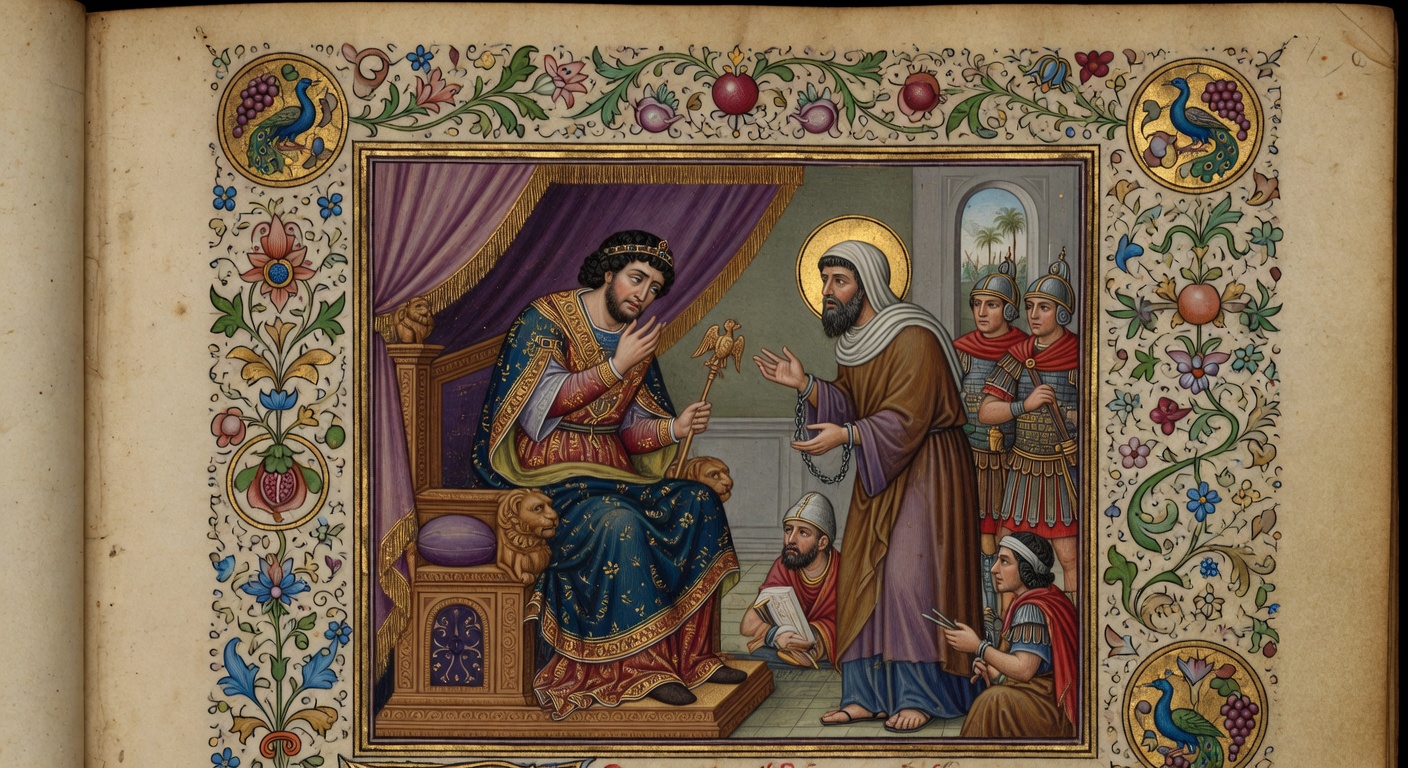
Herod Agrippa II was the last king of the Herodian dynasty, ruling small territories in northern Palestine as a Roman client during the mid-first century. In Acts 25-26 he heard the Apostle Paul’s defense after the Roman procurator Festus arranged the hearing at Caesarea, with Agrippa’s sister Bernice also present. Paul recounted his conversion and mission, leading Agrippa to reply that he was almost persuaded to become a Christian; the king then concluded Paul was innocent and could have been released had he not appealed to Caesar. The account demonstrates the gospel’s advance before governing authorities and records one of the New Testament’s clearest examples of apostolic testimony to a reigning Herodian ruler.
Biography
- Occupation
- King (tetrarch)
- Father
- Herod Agrippa I
- Era
- New Testament (c. AD 50-100)
Family
Did You Know?
Herod Agrippa II held the Roman-granted right to appoint and depose Jewish high priests, a power he exercised repeatedly while also constructing a palace overlooking the temple's inner courts that forced priests to build a screening wall.
Accompanied by his sister Bernice, with whom Josephus and Roman writers reported an incestuous liaison, Agrippa presided over Paul's hearing in Caesarea and declared himself almost persuaded to embrace Christianity (Acts 26:28).
Though raised at the imperial court in Rome and granted only minor territories, Agrippa II possessed detailed knowledge of Jewish customs and sects, which Paul explicitly acknowledged when defending the resurrection hope before him (Acts 26:3).
Agrippa delivered an impassioned speech inside the temple attempting to halt the Jewish revolt of AD 66, yet after Rome's victory he received additional lands from Vespasian and continued ruling as a Roman client until about AD 100.
As the final Herodian monarch, Agrippa II maintained authority over the temple treasury and vestments even after the temple's destruction, marking the quiet extinction of the dynasty without direct heirs.
Agrippa II was granted the authority to appoint the Jewish high priest and supervise the temple treasury in Jerusalem, a role that placed him at the center of religious politics despite his limited secular territory under Roman oversight.
During Paul's hearing, Agrippa was accompanied by his sister Bernice, whose close and rumored incestuous cohabitation with the king was widely noted by contemporary historians such as Josephus and later satirized by Roman writers.
Although raised with Roman citizenship and educated in the imperial court, Agrippa retained enough expertise in Jewish law to follow Paul's detailed defense, leading him to declare that the apostle was almost persuading him to become a Christian.
Agrippa II attempted to mediate between the Jewish rebels and Roman authorities at the outbreak of the First Jewish-Roman War in 66 AD, personally addressing the crowds from a palace portico in a failed effort to prevent the temple's eventual destruction.
As the final Herodian ruler, Agrippa outlived the fall of Jerusalem in 70 AD and continued governing small northern territories until his death around 100 AD, marking the complete end of the dynasty established by his great-grandfather Herod the Great.
Key Chapters
Key Passages
Paul Before Agrippa
Acts 26:27-29
This passage shows Paul's compassionate boldness in urging even powerful rulers like Agrippa to embrace saving faith in Christ.
 27ing Agrippa, believest thou the prophets? I know that thou believest.
Paul Before Agrippa
Acts 26:1-29
This passage shows how courageously sharing your personal story of faith can reach even powerful leaders with the hope of Jesus.
 1hen Agrippa said unto Paul, Thou art permitted to speak for thyself. Then Paul stretched forth the hand, and answered for himself:
Almost Persuaded
Acts 26:28-29
This passage warns that coming close to faith isn't enough, urging us to respond fully and wholeheartedly to Christ.
28hen Agrippa said unto Paul, Almost thou persuadest me to be a Christian.