Pontius Pilate
Ask about Pontius Pilate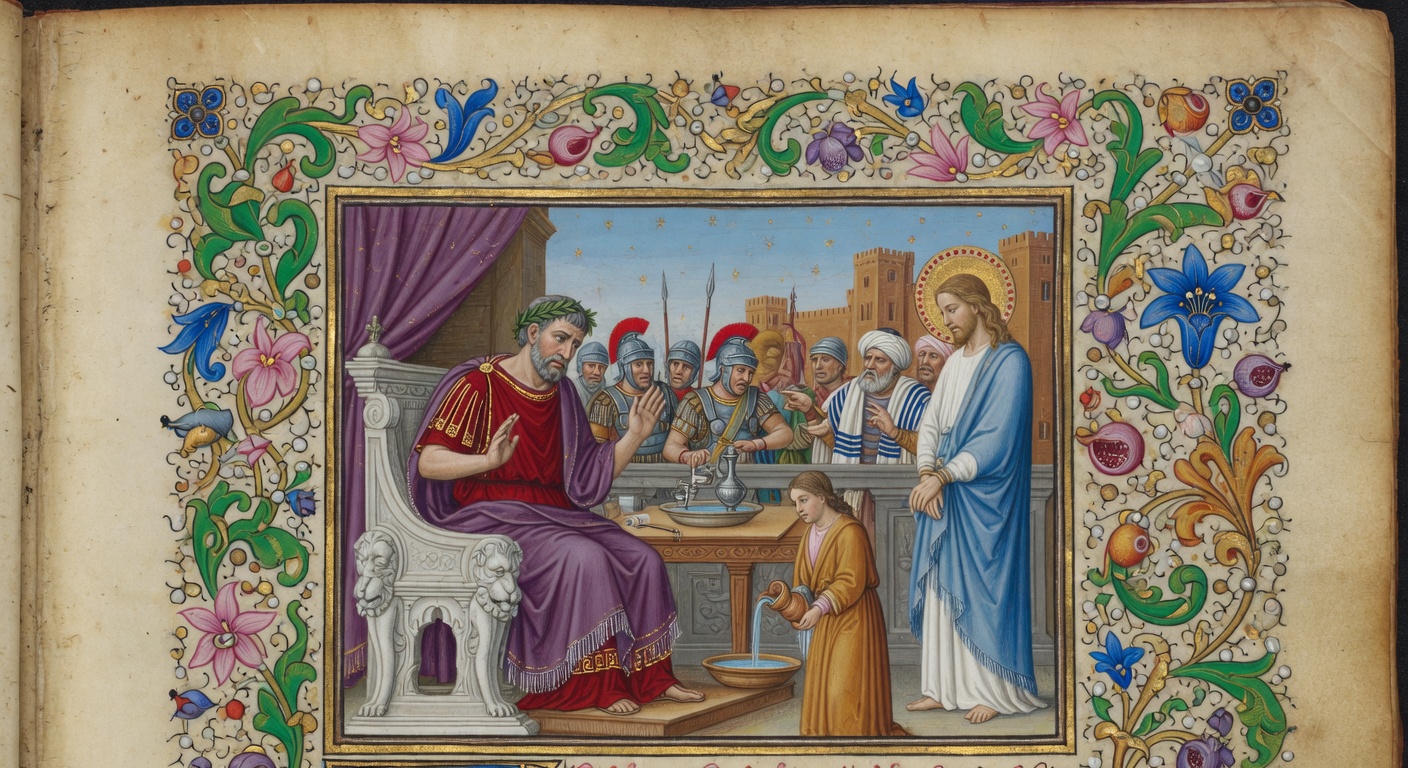
Pontius Pilate served as the Roman prefect of Judea from approximately 26 to 36 AD, exercising authority over legal and military affairs in the region under Emperor Tiberius. In the Gospels he presided over Jesus' trial, repeatedly declaring him innocent of the charges yet ultimately sentencing him to crucifixion after yielding to pressure from the chief priests and the Passover crowd to avoid unrest. This account appears in all four Gospels and is referenced in the Apostles' Creed, illustrating the intersection of Roman political power with Jewish religious leadership. The episode underscores themes of injustice, fulfilled prophecy, and divine sovereignty in the scriptural narrative of redemption.
Biography
- Occupation
- Roman Prefect of Judea
- Spouse
- Claudia Procula (tradition)
- Era
- New Testament (c. AD 26-36)
- Nationality
- Roman
Family
Did You Know?
In the Gospel of Matthew, Pilate's wife sent him an urgent warning during the trial after suffering greatly in a dream about Jesus, an unusual intervention by a Roman official's spouse that underscores the spiritual tension surrounding the proceedings.
Pilate ordered the inscription 'Jesus of Nazareth, the King of the Jews' affixed to the cross in Hebrew, Latin, and Greek, and when Jewish leaders protested, he retorted 'What I have written, I have written,' asserting Roman authority over local objections.
The Gospel of Mark records that Pilate expressed astonishment at Jesus dying after only six hours on the cross and summoned a centurion for confirmation before granting Joseph of Arimathea permission to bury the body, reflecting standard Roman oversight of crucifixions.
Pilate invoked the Passover custom of releasing one prisoner to the crowd, offering them Jesus or the notorious murderer Barabbas, a practice rooted in Roman efforts to ease tensions in restive provinces like Judea through selective clemency.
Despite repeatedly stating he found no guilt in Jesus, Pilate ultimately relented to avoid a riot, as the Gospels note his fear of imperial repercussions in a volatile region where local unrest could threaten his position.
Key Chapters
Key Passages
Jesus Before Pilate
John 18:28-38
This passage shows Jesus standing in truth before worldly power, revealing a kingdom of grace that invites every heart to find real freedom.
 28hen led they Jesus from Caiaphas unto the hall of judgment: and it was early; and they themselves went not into the judgment hall, lest they should be defiled; but that they might eat the passover.
Pilate Washes His Hands
Matthew 27:22-26
This passage reveals how fear of others can lead even powerful people to compromise truth and evade moral responsibility.
 22ilate saith unto them, What shall I do then with Jesus which is called Christ? They all say unto him, Let him be crucified.