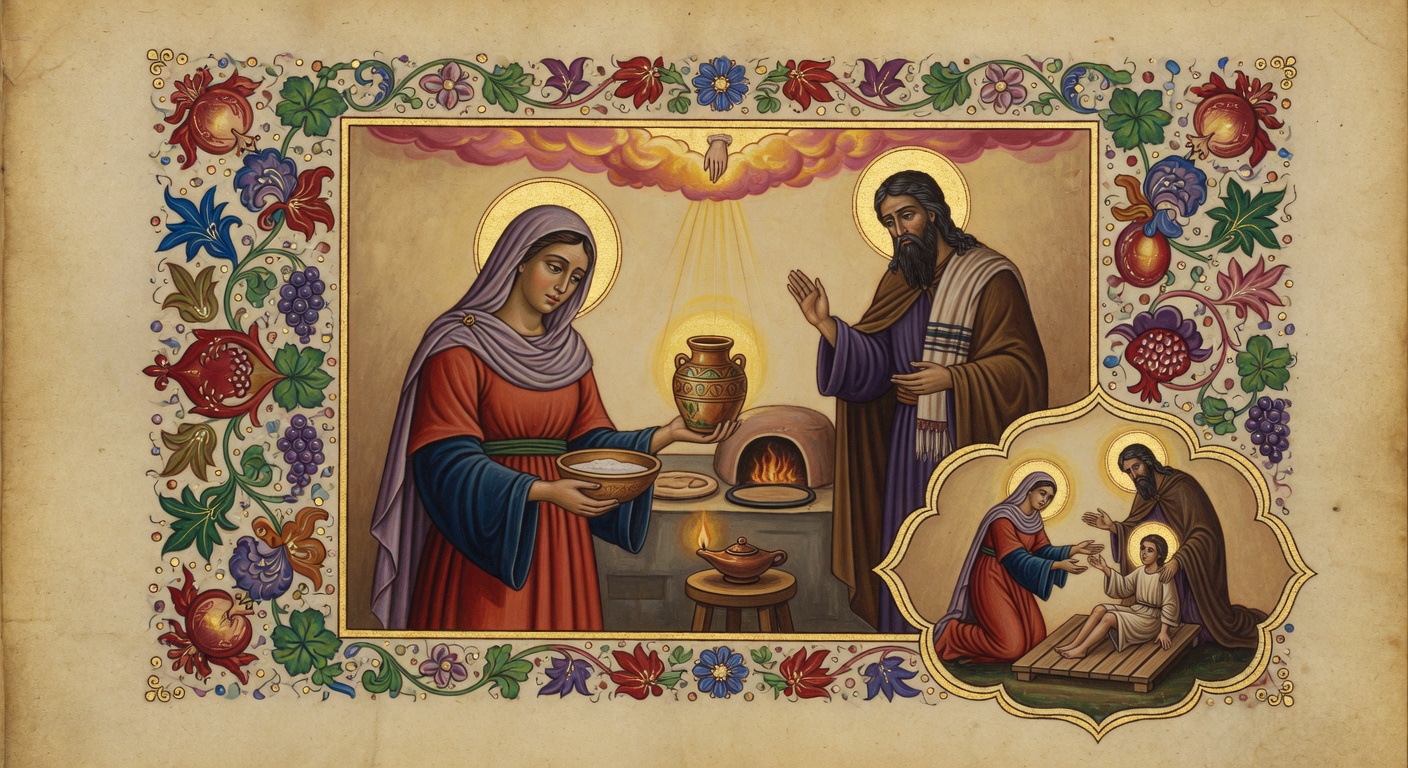
Widow of Zarephath

Portrait of Widow of Zarephath

The Widow of Zarephath was a Phoenician woman living in the town of Zarephath during a severe drought and famine in the region. When the prophet Elijah arrived, seeking sustenance as directed by God, she generously shared her last remaining resources of flour and oil, which God miraculously replenished daily to sustain her household, Elijah, and her son throughout the famine. Later, when her son fell ill and died, Elijah prayed over him, and the boy was restored to life, affirming the prophet's divine authority. This account in 1 Kings 17 illustrates God's provision extending beyond Israel to faithful Gentiles and underscores themes of faith, obedience, and resurrection power in Scripture.

0:00

Biography

Children
One son
Era
Divided Kingdom (c. 870 BC)
Nationality
Phoenician (Sidonian)

Family

Widow of Zarephath
โ†“
Children
One son
Old Testament Divided Kingdom Woman 1 Kings

Did You Know?

1

The Widow of Zarephath, a Phoenician Gentile from the region of Sidon, received divine provision during the three-year drought that Elijah had pronounced on Israel, with her jar of flour and jug of oil sustaining her household for many days despite daily use.

2

Her willingness to give Elijah her last portion of food first, before feeding herself and her son, directly fulfilled the prophet's instruction and triggered the ongoing miracle of inexhaustible supplies, underscoring a principle of prioritizing prophetic word over immediate survival needs.

3

The revival of her son involved Elijah carrying the lifeless boy to an upper room, stretching himself upon the body three times, and praying specifically for the child's life to return, representing the first recorded resurrection performed by a prophet in the Hebrew Scriptures.

4

Zarephath's name, derived from a root meaning 'to smelt or refine,' aligns with its location in a metalworking area between Tyre and Sidon, adding historical texture to the site where Elijah lodged and performed miracles amid Ahab's Baal-influenced reign.

5

Centuries later, Jesus explicitly cited this unnamed widow in Luke 4:26 as an example of God's favor extending beyond Israel, using her story to challenge his Nazareth audience and foreshadow the inclusion of Gentiles in divine blessing.

Key Passages

Elijah and the Widow

1 Kings 17:8-24

This passage shows how trusting God in desperate need opens the way for His miraculous provision and life-restoring power.
A8nd the word of the LORD came unto him, saying,

9 Arise, get thee to Zarephath, which belongeth to Zidon, and dwell there: behold, I have commanded a widow woman there to sustain thee. 10 So he arose and went to Zarephath. And when he came to the gate of the city, behold, the widow woman was there gathering of sticks: and he called to her, and said, Fetch me, I pray thee, a little water in a vessel, that I may drink. 11 And as she was going to fetch it, he called to her, and said, Bring me, I pray thee, a morsel of bread in thine hand. 12 And she said, As the LORD thy God liveth, I have not a cake, but an handful of meal in a barrel, and a little oil in a cruse: and, behold, I am gathering two sticks, that I may go in and dress it for me and my son, that we may eat it, and die. 13 And Elijah said unto her, Fear not; go and do as thou hast said: but make me thereof a little cake first, and bring it unto me, and after make for thee and for thy son. 14 For thus saith the LORD God of Israel, The barrel of meal shall not waste, neither shall the cruse of oil fail, until the day that the LORD sendeth rain upon the earth. 15 And she went and did according to the saying of Elijah: and she, and he, and her house, did eat many days. 16 And the barrel of meal wasted not, neither did the cruse of oil fail, according to the word of the LORD, which he spake by Elijah. 17 And it came to pass after these things, that the son of the woman, the mistress of the house, fell sick; and his sickness was so sore, that there was no breath left in him. 18 And she said unto Elijah, What have I to do with thee, O thou man of God? art thou come unto me to call my sin to remembrance, and to slay my son? 19 And he said unto her, Give me thy son. And he took him out of her bosom, and carried him up into a loft, where he abode, and laid him upon his own bed. 20 And he cried unto the LORD, and said, O LORD my God, hast thou also brought evil upon the widow with whom I sojourn, by slaying her son? 21 And he stretched himself upon the child three times, and cried unto the LORD, and said, O LORD my God, I pray thee, let this childโ€™s soul come into him again. 22 And the LORD heard the voice of Elijah; and the soul of the child came into him again, and he revived. 23 And Elijah took the child, and brought him down out of the chamber into the house, and delivered him unto his mother: and Elijah said, See, thy son liveth. 24 And the woman said to Elijah, Now by this I know that thou art a man of God, and that the word of the LORD in thy mouth is truth.

Read full chapter: 1 Kings 17 โ†’