The Pharisee and the Tax Collector
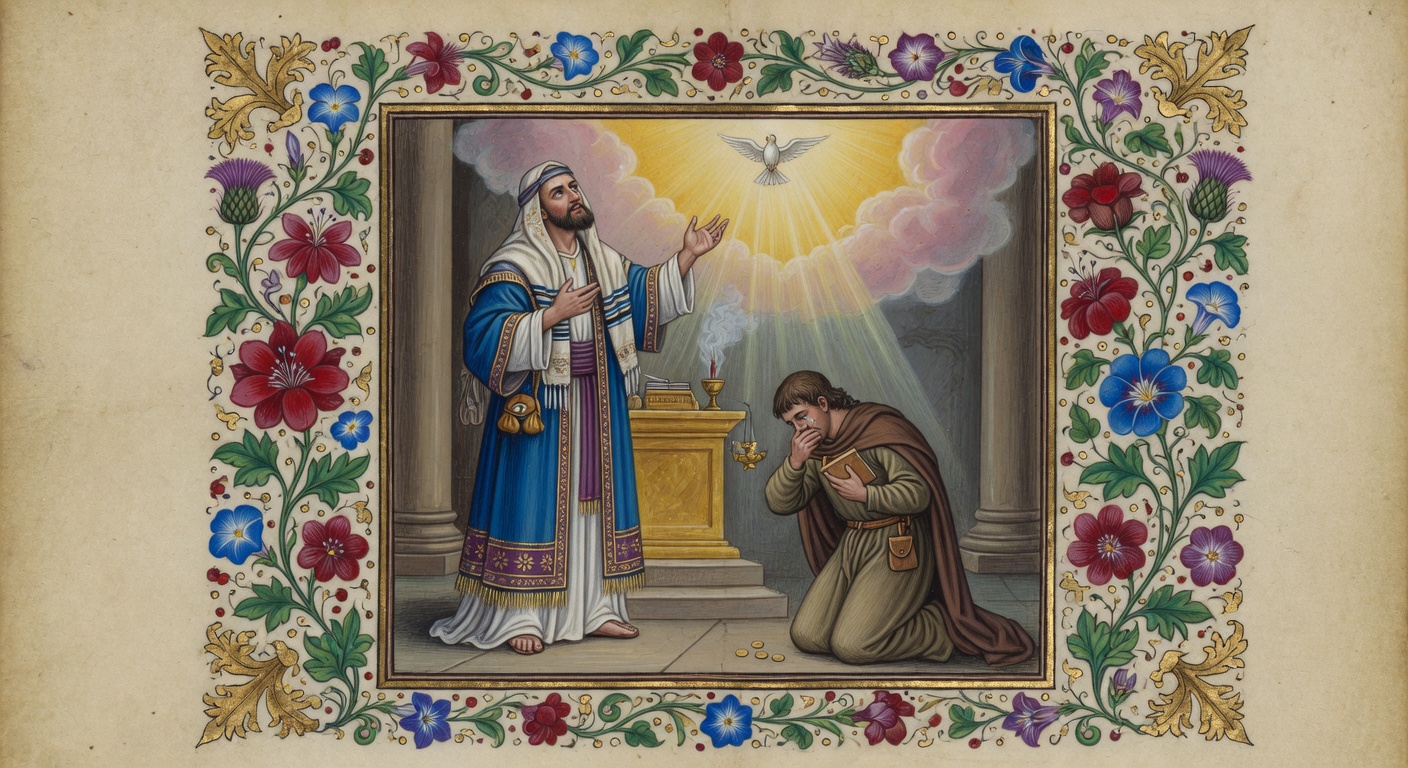
Jesus directed this parable toward those who trusted in themselves as righteous and despised others, describing a Pharisee who stood in the temple and prayed with confidence, thanking God that he was not like other men while listing his religious practices. In contrast, the tax collector remained at a distance, beat his breast, and simply pleaded for mercy as a sinner.
Jesus directed this parable toward those who trusted in themselves as righteous and despised others, describing a Pharisee who stood in the temple and prayed with confidence, thanking God that he was not like other men while listing his religious practices. In contrast, the tax collector remained at a distance, beat his breast, and simply pleaded for mercy as a sinner. By concluding that the tax collector returned home justified rather than the Pharisee, Jesus reveals that God honors humble repentance over proud self-righteousness, underscoring a vital aspect of the gospel where grace meets the contrite heart.
Category: Prayer & Humility
Meaning: God honors humble repentance over proud self-righteousness.
Audience: Self-righteous
Key Chapters
Key Passages
The Parable
Luke 18:9-14
This parable shows that approaching God with humble honesty brings His forgiveness, while self-righteousness leaves us empty.
 9nd he spake this parable unto certain which trusted in themselves that they were righteous, and despised others:
Did You Know?
Tax collectors were considered traitors. They worked for Rome and often extorted extra money.
The Pharisee's prayer was technically accurate. He really did fast and tithe beyond requirements.
The tax collector 'would not even look up to heaven'. A posture of genuine shame and humility.