Elisha's Prayer: Open His Eyes
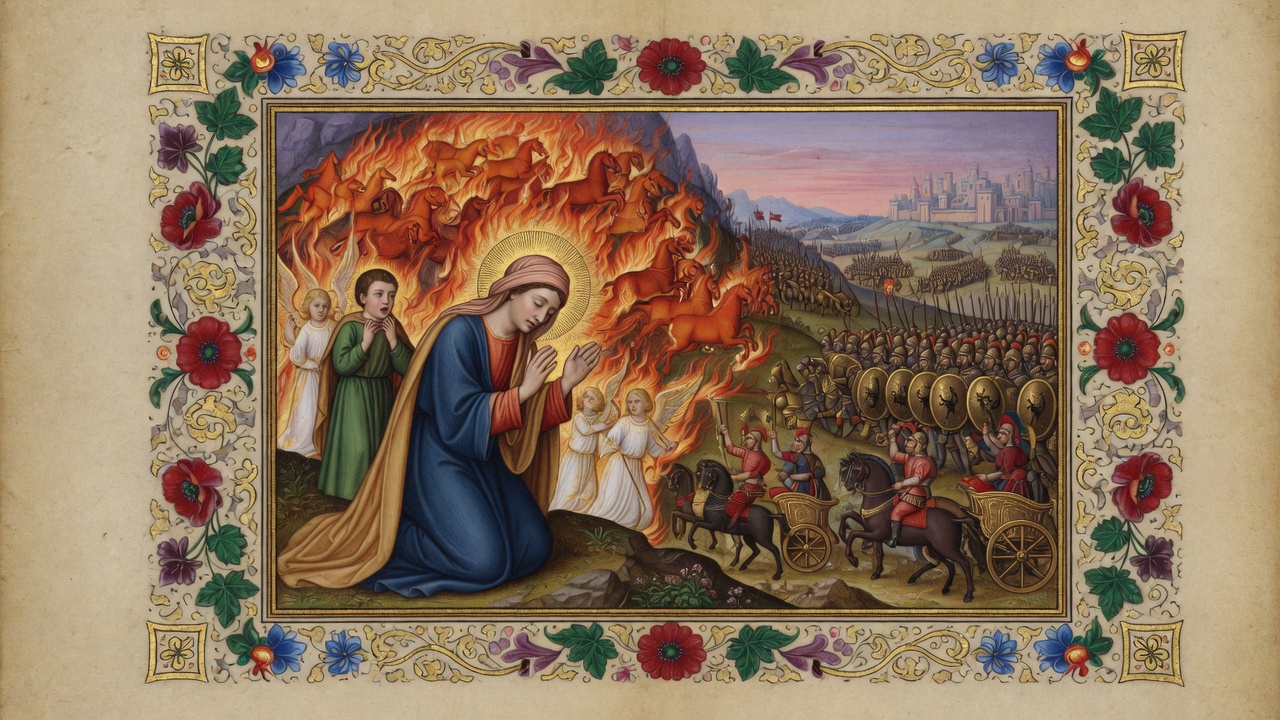
Surrounded by an enemy army, Elisha prayed not for rescue but for sight: 'Open his eyes, that he may see' - and the mountain was full of chariots of fire.
Surrounded at Dothan by the Syrian army sent to capture his master, Elisha's young servant cried out, 'Alas, my master! how shall we do?' Elisha's response was first a declaration - 'Fear not: for they that be with us are more than they that be with them' - and then one of Scripture's shortest and most consequential prayers: 'LORD, I pray thee, open his eyes, that he may see.' The LORD opened the young man's eyes, 'and, behold, the mountain was full of horses and chariots of fire round about Elisha.' Nothing about the situation changed; only the servant's sight did. The prayer has become the Bible's defining request for spiritual perception - the recognition that God's unseen protection is already present, and what the fearful need most is not rescue but vision.
Details
- Category
- Faith
- Prayed by
- Elisha
Key Chapters
Key Passages
The Mountain Full of Fire
2 Kings 6:15-17
Elisha asks for nothing to change except his servant's eyes - the armies of fire were already there before the prayer was prayed.
 15nd when the servant of the man of God was risen early, and gone forth, behold, an host compassed the city both with horses and chariots. And his servant said unto him, Alas, my master! how shall we do?
Did You Know?
The prayer contains no request for rescue, protection, or victory - only for sight; the chariots of fire were already on the mountain before Elisha said a word.
Elisha prays twice in this one scene with opposite requests - eyes opened for his servant, eyes blinded for an army - the Bible's clearest case of prayer directing perception itself.
'They that be with us are more than they that be with them' has comforted besieged believers for millennia - spoken when the visible count was two against an army.