Jesus's Prayer at Lazarus's Tomb
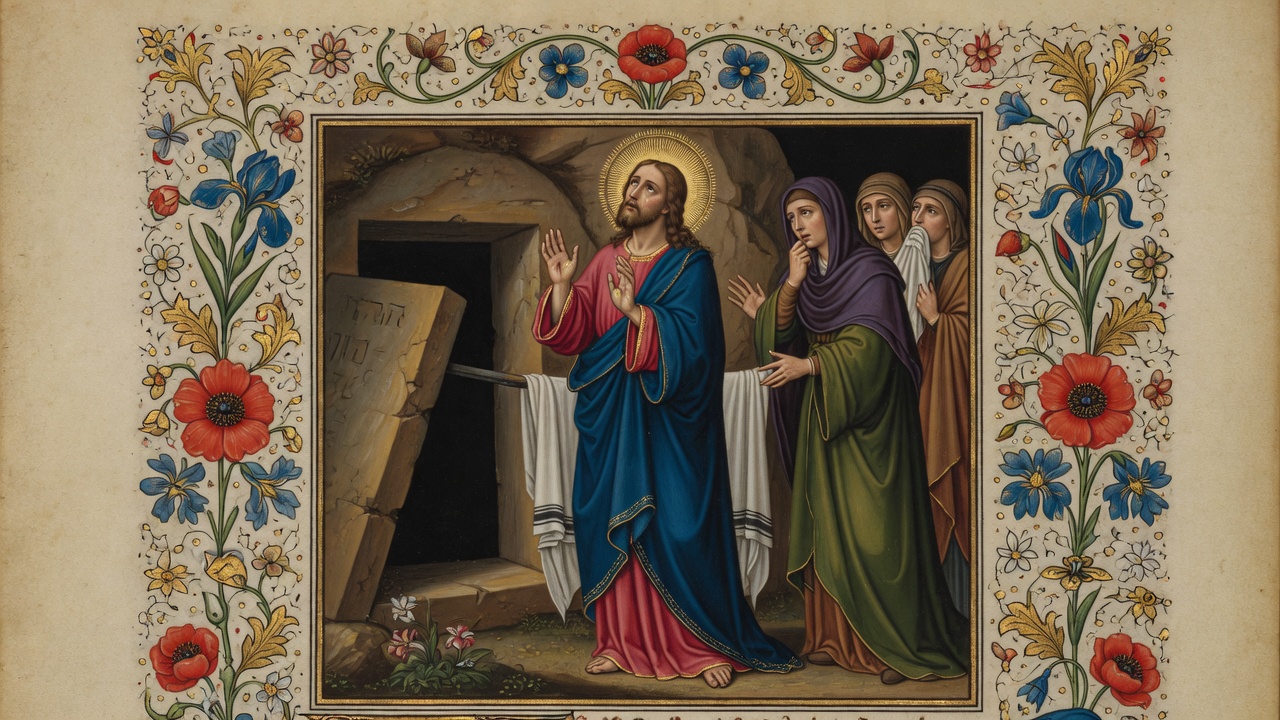
Before the stone-cold tomb, Jesus gave thanks as if the answer had already come - then called the dead man out by name.
Standing before the opened tomb of his friend - having already wept, and with Martha warning about the four-day smell - Jesus lifted up his eyes and prayed a thanksgiving before the miracle happened: 'Father, I thank thee that thou hast heard me. And I knew that thou hearest me always: but because of the people which stand by I said it, that they may believe that thou hast sent me.' It is prayer with the tense reversed - gratitude spoken in advance, from a settled confidence that the Father always hears. Jesus then cried with a loud voice, 'Lazarus, come forth,' and the dead man came out bound in graveclothes. The prayer reveals the inner life behind Jesus's miracles: not incantation summoning power, but unbroken communion overheard aloud for the crowd's sake.
Details
- Category
- Worship & Praise
- Prayed by
- Jesus
Key Chapters
Key Passages
"I Thank Thee That Thou Hast Heard Me"
John 11:41-44
Thanksgiving offered before the answer appears - Jesus prays from certainty, then lets the crowd overhear the communion that never stopped.
 41hen they took away the stone from the place where the dead was laid. And Jesus lifted up his eyes, and said, Father, I thank thee that thou hast heard me.
Did You Know?
Jesus gives thanks in the past tense - 'thou hast heard me' - before Lazarus emerges; the only prayer in Scripture where gratitude precedes the miracle it acknowledges.
Jesus states he prayed aloud purely 'because of the people which stand by' - a rare glimpse of the difference between his unbroken communion and his public speech.
The prayer sits two verses after 'Jesus wept' - thanksgiving and grief occupy the same scene, from the same heart, at the same tomb.