Destruction of the Second Temple
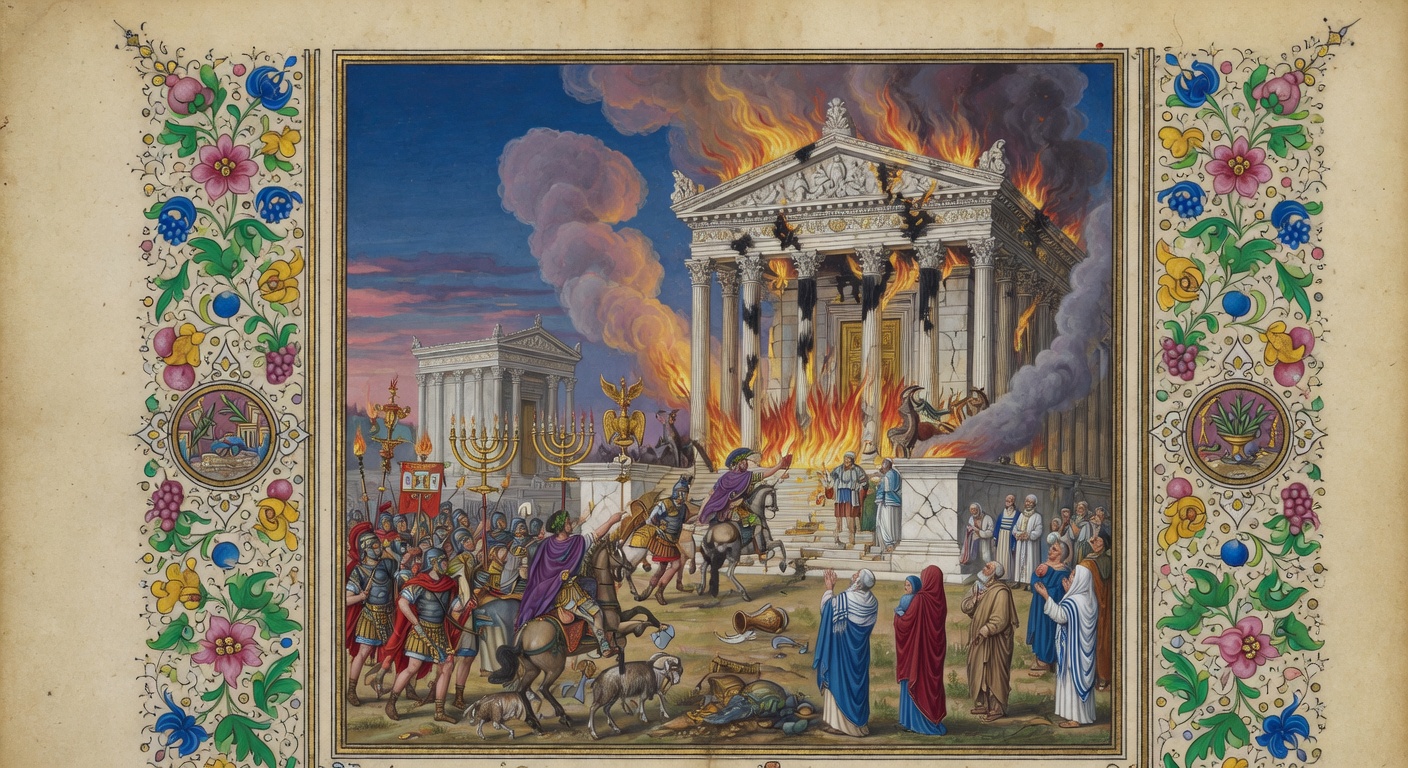
In 70 AD, Roman legions did exactly what Jesus had predicted. Not one stone was left upon another.
In 70 AD, amid the First Jewish-Roman War, Roman legions under the command of Titus besieged Jerusalem, breached its defenses, and set fire to the Second Temple, reducing the structure to ruins and slaughtering or scattering much of the population. This event permanently ended the daily animal sacrifices and priestly rituals that had defined Jewish worship since the Temple's rebuilding under Zerubbabel and its later expansion by Herod the Great. Scripture highlights its significance through Jesus' prophecies in Matthew 24 and Luke 21, which foretold the Temple's destruction as a sign of coming judgment and the shift from the old covenant system to the new covenant centered on Christ's once-for-all sacrifice. The loss also prompted the rise of rabbinic Judaism, redirecting religious life toward Torah study, prayer, and synagogues in the absence of a central sanctuary.
Did You Know?
This event permanently ended the daily animal sacrifices and priestly rituals that had defined Jewish worship since the Temple's rebuilding under Zerubbabel and its later expansion by Herod the Great.
The loss also prompted the rise of rabbinic Judaism, redirecting religious life toward Torah study, prayer, and synagogues in the absence of a central sanctuary..
This event is dated to approximately AD 70 in biblical chronology.
This took place at or near Jerusalem.
Key Passage
Destruction of the Second Temple
Matthew 24:1-2
 1nd Jesus went out, and departed from the temple: and his disciples came to him for to shew him the buildings of the temple.
Meanwhile in the World
The Roman Empire under Nero, Vespasian, and Domitian. Nero persecutes Christians (AD 64). Jerusalem and its temple are destroyed by Rome (AD 70). Pompeii is buried by Vesuvius (AD 79). The Colosseum is built. This is the era of the Pax Romana's later years and increasing imperial cult pressure.
Destruction of the Second Temple (70 AD), rise of rabbinic Judaism