Fall of Jerusalem
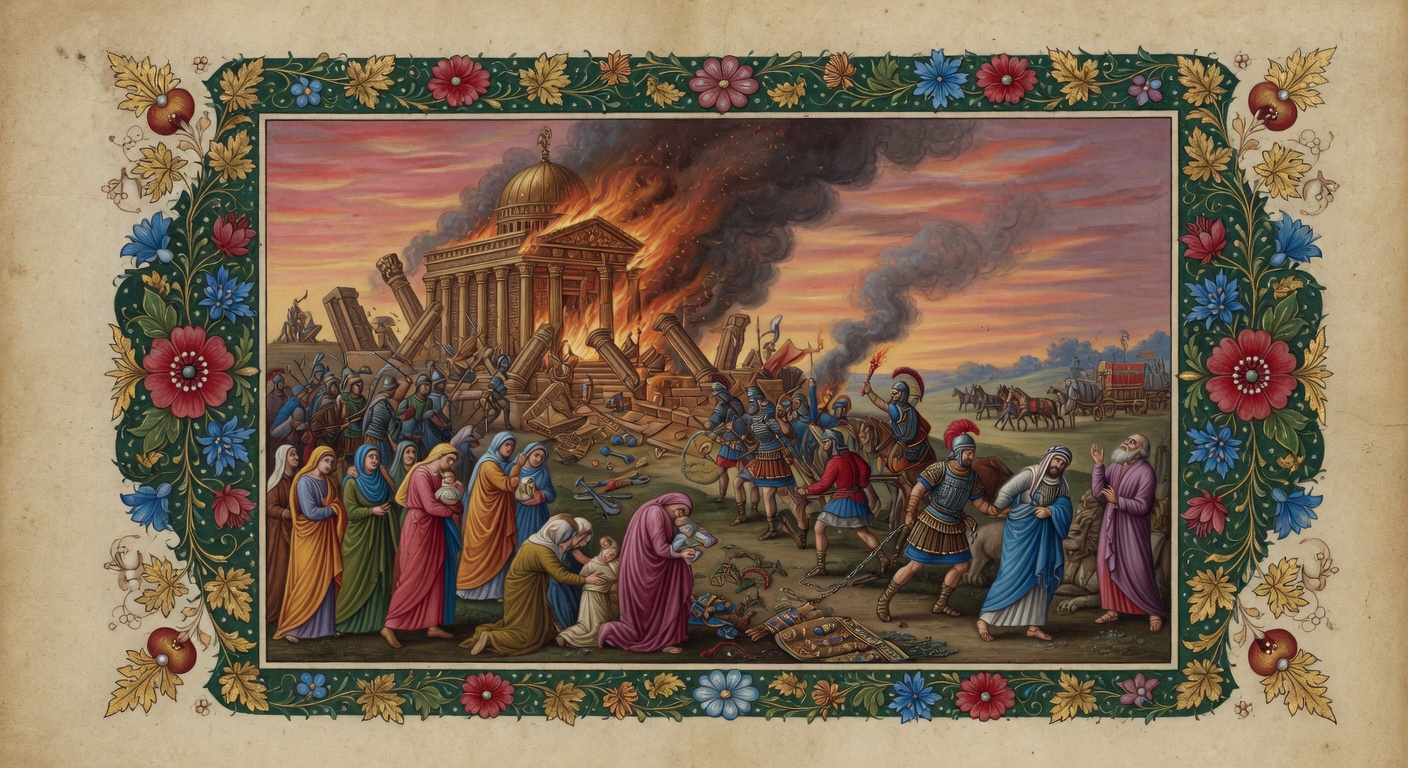
The unthinkable happened. The city of God fell. The temple burned. And Judah went into exile.
The Fall of Jerusalem occurred in 586 BCE when Babylonian forces under Nebuchadnezzar II besieged the city, destroyed Solomon's Temple, and burned much of Jerusalem after King Zedekiah's rebellion. This catastrophe ended the southern Kingdom of Judah and led to the exile of its leading citizens to Babylon, fulfilling repeated warnings from prophets like Jeremiah about divine judgment for covenant unfaithfulness and idolatry. In Scripture the event is presented as a pivotal act of God's justice that dismantled the Davidic monarchy and temple-centered worship, yet it also set the stage for themes of repentance, hope, and promised restoration developed in books such as Ezekiel, Lamentations, and later Ezra-Nehemiah.
Did You Know?
This catastrophe ended the southern Kingdom of Judah and led to the exile of its leading citizens to Babylon, fulfilling repeated warnings from prophets like Jeremiah about divine judgment for covenant unfaithfulness and idolatry.
This event is dated to approximately 586 BC in biblical chronology.
This took place at or near Jerusalem and Babylon.
Key Passage
Fall of Jerusalem
2 Kings 25:1-12
 1nd it came to pass in the ninth year of his reign, in the tenth month, in the tenth day of the month, that Nebuchadnezzar king of Babylon came, he, and all his host, against Jerusalem, and pitched against it; and they built forts against it round about.
Meanwhile in the World
Babylon under Nebuchadnezzar conquers the known world, then falls to Persia under Cyrus the Great (539 BC). Greece enters its Classical period - Socrates, Plato, the Parthenon. Rome becomes a republic. The Persian Empire creates the Royal Road and standardized coinage.