
Isaiah's Suffering Servant
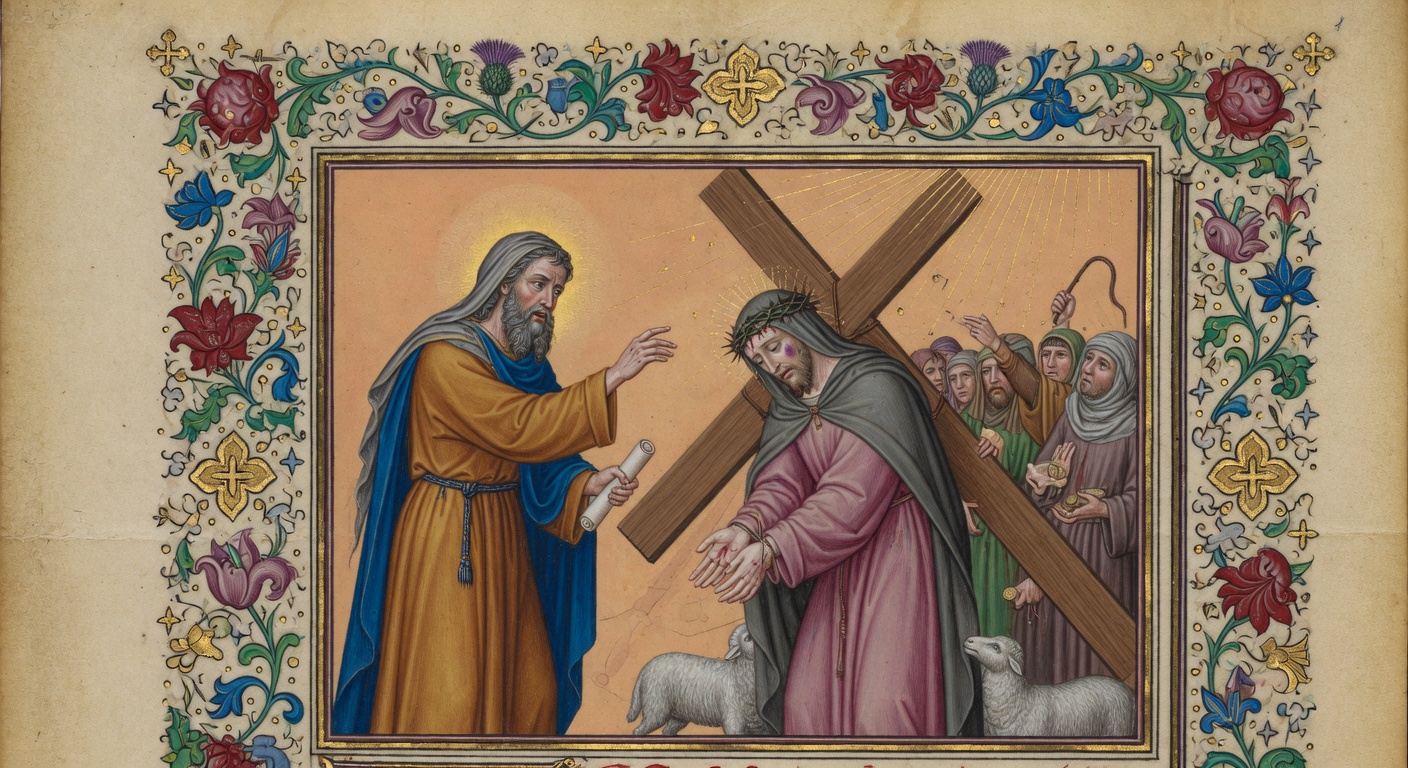
Illustration of Isaiah's Suffering Servant
Era
Divided Kingdom
Date
c. 700 BC โ‰ˆ Approximate
Reference
Isaiah 53:1-12

In the Book of Isaiah, particularly chapters 52 and 53, the prophet describes a figure known as the Suffering Servant who is despised, rejected, and subjected to unjust suffering and death despite his innocence. This servant voluntarily bears the sins and iniquities of many as a guilt offering, achieving justification and healing for transgressors through his wounds and sacrificial death. The passage highlights themes of substitutionary atonement central to biblical theology, portraying the servant's obedience as the means of redemption for others. Christians have long interpreted this prophecy as fulfilled in Jesus Christ, while Jewish traditions often view the servant as representing Israel or a righteous remnant.

0:00

Did You Know?

1

This servant voluntarily bears the sins and iniquities of many as a guilt offering, achieving justification and healing for transgressors through his wounds and sacrificial death.

2

The passage highlights themes of substitutionary atonement central to biblical theology, portraying the servant's obedience as the means of redemption for others.

3

This event is dated to approximately c. 700 BC in biblical chronology.

4

This took place at or near Jerusalem.

Key Passage

Isaiah's Suffering Servant

Isaiah 53:1-12
W1ho hath believed our report? and to whom is the arm of the LORD revealed?

2 For he shall grow up before him as a tender plant, and as a root out of a dry ground: he hath no form nor comeliness; and when we shall see him, there is no beauty that we should desire him. 3 He is despised and rejected of men; a man of sorrows, and acquainted with grief: and we hid as it were our faces from him; he was despised, and we esteemed him not. 4 Surely he hath borne our griefs, and carried our sorrows: yet we did esteem him stricken, smitten of God, and afflicted. 5 But he was wounded for our transgressions, he was bruised for our iniquities: the chastisement of our peace was upon him; and with his stripes we are healed. 6 All we like sheep have gone astray; we have turned every one to his own way; and the LORD hath laid on him the iniquity of us all. 7 He was oppressed, and he was afflicted, yet he opened not his mouth: he is brought as a lamb to the slaughter, and as a sheep before her shearers is dumb, so he openeth not his mouth. 8 He was taken from prison and from judgment: and who shall declare his generation? for he was cut off out of the land of the living: for the transgression of my people was he stricken. 9 And he made his grave with the wicked, and with the rich in his death; because he had done no violence, neither was any deceit in his mouth. 10 Yet it pleased the LORD to bruise him; he hath put him to grief: when thou shalt make his soul an offering for sin, he shall see his seed, he shall prolong his days, and the pleasure of the LORD shall prosper in his hand. 11 He shall see of the travail of his soul, and shall be satisfied: by his knowledge shall my righteous servant justify many; for he shall bear their iniquities. 12 Therefore will I divide him a portion with the great, and he shall divide the spoil with the strong; because he hath poured out his soul unto death: and he was numbered with the transgressors; and he bare the sin of many, and made intercession for the transgressors.

Read full chapter: Isaiah 53 โ†’

Meanwhile in the World

Assyria becomes the world's first great empire, conquering from Egypt to Persia. Greece emerges from its Dark Age - the Olympic Games begin (776 BC). Rome is founded (753 BC). Carthage is established. This is the height of Assyrian military power and the rise of Greek city-states.

When: c. 930 - 586 BC

Key Civilizations: Neo-Assyrian Empire, Archaic Greece