Paul in Corinth

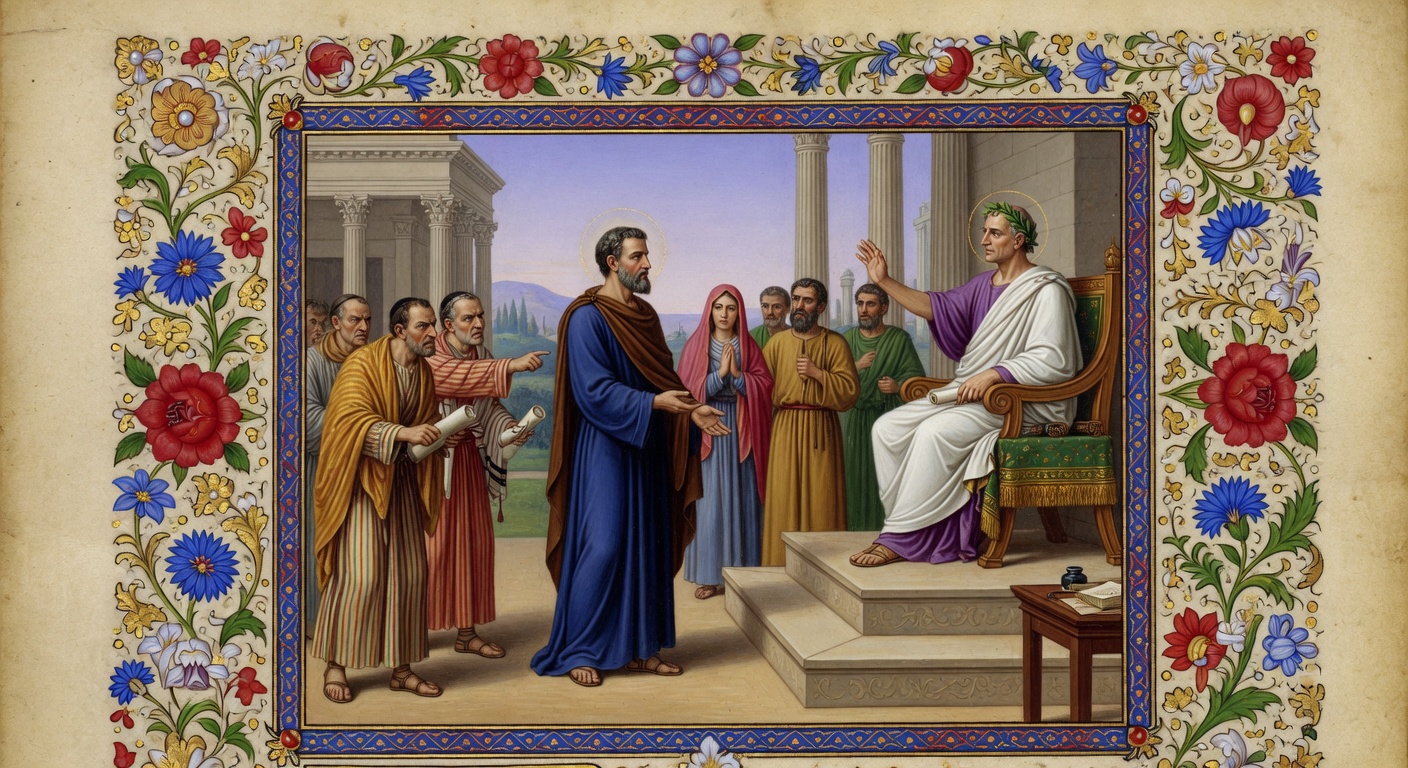
Illustration of Paul in Corinth
Era
Early Church
Date
AD 51-52 โœ“ Historically confirmed
Historical Source
Delphi Inscription dating Gallio's proconsulship to AD 51-52
Reference
Acts 18:1-17

During his second missionary journey, the apostle Paul arrived in the bustling city of Corinth and spent eighteen months teaching in the synagogue and a private home, establishing one of the earliest Christian communities in Greece amid a culturally diverse and morally challenging environment. Local Jewish leaders accused him of promoting unlawful religious practices and brought him before the Roman proconsul Gallio, who dismissed the case as an internal dispute rather than a criminal matter under imperial law. This event, recorded in Acts 18, provided an early legal precedent that Christianity was not inherently subversive, allowing Paul and other missionaries greater freedom to continue their work without immediate Roman interference. The Corinthian church he founded later became the recipient of his canonical epistles addressing doctrine, morality, and church order.

0:00

Did You Know?

1

This event, recorded in Acts 18, provided an early legal precedent that Christianity was not inherently subversive, allowing Paul and other missionaries greater freedom to continue their work without immediate Roman interference.

2

The Corinthian church he founded later became the recipient of his canonical epistles addressing doctrine, morality, and church order..

3

This event is dated to approximately AD 51-52 in biblical chronology.

4

This took place at or near Corinth.

Key Passage

Paul in Corinth

Acts 18:1-17
A1fter these things Paul departed from Athens, and came to Corinth;

2 And found a certain Jew named Aquila, born in Pontus, lately come from Italy, with his wife Priscilla; (because that Claudius had commanded all Jews to depart from Rome:) and came unto them. 3 And because he was of the same craft, he abode with them, and wrought: for by their occupation they were tentmakers. 4 And he reasoned in the synagogue every sabbath, and persuaded the Jews and the Greeks. 5 And when Silas and Timotheus were come from Macedonia, Paul was pressed in the spirit, and testified to the Jews that Jesus was Christ. 6 And when they opposed themselves, and blasphemed, he shook his raiment, and said unto them, Your blood be upon your own heads; I am clean: from henceforth I will go unto the Gentiles. 7 And he departed thence, and entered into a certain manโ€™s house, named Justus, one that worshipped God, whose house joined hard to the synagogue. 8 And Crispus, the chief ruler of the synagogue, believed on the Lord with all his house; and many of the Corinthians hearing believed, and were baptized. 9 Then spake the Lord to Paul in the night by a vision, Be not afraid, but speak, and hold not thy peace: 10 For I am with thee, and no man shall set on thee to hurt thee: for I have much people in this city. 11 And he continued there a year and six months, teaching the word of God among them. 12 And when Gallio was the deputy of Achaia, the Jews made insurrection with one accord against Paul, and brought him to the judgment seat, 13 Saying, This fellow persuadeth men to worship God contrary to the law. 14 And when Paul was now about to open his mouth, Gallio said unto the Jews, If it were a matter of wrong or wicked lewdness, O ye Jews, reason would that I should bear with you: 15 But if it be a question of words and names, and of your law, look ye to it; for I will be no judge of such matters. 16 And he drave them from the judgment seat. 17 Then all the Greeks took Sosthenes, the chief ruler of the synagogue, and beat him before the judgment seat. And Gallio cared for none of those things.

Read full chapter: Acts 18 โ†’

Meanwhile in the World

The Roman Empire under Nero, Vespasian, and Domitian. Nero persecutes Christians (AD 64). Jerusalem and its temple are destroyed by Rome (AD 70). Pompeii is buried by Vesuvius (AD 79). The Colosseum is built. This is the era of the Pax Romana's later years and increasing imperial cult pressure.

When: c. AD 30 - 100

Key Civilizations: Roman Empire (Flavian dynasty)

Biblical Parallels: Acts 1-28

Destruction of the Second Temple (70 AD), rise of rabbinic Judaism