Paul's Missionary Journeys
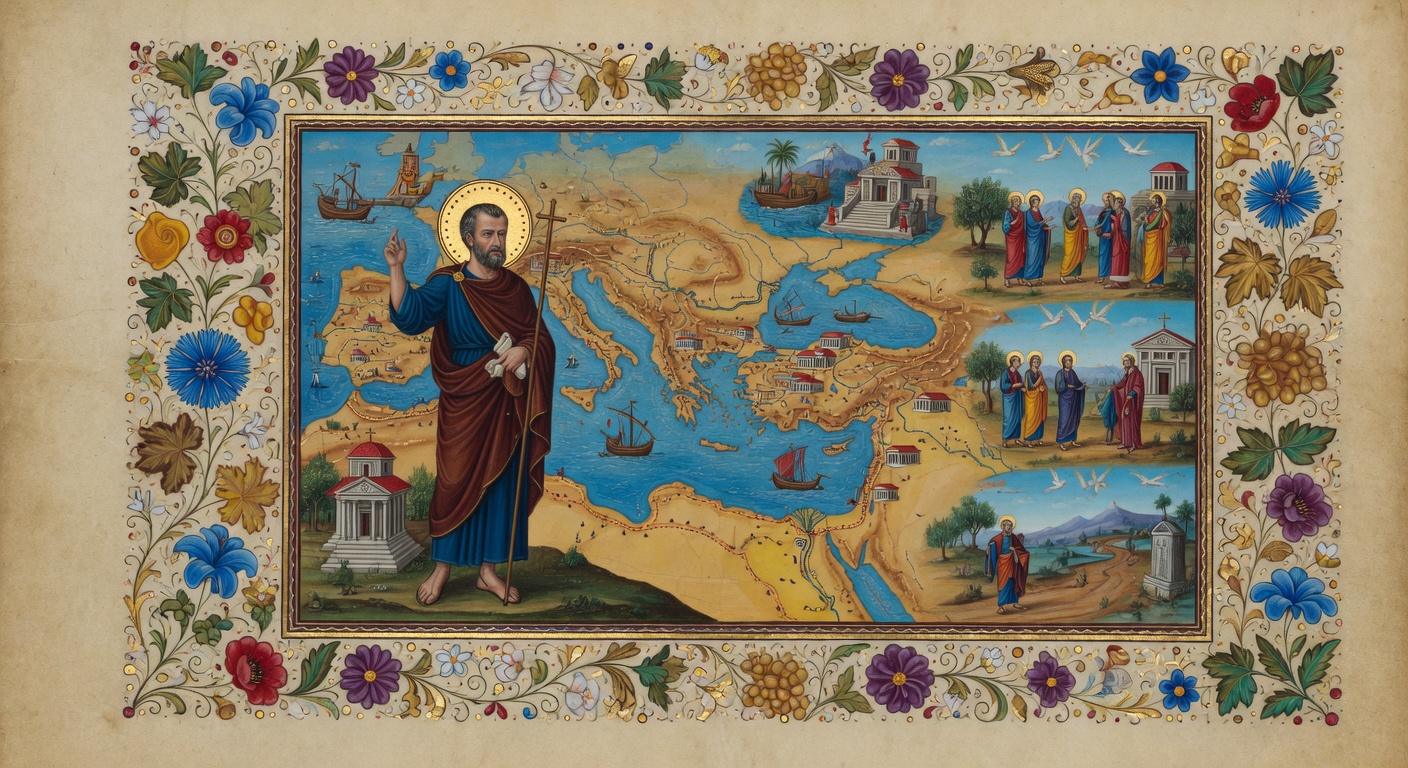
Paul and Barnabas set out to do something no one had attempted: take the gospel to the Gentile world.
Paul undertook three major missionary journeys throughout the Roman Empire in the mid-first century AD, traveling by land and sea to regions including Asia Minor, Macedonia, and Greece as recorded in the Book of Acts. During these travels he preached the gospel in synagogues and public forums, performed miracles, debated philosophers, and founded congregations in key cities such as Antioch, Corinth, and Ephesus while converting both Jews and Gentiles. These efforts fulfilled Jesus’ commission to take the message beyond Jerusalem and were essential for the rapid expansion of Christianity into the wider Greco-Roman world. The journeys also prompted many of Paul’s New Testament epistles, which provided theological instruction and pastoral guidance to the newly established churches.
Did You Know?
During these travels he preached the gospel in synagogues and public forums, performed miracles, debated philosophers, and founded congregations in key cities such as Antioch, Corinth, and Ephesus while converting both Jews and Gentiles.
These efforts fulfilled Jesus’ commission to take the message beyond Jerusalem and were essential for the rapid expansion of Christianity into the wider Greco-Roman world.
This event is dated to approximately c. AD 47-57 in biblical chronology.
Key figures involved: Paul, Barnabas, Silas, Timothy.
This took place at or near Antioch and Ephesus.
Key Passage
Paul's Missionary Journeys
Acts 13:1-12
 1ow there were in the church that was at Antioch certain prophets and teachers; as Barnabas, and Simeon that was called Niger, and Lucius of Cyrene, and Manaen, which had been brought up with Herod the tetrarch, and Saul.
Meanwhile in the World
The Roman Empire under Nero, Vespasian, and Domitian. Nero persecutes Christians (AD 64). Jerusalem and its temple are destroyed by Rome (AD 70). Pompeii is buried by Vesuvius (AD 79). The Colosseum is built. This is the era of the Pax Romana's later years and increasing imperial cult pressure.
Destruction of the Second Temple (70 AD), rise of rabbinic Judaism