Pentecost
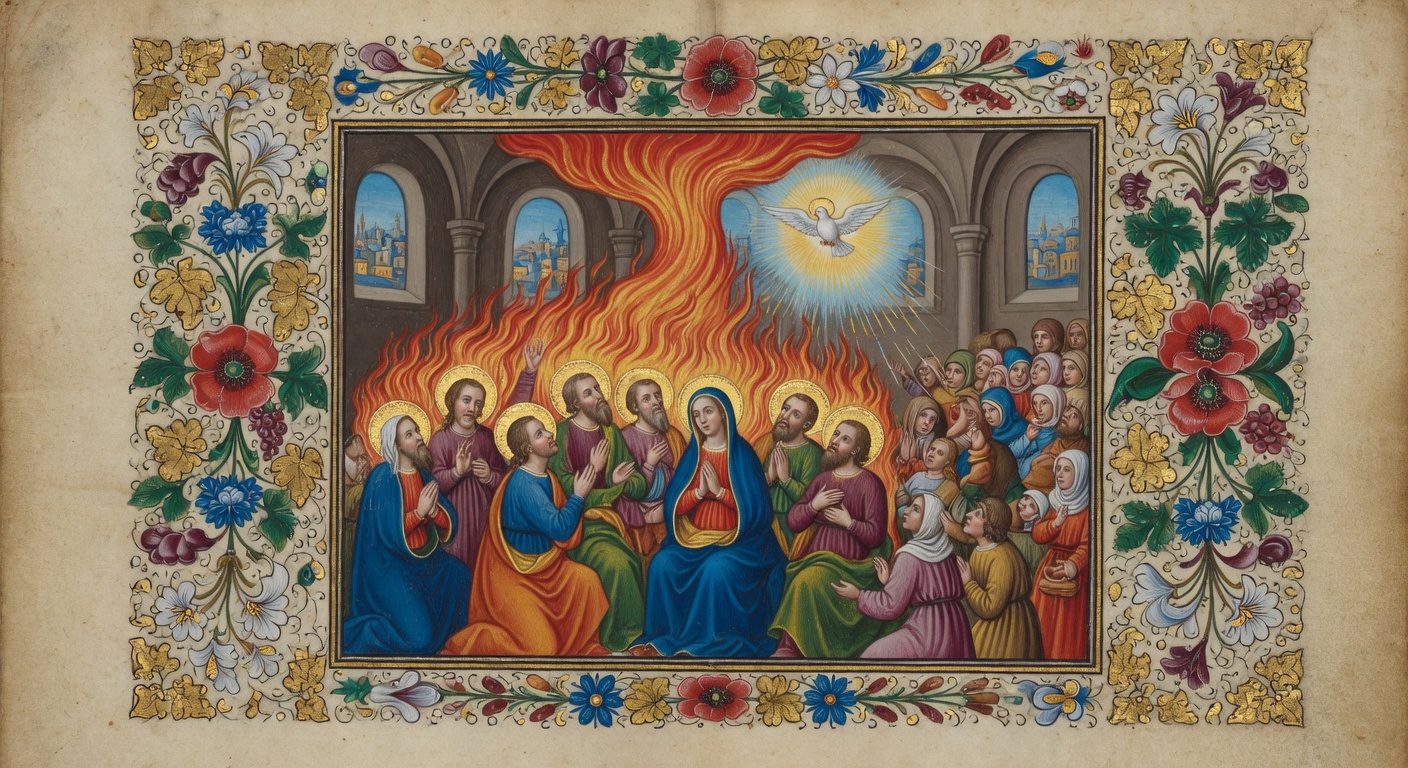
Wind. Fire. Languages no one had learned. The Holy Spirit arrived, and the church was born.
Pentecost occurred fifty days after Jesus' resurrection when the apostles were gathered in Jerusalem during the Jewish feast of Shavuot. The Holy Spirit descended upon them in a powerful display of wind and tongues of fire, enabling them to speak in various languages and proclaim the gospel boldly. This event resulted in Peter's sermon leading to the conversion and baptism of about three thousand people, marking the birth of the Christian church. It holds great significance in Scripture as the fulfillment of Jesus' promise to send the Holy Spirit and the Old Testament prophecies regarding the outpouring of God's Spirit on all people.
Did You Know?
The Holy Spirit descended upon them in a powerful display of wind and tongues of fire, enabling them to speak in various languages and proclaim the gospel boldly.
This event resulted in Peter's sermon leading to the conversion and baptism of about three thousand people, marking the birth of the Christian church.
This event is dated to approximately AD 30 or 33 in biblical chronology.
This took place at or near Jerusalem.
Key Passage
Pentecost
Acts 2:1-13
 1nd when the day of Pentecost was fully come, they were all with one accord in one place.
Meanwhile in the World
The Roman Empire under Nero, Vespasian, and Domitian. Nero persecutes Christians (AD 64). Jerusalem and its temple are destroyed by Rome (AD 70). Pompeii is buried by Vesuvius (AD 79). The Colosseum is built. This is the era of the Pax Romana's later years and increasing imperial cult pressure.
Destruction of the Second Temple (70 AD), rise of rabbinic Judaism