Return from Exile
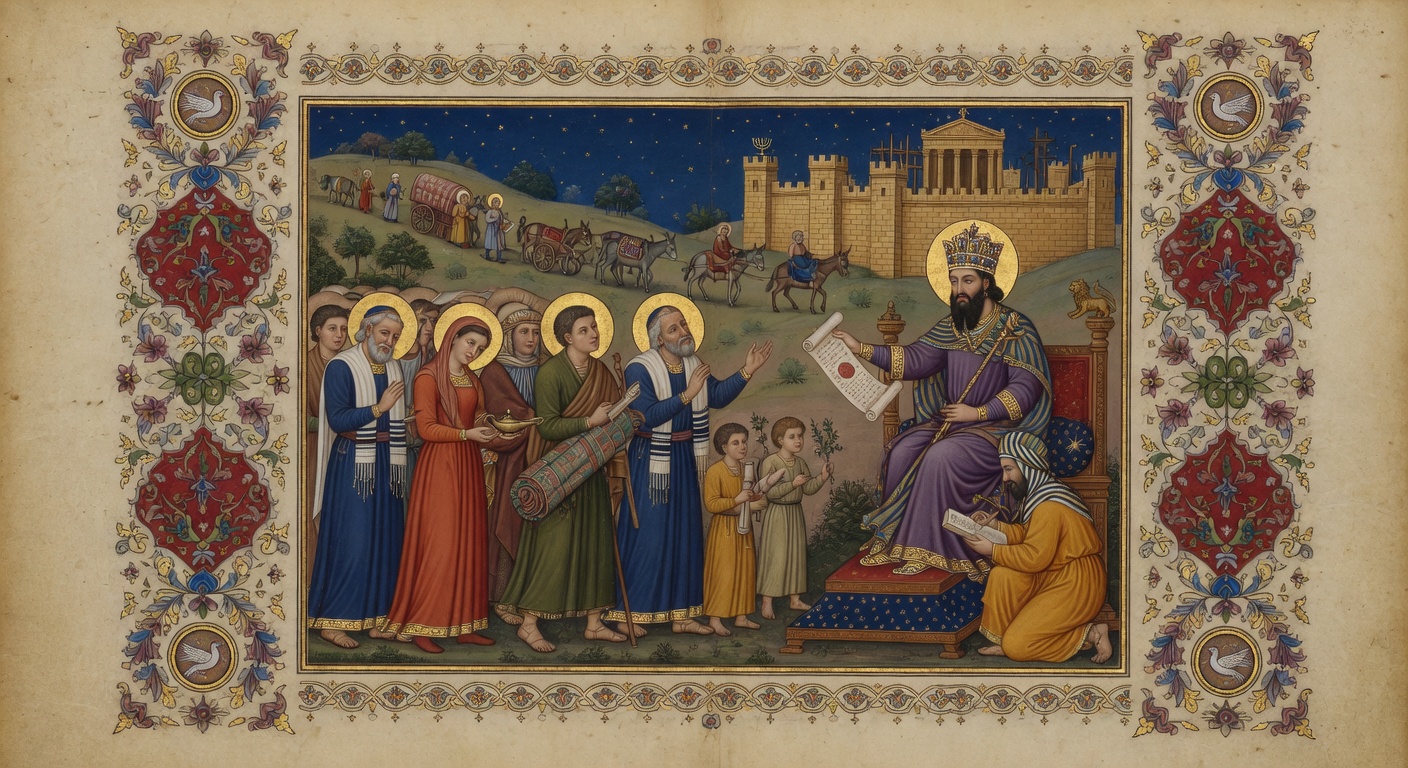
Against all odds, a remnant returned to rebuild. The exile was over, but the struggle was not.
Following the conquest of Babylon by the Persian Empire, King Cyrus issued a decree in 538 BC permitting the exiled Jews to return to their homeland in Jerusalem and reconstruct the temple that had been destroyed by the Babylonians. This event marked the end of the Babylonian captivity, which had lasted approximately seventy years as prophesied by Jeremiah, allowing a remnant of the Jewish people to resettle in Judah. The return facilitated the rebuilding of the Second Temple, completed under Zerubbabel, restoring central worship practices and symbolizing God's faithfulness to His covenant promises. In Scripture, this period underscores themes of restoration, divine sovereignty over nations, and the continuation of Israel's story leading into the post-exilic books like Ezra and Nehemiah.
Did You Know?
This event marked the end of the Babylonian captivity, which had lasted approximately seventy years as prophesied by Jeremiah, allowing a remnant of the Jewish people to resettle in Judah.
The return facilitated the rebuilding of the Second Temple, completed under Zerubbabel, restoring central worship practices and symbolizing God's faithfulness to His covenant promises.
This event is dated to approximately 538 BC in biblical chronology.
This took place at or near Jerusalem and Babylon.
Key Passage
Return from Exile
Ezra 1:1-11
 1ow in the first year of Cyrus king of Persia, that the word of the LORD by the mouth of Jeremiah might be fulfilled, the LORD stirred up the spirit of Cyrus king of Persia, that he made a proclamation throughout all his kingdom, and put it also in writing, saying,
Meanwhile in the World
Babylon under Nebuchadnezzar conquers the known world, then falls to Persia under Cyrus the Great (539 BC). Greece enters its Classical period - Socrates, Plato, the Parthenon. Rome becomes a republic. The Persian Empire creates the Royal Road and standardized coinage.