The Flood
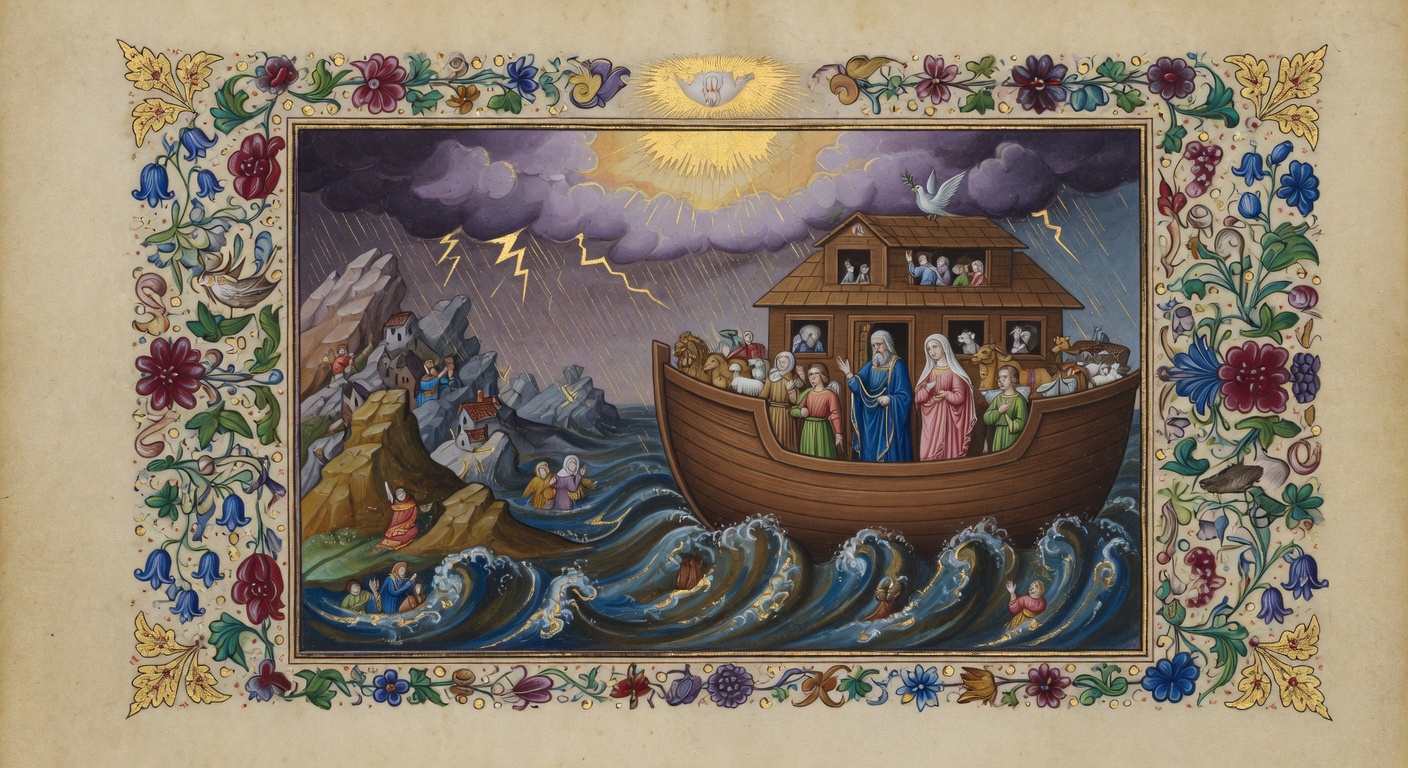
God looked at the world He had made and grieved. What followed was the most catastrophic judgment in history.
In the biblical account, widespread human wickedness and corruption prompted God to send a devastating flood as an act of divine judgment to cleanse the earth and renew creation. Noah, a righteous man, obeyed God's command to build an ark that preserved his family along with pairs of every animal species through the waters that covered the land for months. This event holds lasting significance in Scripture as it demonstrates themes of justice, mercy, and covenant, with God promising never again to destroy the earth by flood and establishing the rainbow as a lasting sign of that commitment.
Did You Know?
Noah, a righteous man, obeyed God's command to build an ark that preserved his family along with pairs of every animal species through the waters that covered the land for months.
This event holds lasting significance in Scripture as it demonstrates themes of justice, mercy, and covenant, with God promising never again to destroy the earth by flood and establishing the rainbow as a lasting sign of that commitment..
This event is dated to approximately c. 2400 BC in biblical chronology.
This took place at or near Mount Ararat.
Key Passage
The Flood
Genesis 7:1-24
 1nd the LORD said unto Noah, Come thou and all thy house into the ark; for thee have I seen righteous before me in this generation.
Meanwhile in the World
The earliest civilizations are emerging in Mesopotamia (Sumer) and Egypt. Writing has not yet been invented. Humans are transitioning from nomadic to agricultural life. The Sumerian King List and early Egyptian dynasties provide the first historical records.