Triumphal Entry
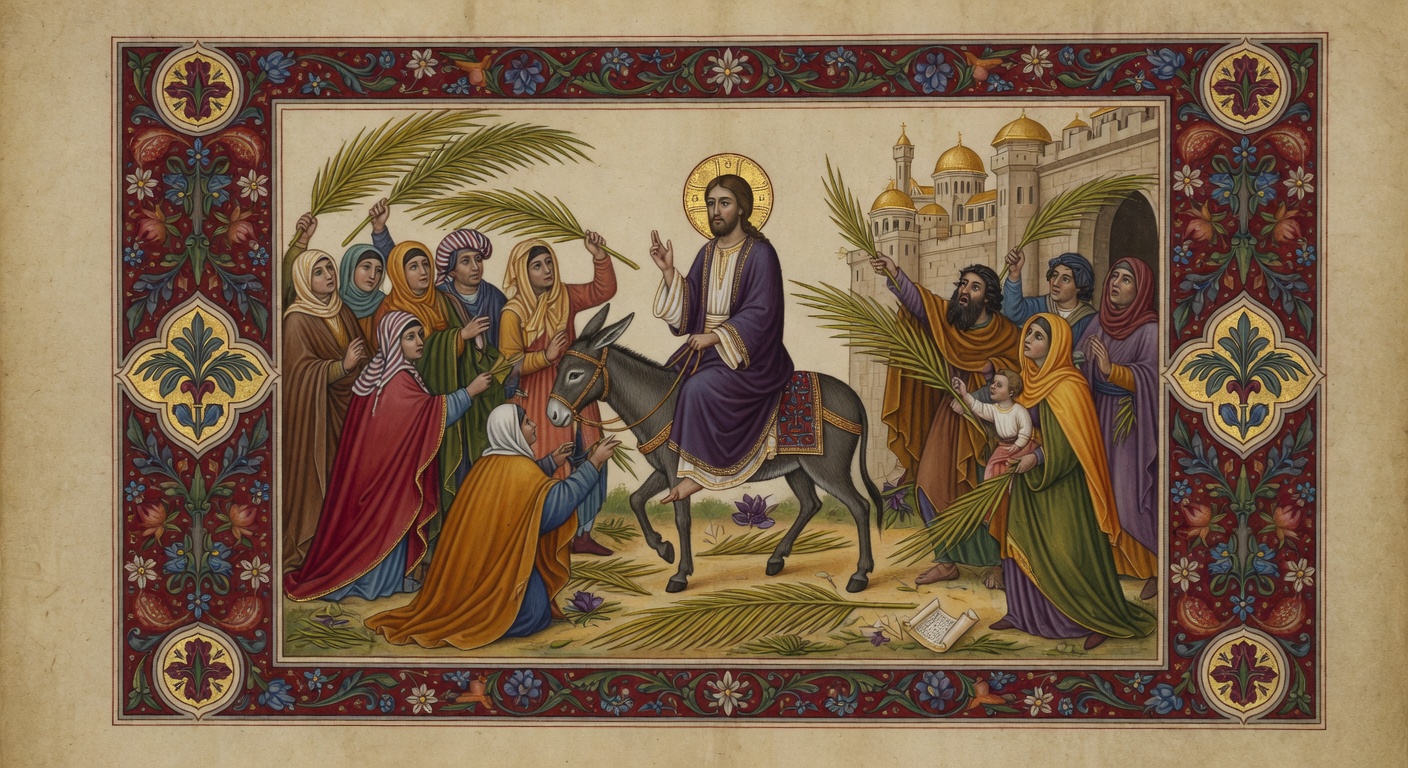
He rode into Jerusalem on a donkey, fulfilling a prophecy spoken five hundred years earlier. The crowds cheered. Within days, they would demand His death.
The Triumphal Entry marks the occasion when Jesus rode into Jerusalem on a donkey while crowds spread palm branches and their cloaks on the road, shouting praises and declaring him the Son of David. This event fulfilled the prophecy in Zechariah 9:9, which foretold that the king would come to Zion riding on a donkey, symbolizing peace rather than conquest. It holds significance as the public declaration of Jesus' messianic identity at the start of Holy Week, setting the stage for the events leading to his crucifixion and resurrection. In Scripture, this moment highlights the tension between the people's expectations of a political savior and Jesus' mission of spiritual redemption.
Did You Know?
This event fulfilled the prophecy in Zechariah 9:9, which foretold that the king would come to Zion riding on a donkey, symbolizing peace rather than conquest.
It holds significance as the public declaration of Jesus' messianic identity at the start of Holy Week, setting the stage for the events leading to his crucifixion and resurrection.
This event is dated to approximately c. AD 30 in biblical chronology.
This took place at or near Jerusalem.
Key Passage
Triumphal Entry
Matthew 21:1-11
 1nd when they drew nigh unto Jerusalem, and were come to Bethphage, unto the mount of Olives, then sent Jesus two disciples,
Meanwhile in the World
The Roman Empire is at its peak under Augustus and Tiberius (Pax Romana). Rome controls the entire Mediterranean world. Roads, common language (Greek), and peace make travel and communication easy - the 'fullness of time.' Herod the Great rules Judea as a client king.