Ecclesiastes 11 KJV
Cast Your Bread Upon the Waters
Cast Your Bread Upon the Waters
The chapter's opening metaphor likely evokes ancient Nile Valley sowing practices, where grain scattered on receding floodwaters would germinate unseen, symbolizing radical trust in divine provision rather than visible results.
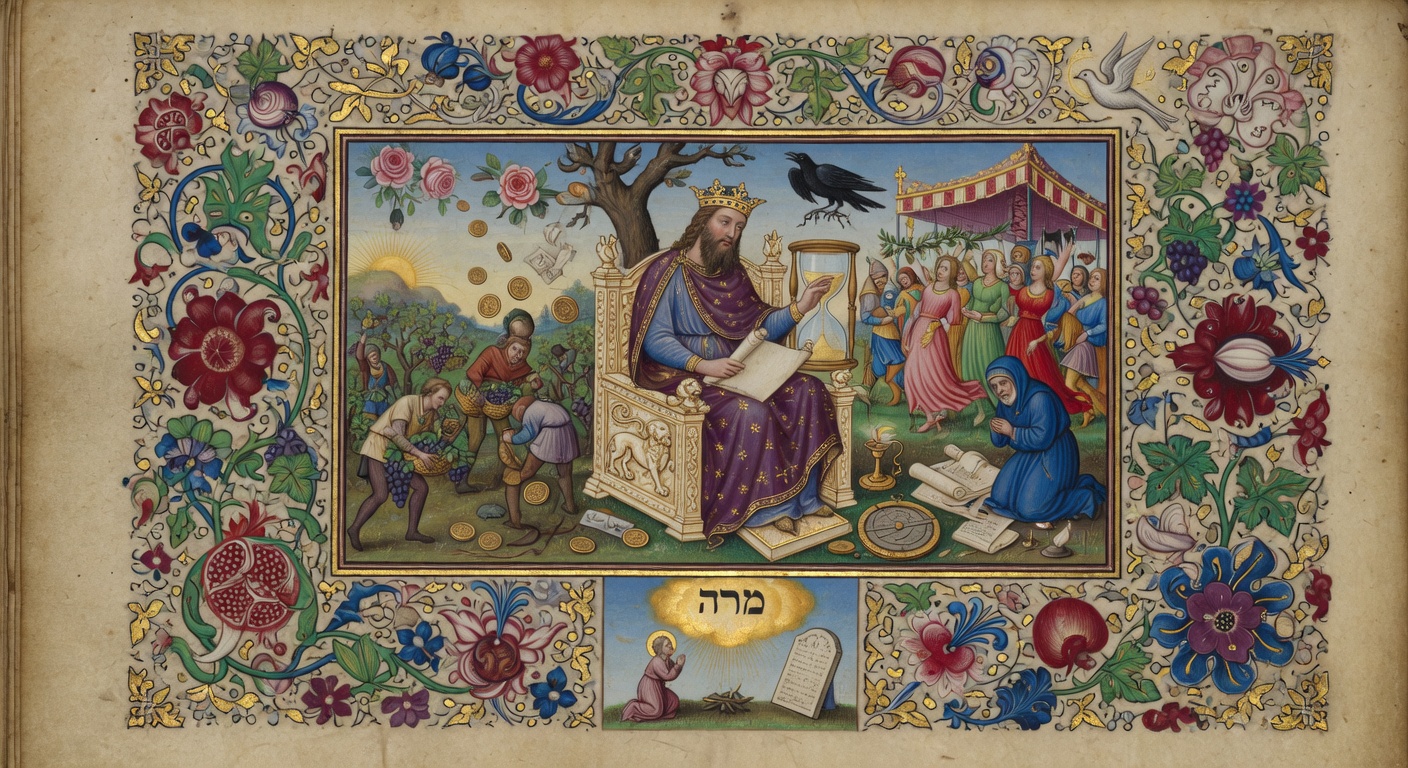
 1ast thy bread upon the waters: for thou shalt find it after many days.
2 Give a portion to seven, and also to eight; for thou knowest not what evil shall be upon the earth.
3 If the clouds be full of rain, they empty themselves upon the earth: and if the tree fall toward the south, or toward the north, in the place where the tree falleth, there it shall be.
4 He that observeth the wind shall not sow; and he that regardeth the clouds shall not reap.
5 As thou knowest not what is the way of the spirit, nor how the bones do grow in the womb of her that is with child: even so thou knowest not the works of God who maketh all.
6 In the morning sow thy seed, and in the evening withhold not thine hand: for thou knowest not whether shall prosper, either this or that, or whether they both shall be alike good.
7 Truly the light is sweet, and a pleasant thing it is for the eyes to behold the sun:
8 But if a man live many years, and rejoice in them all; yet let him remember the days of darkness; for they shall be many. All that cometh is vanity.
9 Rejoice, O young man, in thy youth; and let thy heart cheer thee in the days of thy youth, and walk in the ways of thine heart, and in the sight of thine eyes: but know thou, that for all these things God will bring thee into judgment.
10 Therefore remove sorrow from thy heart, and put away evil from thy flesh: for childhood and youth are vanity.
← → arrow keys to navigate chapters · spacebar to play/pause audio
Did You Know?
The chapter's opening metaphor likely evokes ancient Nile Valley sowing practices, where grain scattered on receding floodwaters would germinate unseen, symbolizing radical trust in divine provision rather than visible results.
Verse 5's embryological reference to bones forming in the womb echoes a shared ancient Near Eastern wisdom motif also found in Job 10:11, but here functions to equate human ignorance of prenatal development with ignorance of God's broader works.
The commercial imagery of casting bread on waters (v.1) and dividing portions among seven or eight (v.2) may reflect post-exilic Jewish involvement in maritime trade routes under Persian or Hellenistic influence, framing generosity as economic risk-taking.
The cluster of 'thou knowest not' statements across verses 2, 5, and 6 creates a deliberate epistemological framework that justifies bold action precisely because human foresight is limited, inverting typical wisdom literature's emphasis on prudent calculation.
Verse 9's seemingly permissive command to 'walk in the ways of thine heart' is immediately qualified by impending divine judgment, establishing a theological tension between present enjoyment and future accountability that anticipates the book's final resolution in chapter 12.
Biblical tradition attributes 3,000 proverbs and 1,005 songs to Solomon, along with expertise in botany and zoology covering everything from cedar trees to hyssop and from livestock to birds, fish, and reptiles, yet only fragments survive in Proverbs, Ecclesiastes, and Song of Songs.
David purchased Araunah the Jebusite's threshing floor for fifty shekels of silver after the plague halted, establishing the exact site that later became the Temple Mount under Solomon.
Three major world religions consider Jerusalem a holy city.