Psalms 126 KJV
Restoring the Fortunes of Zion
About This Psalm
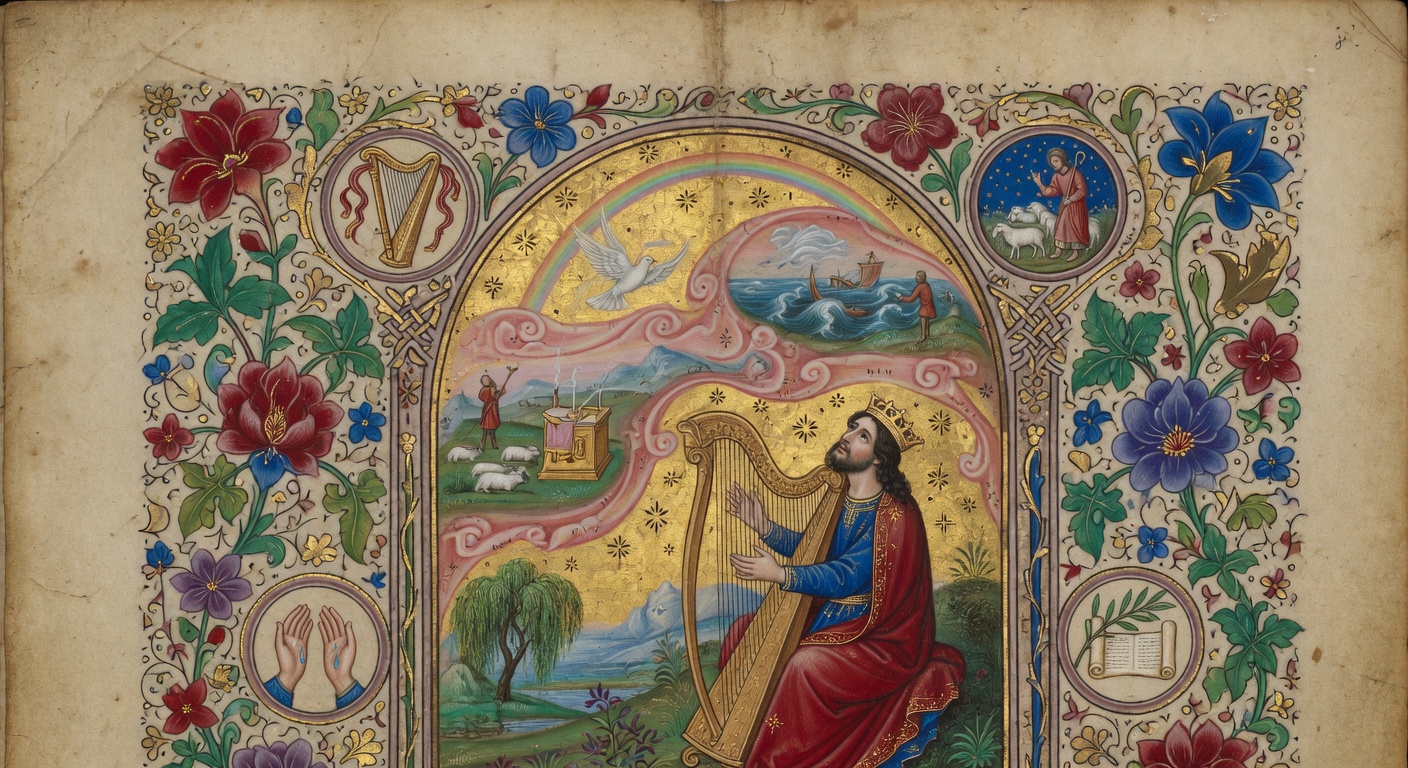
When the LORD restored our fortunes, we were like those who dream. Laughter and joy after a long season of tears.
 1hen the LORD turned again the captivity of Zion, we were like them that dream.
2 Then was our mouth filled with laughter, and our tongue with singing: then said they among the heathen, The LORD hath done great things for them.
3 The LORD hath done great things for us; whereof we are glad.
4 Turn again our captivity, O LORD, as the streams in the south.
5 They that sow in tears shall reap in joy.
6 He that goeth forth and weepeth, bearing precious seed, shall doubtless come again with rejoicing, bringing his sheaves with him.
← → arrow keys to navigate chapters · spacebar to play/pause audio
Did You Know?
The psalm's opening simile of deliverance 'as them that dream' captures the disorienting euphoria of Cyrus's decree, mirroring ancient reports of exiles who initially doubted their freedom was real rather than illusory.
Its petition for God to 'turn again our captivity as the streams in the south' draws on the sudden winter flash floods of the arid Negev, a phenomenon that could transform dry wadis overnight and thus served as a precise regional metaphor for abrupt divine reversal.
The agricultural image of sowing in tears and reaping in joy subtly echoes the Joseph narrative in Genesis, where prolonged sorrow yields unexpected abundance, linking personal and national stories of reversal within the Hebrew Bible's wider literary pattern.
Though often read as a completed thanksgiving for the 538 BC return, the imperative in verse 4 indicates the psalm was composed amid ongoing post-exilic struggles, voicing the gap between initial repatriation and the fuller restoration still awaited under later Persian rule.
As part of the Songs of Ascents, the psalm transforms a historical memory of exile's end into a pilgrimage song, allowing later worshippers ascending to Jerusalem to reenact the joy of return even centuries after the events described.
David purchased Araunah the Jebusite's threshing floor for fifty shekels of silver after the plague halted, establishing the exact site that later became the Temple Mount under Solomon.
Biblical tradition attributes 3,000 proverbs and 1,005 songs to Solomon, along with expertise in botany and zoology covering everything from cedar trees to hyssop and from livestock to birds, fish, and reptiles, yet only fragments survive in Proverbs, Ecclesiastes, and Song of Songs.
This location became the focal point of national worship and divine promises, later extending symbolically to encompass the Temple Mount where Solomon built the house of the Lord.
Jerusalem sits at about 2,500 feet elevation. Higher than most surrounding areas.
Commentary & Study Notes Jamieson-Fausset-Brown (1871) · Public Domain When the Lord, &c. — The joy of those returned from Babylon was ecstatic, and elicited the admiration even of the heathen, as illustrating God's great power and goodness. turne…
Classic verse-by-verse commentary on Psalms 126 from Jamieson, Fausset & Brown (1871). Covers: To praise for God's favor to his people is added a prayer for its continued manifestation.
- 1-3
- When the Lord, &c. — The joy of those returned from Babylon was ecstatic, and elicited the admiration even of the heathen, as illustrating God's great power and goodness. turned again the captivity — that is, restored from it (Job 39:12; Ps 14:7; Pr 12:14). HENGSTENBERG translates: "When the Lord turned Himself to the turning of Zion" (see Margin), God returns to His people when they return to Him (De 30:2, 3).
- 4
- All did not return at once; hence the prayer for repeated favors. as the streams in the south — or, the torrents in the desert south of Judea, dependent on rain (Jos 15:9), reappearing after dry seasons (compare Job 6:15; Ps 68:9). The point of comparison is joy at the reappearing of what has been so painfully missed.
Read all 4 notes on Psalms 126 →