Psalms 141 KJV
A Prayer for Purity
About This Psalm
Set a guard over my mouth. Don't let me be drawn into wickedness. A prayer for self-control.
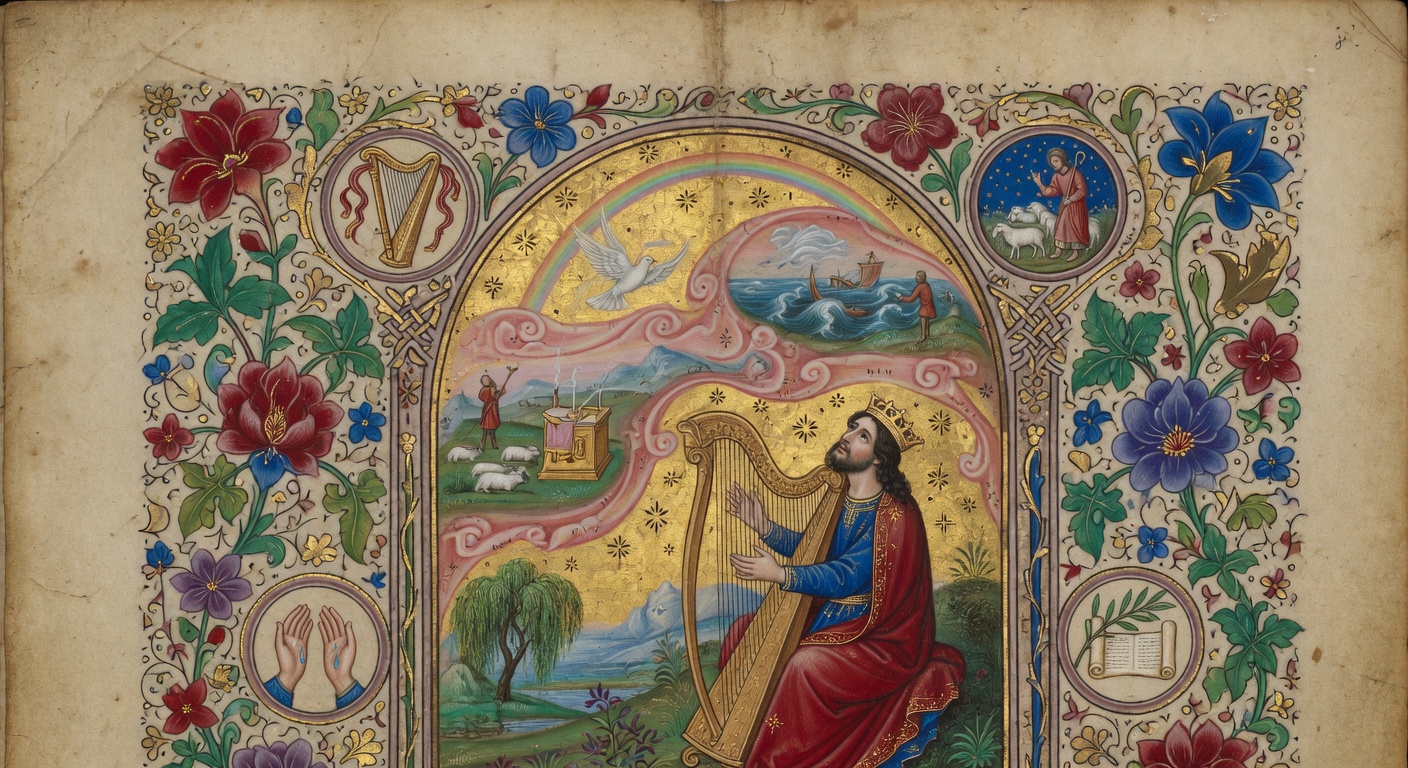
 1ord, I cry unto thee: make haste unto me; give ear unto my voice, when I cry unto thee.
2 Let my prayer be set forth before thee as incense; and the lifting up of my hands as the evening sacrifice.
3 Set a watch, O LORD, before my mouth; keep the door of my lips.
4 Incline not my heart to any evil thing, to practise wicked works with men that work iniquity: and let me not eat of their dainties.
5 Let the righteous smite me; it shall be a kindness: and let him reprove me; it shall be an excellent oil, which shall not break my head: for yet my prayer also shall be in their calamities.
6 When their judges are overthrown in stony places, they shall hear my words; for they are sweet.
7 Our bones are scattered at the grave’s mouth, as when one cutteth and cleaveth wood upon the earth.
8 But mine eyes are unto thee, O GOD the Lord: in thee is my trust; leave not my soul destitute.
9 Keep me from the snares which they have laid for me, and the gins of the workers of iniquity.
10 Let the wicked fall into their own nets, whilst that I withal escape.
← → arrow keys to navigate chapters · spacebar to play/pause audio
Did You Know?
The psalm's equation of prayer with incense and uplifted hands with the evening sacrifice (v. 2) reflects an early move toward spiritualizing temple ritual, allowing worship apart from physical sacrifice in times of exile or persecution.
Verse 5's willingness to receive smiting and reproof from the righteous rather than the oil of the wicked inverts ancient Near Eastern expectations of royal flattery, aligning instead with wisdom traditions that value corrective rebuke over prosperity from the unrighteous.
The unusual simile in verse 7 comparing scattered bones to wood being split and cleaved draws on agricultural imagery of threshing or chopping to evoke both the violence of martyrdom and the hope of resurrection-like reassembly.
Its closing plea that the wicked fall into their own nets (v. 10) subtly echoes hunting and fowling motifs from Canaanite literature while transforming them into a statement of divine poetic justice without direct calls for vengeance.
The petition to 'set a watch before my mouth' (v. 3) parallels Egyptian and Mesopotamian apotropaic incantations that guard speech against demonic influence, yet here redirects the protection inward as moral self-discipline under YHWH's oversight.
David purchased Araunah the Jebusite's threshing floor for fifty shekels of silver after the plague halted, establishing the exact site that later became the Temple Mount under Solomon.
Biblical tradition attributes 3,000 proverbs and 1,005 songs to Solomon, along with expertise in botany and zoology covering everything from cedar trees to hyssop and from livestock to birds, fish, and reptiles, yet only fragments survive in Proverbs, Ecclesiastes, and Song of Songs.
This location became the focal point of national worship and divine promises, later extending symbolically to encompass the Temple Mount where Solomon built the house of the Lord.
The city has been destroyed at least twice, besieged 23 times, and captured 44 times.
Commentary & Study Notes Jamieson-Fausset-Brown (1871) · Public Domain Verse-by-verse notes on Psalms 141 from the Jamieson-Fausset-Brown Commentary (1871), a classic public-domain work.
Verse-by-verse notes on Psalms 141 from the Jamieson-Fausset-Brown Commentary (1871), a classic public-domain work.