Psalms 142 KJV
A Prayer from a Cave
About This Psalm
Written in a cave - no one cares for my soul. When you feel completely alone and trapped, God is your refuge.
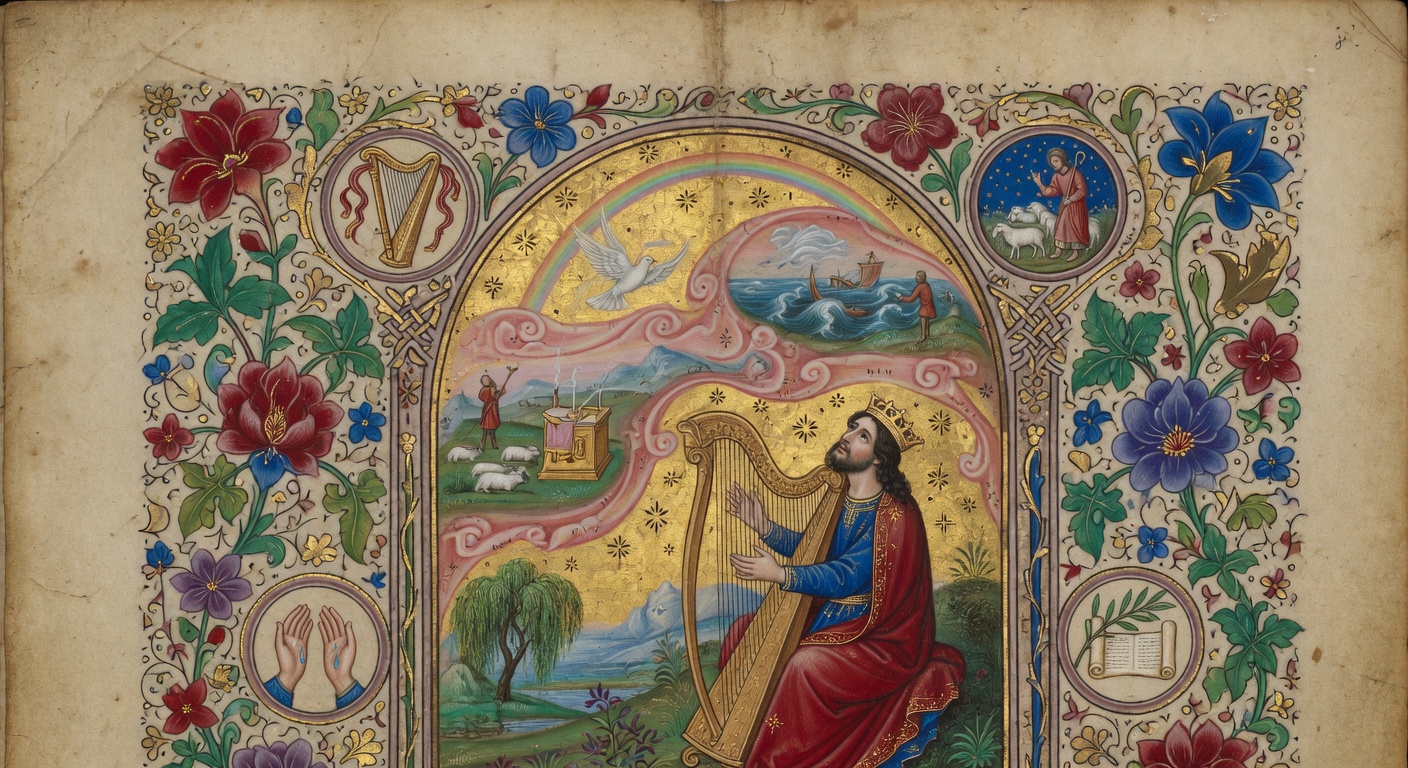
 1 cried unto the LORD with my voice; with my voice unto the LORD did I make my supplication.
2 I poured out my complaint before him; I shewed before him my trouble.
3 When my spirit was overwhelmed within me, then thou knewest my path. In the way wherein I walked have they privily laid a snare for me.
4 I looked on my right hand, and beheld, but there was no man that would know me: refuge failed me; no man cared for my soul.
5 I cried unto thee, O LORD: I said, Thou art my refuge and my portion in the land of the living.
6 Attend unto my cry; for I am brought very low: deliver me from my persecutors; for they are stronger than I.
7 Bring my soul out of prison, that I may praise thy name: the righteous shall compass me about; for thou shalt deal bountifully with me.
← → arrow keys to navigate chapters · spacebar to play/pause audio
Did You Know?
The superscription identifies this as a Maschil tied to David's cave refuge, linking it specifically to the period of Saul's pursuit rather than generic distress and underscoring its function as contemplative instruction on royal rejection.
Verse 5's assertion that the Lord is David's 'portion' in the land of the living echoes the Levitical inheritance language of Numbers 18, reframing the anointed king's survival as a priestly claim on God himself when earthly territory is lost.
The shift from solitary complaint in verse 4 to the vow of public praise 'in the congregation' in verse 7 anticipates the post-exilic emphasis on gathered worship as the arena where individual laments are resolved, bridging personal and corporate piety.
Use of the rare phrase 'my spirit was overwhelmed' (verse 3) parallels the identical wording in Psalm 77, creating an inter-psalm dialogue between David's cave experience and the Asaphite community's later reflection on national exile.
The closing petition that the righteous 'compass me about' reverses the isolation of verse 4 and subtly foreshadows the New Testament portrayal of the persecuted Messiah surrounded by a restored community of witnesses.
Jonathan sealed his covenant with David by giving him his royal robe, armor, sword, bow, and belt, ritually transferring symbols of kingship despite being Saul's heir.
Solomon's throne, overlaid with gold and ivory, featured six steps flanked by twelve lions symbolizing the tribes of Israel and incorporated a calf-shaped seat back, making it a unique artifact unmatched by any other royal throne of the era.
In the prophetic writings it stands as the center of God's redemptive plan, embodying covenant faithfulness and the expectation of a coming Messiah who would rule from Zion in justice and peace.
Jerusalem sits at about 2,500 feet elevation. Higher than most surrounding areas.
Commentary & Study Notes Jamieson-Fausset-Brown (1871) · Public Domain with my voice — audibly, because earnestly.
Classic verse-by-verse commentary on Psalms 142 from Jamieson, Fausset & Brown (1871). Covers: Maschil--(see on ps 32:1, title). When he was in the cave--either of adullam (1sa 22:1), or en-gedi (1sa 24:3). This does not mean that the psalm was composed in the cave, but that the precarious mode of life, of which his refuge in caves was a striking illustration, occasioned the complaint, which constitutes the first part of the psalm and furnishes the reason for the prayer with which it concludes, and which, as the prominent characteristic, gives its name.
- 1
- with my voice — audibly, because earnestly.
- 2
- (Compare Ps 62:8). I poured out my complaint — or, "a sad musing."
Read all 7 notes on Psalms 142 →