Psalms 31 KJV
A Prayer of Trust in God
Echoes & Connections 1 connections
About This Psalm
Into thy hands I commit my spirit - Jesus quoted this on the cross. Complete surrender to God when you've exhausted all other options.
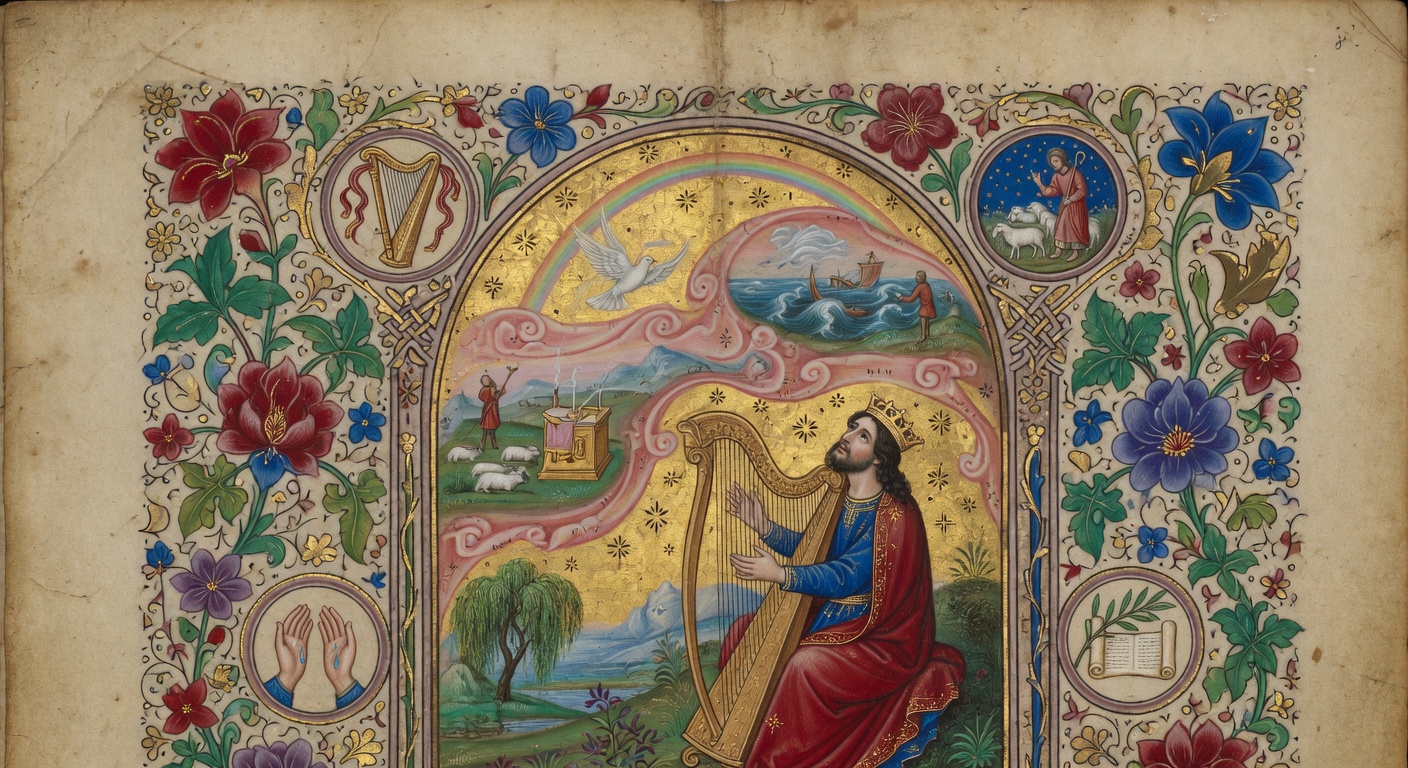
 1n thee, O LORD, do I put my trust; let me never be ashamed: deliver me in thy righteousness.
2 Bow down thine ear to me; deliver me speedily: be thou my strong rock, for an house of defence to save me.
3 For thou art my rock and my fortress; therefore for thy name’s sake lead me, and guide me.
4 Pull me out of the net that they have laid privily for me: for thou art my strength.
5 Into thine hand I commit my spirit: thou hast redeemed me, O LORD God of truth.
6 I have hated them that regard lying vanities: but I trust in the LORD.
7 I will be glad and rejoice in thy mercy: for thou hast considered my trouble; thou hast known my soul in adversities;
8 And hast not shut me up into the hand of the enemy: thou hast set my feet in a large room.
9 Have mercy upon me, O LORD, for I am in trouble: mine eye is consumed with grief, yea, my soul and my belly.
10 For my life is spent with grief, and my years with sighing: my strength faileth because of mine iniquity, and my bones are consumed.
11 I was a reproach among all mine enemies, but especially among my neighbours, and a fear to mine acquaintance: they that did see me without fled from me.
12 I am forgotten as a dead man out of mind: I am like a broken vessel.
13 For I have heard the slander of many: fear was on every side: while they took counsel together against me, they devised to take away my life.
14 But I trusted in thee, O LORD: I said, Thou art my God.
15 My times are in thy hand: deliver me from the hand of mine enemies, and from them that persecute me.
16 Make thy face to shine upon thy servant: save me for thy mercies’ sake.
17 Let me not be ashamed, O LORD; for I have called upon thee: let the wicked be ashamed, and let them be silent in the grave.
18 Let the lying lips be put to silence; which speak grievous things proudly and contemptuously against the righteous.
19 Oh how great is thy goodness, which thou hast laid up for them that fear thee; which thou hast wrought for them that trust in thee before the sons of men!
20 Thou shalt hide them in the secret of thy presence from the pride of man: thou shalt keep them secretly in a pavilion from the strife of tongues.
21 Blessed be the LORD: for he hath shewed me his marvellous kindness in a strong city.
22 For I said in my haste, I am cut off from before thine eyes: nevertheless thou heardest the voice of my supplications when I cried unto thee.
23 O love the LORD, all ye his saints: for the LORD preserveth the faithful, and plentifully rewardeth the proud doer.
24 Be of good courage, and he shall strengthen your heart, all ye that hope in the LORD.
← → arrow keys to navigate chapters · spacebar to play/pause audio
Did You Know?
Psalm 31:1-3 is reproduced almost verbatim as the opening of Psalm 71, indicating that later psalmists deliberately reused its language of refuge to extend the same prayer tradition into old age and ongoing threat.
Verse 5's phrase 'into thine hand I commit my spirit' appears in a context where the psalmist simultaneously protests innocence and confesses iniquity (v. 10), creating a theological tension between trust and penitence that Jesus' use on the cross intensifies rather than resolves.
The Hebrew root for 'rock' (tsur) in verse 3 is paired with 'fortress' (metsudah), a combination that recurs in David's historical narratives (1 Sam 23:29; 24:22) and may embed an autobiographical allusion to his literal cave hideouts.
Verses 11-13 describe the psalmist's reputation collapsing into public scorn and whispered plots, a social-death motif that parallels the suffering-servant imagery in Isaiah 53 more closely than most individual laments in the Psalter.
The final stanza (vv. 19-24) abruptly shifts to communal exhortation ('love the Lord, all ye his saints'), transforming a private cry into a public testimony and thereby modeling how personal deliverance becomes corporate instruction in the Psalter's redaction.
David purchased Araunah the Jebusite's threshing floor for fifty shekels of silver after the plague halted, establishing the exact site that later became the Temple Mount under Solomon.
Biblical tradition attributes 3,000 proverbs and 1,005 songs to Solomon, along with expertise in botany and zoology covering everything from cedar trees to hyssop and from livestock to birds, fish, and reptiles, yet only fragments survive in Proverbs, Ecclesiastes, and Song of Songs.
In the prophetic writings it stands as the center of God's redemptive plan, embodying covenant faithfulness and the expectation of a coming Messiah who would rule from Zion in justice and peace.
Three major world religions consider Jerusalem a holy city.
Commentary & Study Notes Jamieson-Fausset-Brown (1871) · Public Domain Expresses the general tone of feeling of the Psalm.
Classic verse-by-verse commentary on Psalms 31 from Jamieson, Fausset & Brown (1871). Covers: The prayer of a believer in time of deep distress. In the first part, cries for help are mingled with expressions of confidence. Then the detail of griefs engrosses his attention, till, in the assurance of strong but submissive faith, he rises to the language of unmingled joyful trust and exhorts others to like love and confidence towards God.
- 1
- Expresses the general tone of feeling of the Psalm.
- 2-4
- He seeks help in God's righteous government (Ps 5:8), and begs for an attentive hearing, and speedy and effectual aid. With no other help and no claim of merit, he relies solely on God's regard to His own perfections for a safe guidance and release from the snares of his enemies. On the terms "rock," &c., (compare Ps 17:2; 18:2, 50; 20:6; 23:3; 25:21).
Read all 17 notes on Psalms 31 →