Psalms 32 KJV
The Joy of Forgiveness
About This Psalm
The relief of confessing sin after trying to hide it. Unconfessed guilt is physically exhausting; forgiveness is like breathing again.
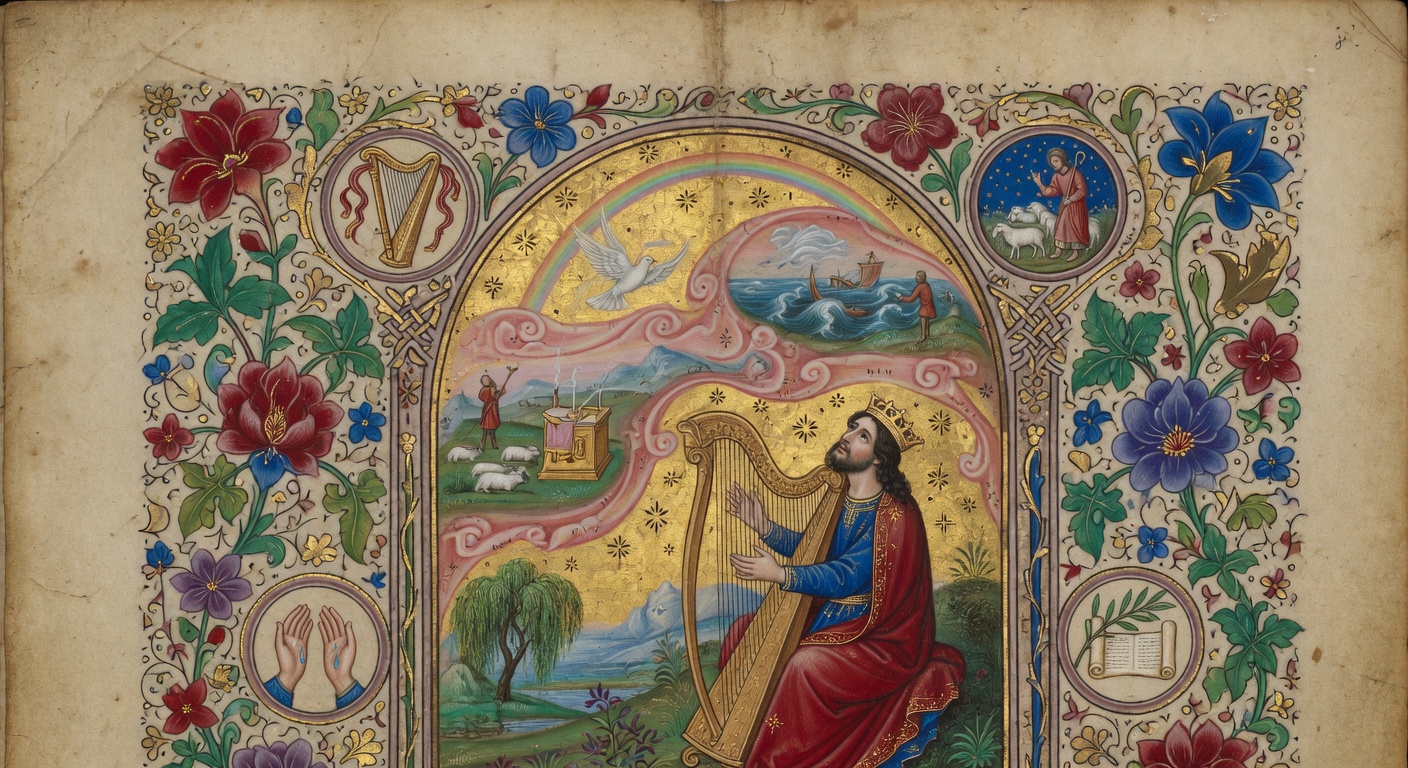
 1lessed is he whose transgression is forgiven, whose sin is covered.
2 Blessed is the man unto whom the LORD imputeth not iniquity, and in whose spirit there is no guile.
3 When I kept silence, my bones waxed old through my roaring all the day long.
4 For day and night thy hand was heavy upon me: my moisture is turned into the drought of summer. Selah.
5 I acknowledged my sin unto thee, and mine iniquity have I not hid. I said, I will confess my transgressions unto the LORD; and thou forgavest the iniquity of my sin. Selah.
6 For this shall every one that is godly pray unto thee in a time when thou mayest be found: surely in the floods of great waters they shall not come nigh unto him.
7 Thou art my hiding place; thou shalt preserve me from trouble; thou shalt compass me about with songs of deliverance. Selah.
8 I will instruct thee and teach thee in the way which thou shalt go: I will guide thee with mine eye.
9 Be ye not as the horse, or as the mule, which have no understanding: whose mouth must be held in with bit and bridle, lest they come near unto thee.
10 Many sorrows shall be to the wicked: but he that trusteth in the LORD, mercy shall compass him about.
11 Be glad in the LORD, and rejoice, ye righteous: and shout for joy, all ye that are upright in heart.
← → arrow keys to navigate chapters · spacebar to play/pause audio
Did You Know?
Psalm 32 is quoted by Paul in Romans 4:6-8 to argue that David describes the imputation of righteousness apart from works, making it a key Old Testament witness to justification by faith.
The superscription labels it a Maschil, a term denoting didactic wisdom, which the psalm itself enacts when God promises in verse 8 to 'instruct thee and teach thee in the way which thou shalt go.'
Its traditional linkage to David's Bathsheba affair (2 Samuel 11-12) supplies a concrete historical backdrop for the psalm's depiction of bodily wasting and silent groaning as somatic effects of unconfessed guilt.
The sequence of sin vocabulary in the opening verses. Transgression, sin, iniquity, guile. Maps a comprehensive theological taxonomy of wrongdoing that is then comprehensively covered by divine forgiveness.
Verse 7's reference to being 'compassed about with songs of deliverance' evokes the ancient practice of composing personal thanksgiving psalms for public recitation at the temple, turning private absolution into corporate testimony.
Jonathan sealed his covenant with David by giving him his royal robe, armor, sword, bow, and belt, ritually transferring symbols of kingship despite being Saul's heir.
Solomon's throne, overlaid with gold and ivory, featured six steps flanked by twelve lions symbolizing the tribes of Israel and incorporated a calf-shaped seat back, making it a unique artifact unmatched by any other royal throne of the era.
The New Testament further develops this imagery to portray the heavenly Jerusalem where believers gather to the living God.
Jerusalem is mentioned over 800 times in the Bible. More than any other city.
Commentary & Study Notes Jamieson-Fausset-Brown (1871) · Public Domain (Compare Ro 4:6). forgiven — literally, "taken away," opposed to retain (Joh 20:23). covered — so that God no longer regards the sin (Ps 85:3).
Classic verse-by-verse commentary on Psalms 32 from Jamieson, Fausset & Brown (1871). Covers: Maschil--literally, "giving instruction." the psalmist describes the blessings of his forgiveness, succeeding the pains of conviction, and deduces from his own experience instruction and exhortation to others.
- 1,2
- (Compare Ro 4:6). forgiven — literally, "taken away," opposed to retain (Joh 20:23). covered — so that God no longer regards the sin (Ps 85:3).
- 2
- imputeth — charge to him, and treat him accordingly. no guile — or, deceit, no false estimate of himself, nor insincerity before God (compare Ro 8:1).
Read all 11 notes on Psalms 32 →