Psalms 41 KJV
A Prayer in Sickness
About This Psalm
Blessed are those who consider the poor. David is sick and betrayed by a close friend - yet trusts God will raise him up.
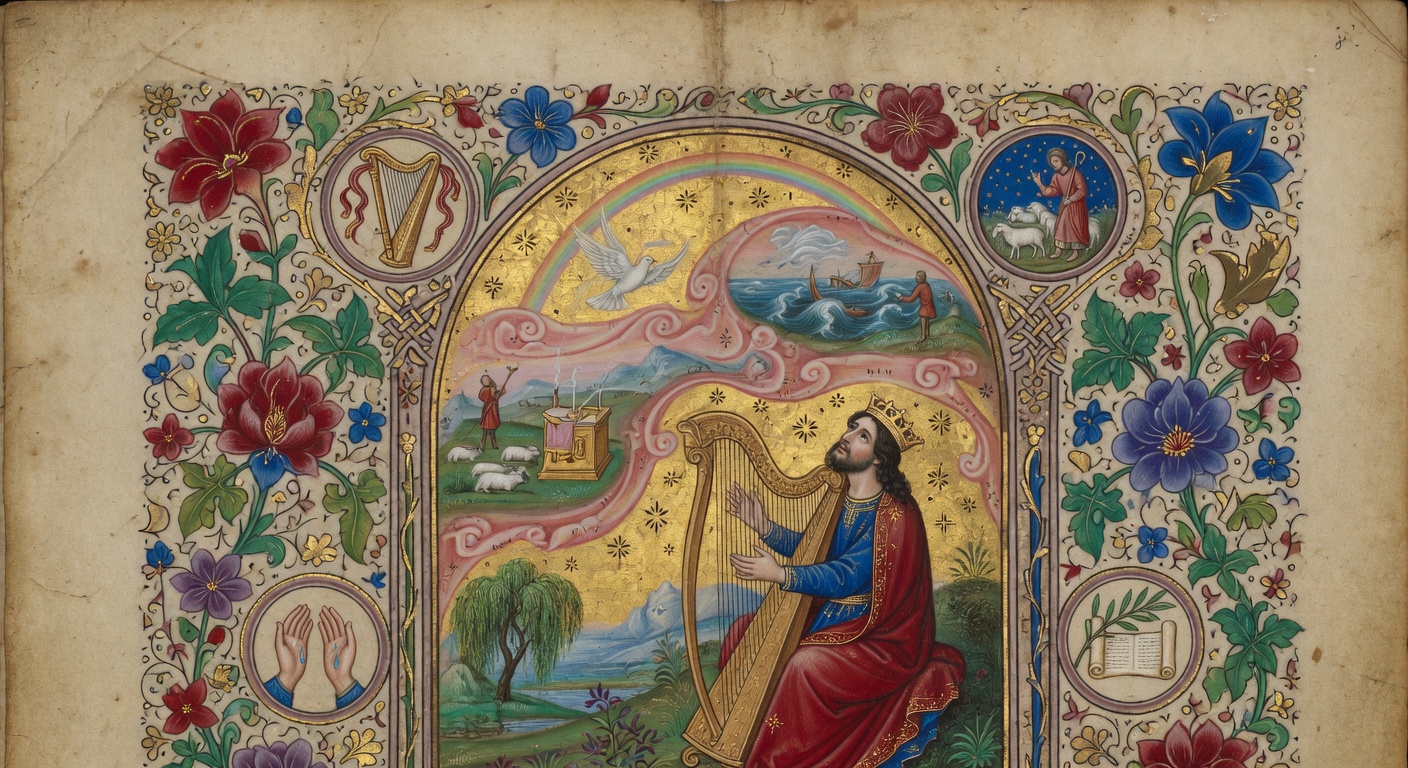
 1lessed is he that considereth the poor: the LORD will deliver him in time of trouble.
2 The LORD will preserve him, and keep him alive; and he shall be blessed upon the earth: and thou wilt not deliver him unto the will of his enemies.
3 The LORD will strengthen him upon the bed of languishing: thou wilt make all his bed in his sickness.
4 I said, LORD, be merciful unto me: heal my soul; for I have sinned against thee.
5 Mine enemies speak evil of me, When shall he die, and his name perish?
6 And if he come to see me, he speaketh vanity: his heart gathereth iniquity to itself; when he goeth abroad, he telleth it.
7 All that hate me whisper together against me: against me do they devise my hurt.
8 An evil disease, say they, cleaveth fast unto him: and now that he lieth he shall rise up no more.
9 Yea, mine own familiar friend, in whom I trusted, which did eat of my bread, hath lifted up his heel against me.
10 But thou, O LORD, be merciful unto me, and raise me up, that I may requite them.
11 By this I know that thou favourest me, because mine enemy doth not triumph over me.
12 And as for me, thou upholdest me in mine integrity, and settest me before thy face for ever.
13 Blessed be the LORD God of Israel from everlasting, and to everlasting. Amen, and Amen.
← → arrow keys to navigate chapters · spacebar to play/pause audio
Did You Know?
Psalm 41 closes Book I of the Psalter with its double Amen doxology in v. 13, the first of five such markers that later editors used to divide the collection into five books mirroring the Torah.
Verse 9’s phrase about the trusted friend ‘lifting up his heel’ against the psalmist is the only Old Testament text Jesus explicitly quotes as fulfilled by Judas (John 13:18), linking Davidic betrayal to the passion narrative.
The opening beatitude on considering the poor (v. 1) uses the rare Hebrew verb maskil, the same root that titles several wisdom psalms, implying that genuine insight into the vulnerable is itself a mark of covenant wisdom.
The psalm’s movement from sickness-bed (v. 3) to table fellowship (v. 9) to public praise (v. 11-12) mirrors ancient Israelite ritual patterns in which recovery from illness required both divine healing and restored social commensality.
Its attribution to David during Absalom’s revolt gains texture from the detail that Ahithophel, the betrayer, was previously David’s counselor who shared royal meals, making the psalm a possible lament over political as well as physical betrayal.
David purchased Araunah the Jebusite's threshing floor for fifty shekels of silver after the plague halted, establishing the exact site that later became the Temple Mount under Solomon.
Biblical tradition attributes 3,000 proverbs and 1,005 songs to Solomon, along with expertise in botany and zoology covering everything from cedar trees to hyssop and from livestock to birds, fish, and reptiles, yet only fragments survive in Proverbs, Ecclesiastes, and Song of Songs.
The New Testament further develops this imagery to portray the heavenly Jerusalem where believers gather to the living God.
The city has been destroyed at least twice, besieged 23 times, and captured 44 times.
Commentary & Study Notes Jamieson-Fausset-Brown (1871) · Public Domain God rewards kindness to the poor (Pr 19:17). From Ps 41:2, 11 it may be inferred that the Psalmist describes his own conduct. poor — in person, position, and possessions.
Classic verse-by-verse commentary on Psalms 41 from Jamieson, Fausset & Brown (1871). Covers: The psalmist celebrates the blessedness of those who compassionate the poor, conduct strongly contrasted with the spite of his enemies and neglect of his friends in his calamity. He prays for God's mercy in view of his ill desert, and, in confidence of relief, and that God will vindicate his cause, he closes with a doxology.
- 1-3
- God rewards kindness to the poor (Pr 19:17). From Ps 41:2, 11 it may be inferred that the Psalmist describes his own conduct. poor — in person, position, and possessions.
- 2
- shall be blessed — literally, "led aright," or "safely," prospered (Ps 23:3). upon the earth — or land of promise (Ps 25:13; 27:3-9, &c.).
Read all 13 notes on Psalms 41 →