Psalms 50 KJV
God the Judge
About This Psalm
God doesn't need your sacrifices - He owns everything. What He wants is genuine thanksgiving and a life that matches your worship.
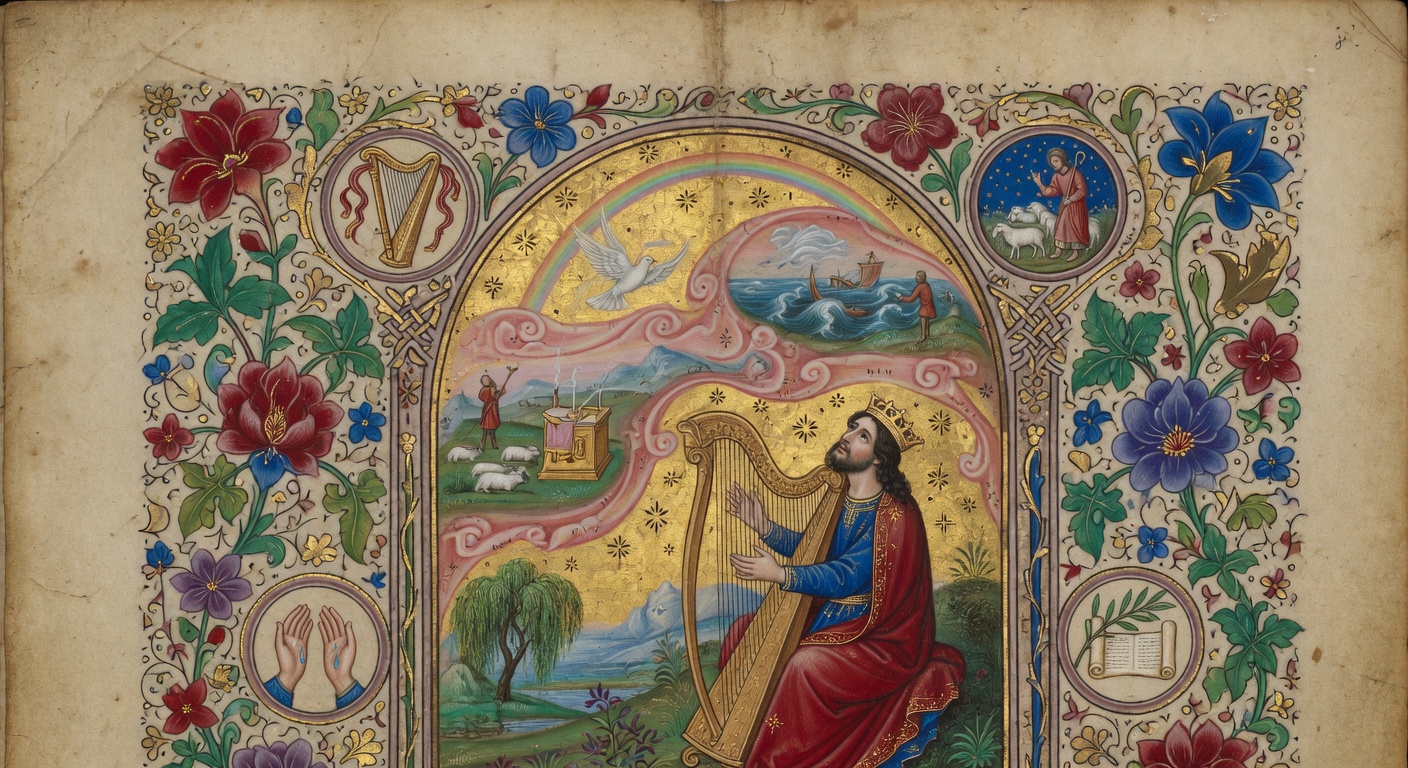
 1he mighty God, even the LORD, hath spoken, and called the earth from the rising of the sun unto the going down thereof.
2 Out of Zion, the perfection of beauty, God hath shined.
3 Our God shall come, and shall not keep silence: a fire shall devour before him, and it shall be very tempestuous round about him.
4 He shall call to the heavens from above, and to the earth, that he may judge his people.
5 Gather my saints together unto me; those that have made a covenant with me by sacrifice.
6 And the heavens shall declare his righteousness: for God is judge himself. Selah.
7 Hear, O my people, and I will speak; O Israel, and I will testify against thee: I am God, even thy God.
8 I will not reprove thee for thy sacrifices or thy burnt offerings, to have been continually before me.
9 I will take no bullock out of thy house, nor he goats out of thy folds.
10 For every beast of the forest is mine, and the cattle upon a thousand hills.
11 I know all the fowls of the mountains: and the wild beasts of the field are mine.
12 If I were hungry, I would not tell thee: for the world is mine, and the fulness thereof.
13 Will I eat the flesh of bulls, or drink the blood of goats?
14 Offer unto God thanksgiving; and pay thy vows unto the most High:
15 And call upon me in the day of trouble: I will deliver thee, and thou shalt glorify me.
16 But unto the wicked God saith, What hast thou to do to declare my statutes, or that thou shouldest take my covenant in thy mouth?
17 Seeing thou hatest instruction, and casteth my words behind thee.
18 When thou sawest a thief, then thou consentedst with him, and hast been partaker with adulterers.
19 Thou givest thy mouth to evil, and thy tongue frameth deceit.
20 Thou sittest and speakest against thy brother; thou slanderest thine own mother’s son.
21 These things hast thou done, and I kept silence; thou thoughtest that I was altogether such an one as thyself: but I will reprove thee, and set them in order before thine eyes.
22 Now consider this, ye that forget God, lest I tear you in pieces, and there be none to deliver.
23 Whoso offereth praise glorifieth me: and to him that ordereth his conversation aright will I shew the salvation of God.
← → arrow keys to navigate chapters · spacebar to play/pause audio
Did You Know?
Psalm 50 opens with a covenant-lawsuit framework drawn from Deuteronomy 32, casting heaven and earth as summoned witnesses in a divine trial against Israel for breaching the covenant through hollow ritual.
The Asaphite collection (Psalms 50, 73-83) consistently pairs judgment oracles with musical headings, suggesting these texts originated in Levitical circles that used liturgy to confront post-exilic worship failures.
God's claim that He needs no bulls or goats because 'every beast of the forest is mine' subverts ancient Near Eastern temple-economy logic, asserting that the Creator's self-sufficiency renders material offerings secondary to thanksgiving and vow-keeping.
The storm-theophany imagery in verses 2-3 (devouring fire, tempest) deliberately echoes both Sinai and Canaanite Baal motifs, yet redirects them to condemn insincere Yahwistic worship rather than affirm fertility religion.
The closing promise that the one who offers thanksgiving 'glorifies' God reframes sacrifice as verbal praise that actually benefits the worshiper, inverting the common ancient assumption that rituals primarily nourish the deity.
While fleeing Saul, David sought refuge among the Philistines and feigned madness before King Achish of Gath by scribbling on the city gates and letting saliva run down his beard, successfully avoiding recognition.
Solomon conscripted 30,000 Israelite men for monthly rotations of forced labor in Lebanon to harvest cedar and cypress timber for the temple, while assigning an additional 150,000 Canaanite laborers to quarry and transport stone, reflecting the ancient Near Eastern practice of corvée labor systems.
The New Testament further develops this imagery to portray the heavenly Jerusalem where believers gather to the living God.
Jerusalem sits at about 2,500 feet elevation. Higher than most surrounding areas.
Commentary & Study Notes Jamieson-Fausset-Brown (1871) · Public Domain The description of this majestic appearance of God resembles that of His giving the law (compare Ex 19:16; 20:18; De 32:1).
Classic verse-by-verse commentary on Psalms 50 from Jamieson, Fausset & Brown (1871). Covers: In the grandeur and solemnity of a divine judgment, God is introduced as instructing men in the nature of true worship, exposing hypocrisy, warning the wicked, and encouraging the pious.
- 1-4
- The description of this majestic appearance of God resembles that of His giving the law (compare Ex 19:16; 20:18; De 32:1).
- 4
- above — literally, "above" (Ge 1:7). heavens... earth — For all creatures are witnesses (De 4:26; 30:19; Isa 1:2).
Read all 10 notes on Psalms 50 →