Psalms 58 KJV
A Cry for Justice
About This Psalm
A fierce prayer against corrupt judges. When the justice system itself is unjust, only God can set things right.
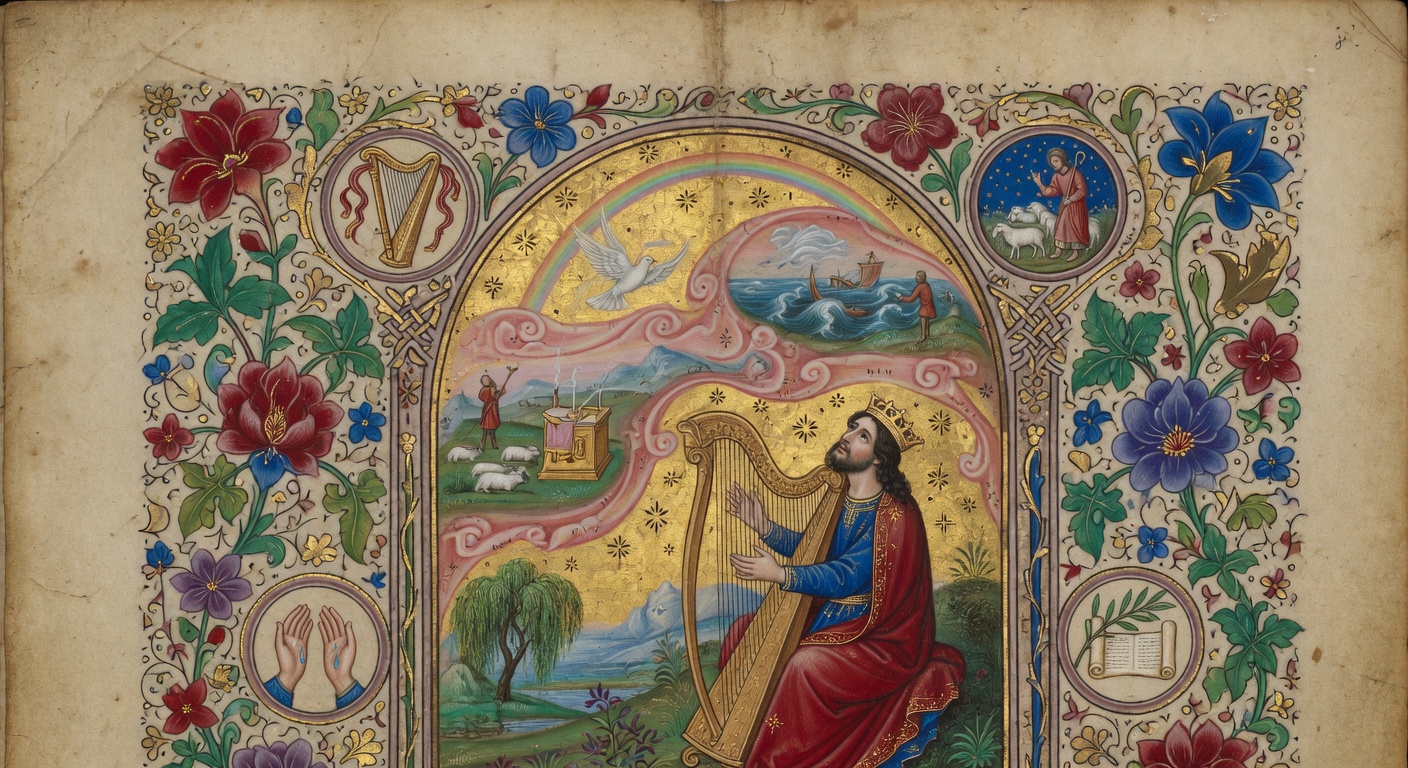
 1o ye indeed speak righteousness, O congregation? do ye judge uprightly, O ye sons of men?
2 Yea, in heart ye work wickedness; ye weigh the violence of your hands in the earth.
3 The wicked are estranged from the womb: they go astray as soon as they be born, speaking lies.
4 Their poison is like the poison of a serpent: they are like the deaf adder that stoppeth her ear;
5 Which will not hearken to the voice of charmers, charming never so wisely.
6 Break their teeth, O God, in their mouth: break out the great teeth of the young lions, O LORD.
7 Let them melt away as waters which run continually: when he bendeth his bow to shoot his arrows, let them be as cut in pieces.
8 As a snail which melteth, let every one of them pass away: like the untimely birth of a woman, that they may not see the sun.
9 Before your pots can feel the thorns, he shall take them away as with a whirlwind, both living, and in his wrath.
10 The righteous shall rejoice when he seeth the vengeance: he shall wash his feet in the blood of the wicked.
11 So that a man shall say, Verily there is a reward for the righteous: verily he is a God that judgeth in the earth.
← → arrow keys to navigate chapters · spacebar to play/pause audio
Did You Know?
The psalm opens by addressing 'elohim' (rendered 'congregation' in KJV) as corrupt judges, implying a heavenly council or divine beings accountable for earthly injustice, a motif rare outside prophetic literature like Isaiah 3.
Its serpent metaphors draw on ancient Near Eastern incantation traditions, particularly the 'deaf adder' that cannot be charmed, inverting the typical use of such imagery to portray unrepentant human wickedness rather than demonic forces.
Verse 8's 'snail which melteth' relies on a pre-scientific observation of gastropods leaving slime trails, metaphorically enacting dissolution as divine judgment, paralleling Ugaritic curse formulae that invoke natural dissolution.
The imprecation against 'the untimely birth of a woman' (verse 8) echoes Mesopotamian legal and ritual texts where stillborn children symbolize lives erased from memory and inheritance, underscoring total covenantal exclusion.
The closing image of the righteous washing their feet in the blood of the wicked (verse 10) parallels victory hymns from the ancient Near East, such as those celebrating Baal's triumph, but here functions as eschatological vindication rather than mere military boasting.
David twice spared Saul's life in the wilderness, once cutting off a piece of his robe in the En Gedi cave and later removing his spear and water jug while he slept, demonstrating restraint amid pursuit.
The Queen of Sheba traveled roughly 1,200 miles from her Arabian kingdom with a caravan of camels carrying spices, gold, and stones to test Solomon's wisdom with riddles, then exchanged lavish gifts including 120 talents of gold that funded further temple adornments.
In the prophetic writings it stands as the center of God's redemptive plan, embodying covenant faithfulness and the expectation of a coming Messiah who would rule from Zion in justice and peace.
Jerusalem sits at about 2,500 feet elevation. Higher than most surrounding areas.
Commentary & Study Notes Jamieson-Fausset-Brown (1871) · Public Domain O congregation — literally, "Oh, dumb"; the word used is never translated "congregation." "Are ye dumb? ye should speak righteousness," may be the translation. In any case, the wri…
Classic verse-by-verse commentary on Psalms 58 from Jamieson, Fausset & Brown (1871). Covers: David's critical condition in some period of the sauline persecution probably occasioned this psalm, in which the psalmist teaches that the innate and actual sinfulness of men deserves, and shall receive, God's righteous vengeance, while the pious may be consoled by the evidence of his wise and holy government of men.
- 1
- O congregation — literally, "Oh, dumb"; the word used is never translated "congregation." "Are ye dumb? ye should speak righteousness," may be the translation. In any case, the writer remonstrates with them, perhaps a council, who were assembled to try his cause, and bound to give a right decision.
- 2
- This they did not design; but weigh... violence — or give decisions of violence. Weigh is a figure to express the acts of judges. in the earth — publicly.
Read all 9 notes on Psalms 58 →