Psalms 64 KJV
A Prayer Against Conspirators
About This Psalm
A prayer for protection from secret plots and sharp tongues. God will turn their own arrows back on them.
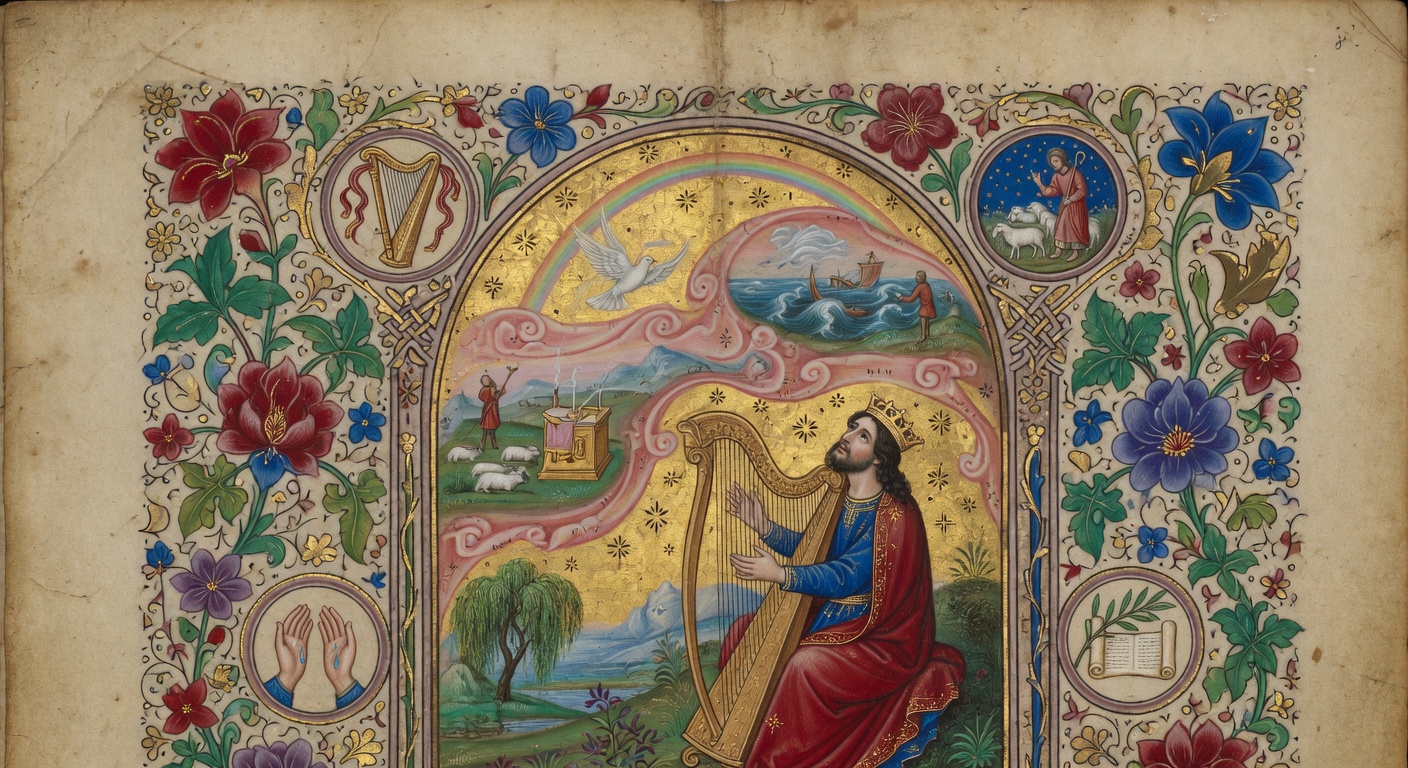
 1ear my voice, O God, in my prayer: preserve my life from fear of the enemy.
2 Hide me from the secret counsel of the wicked; from the insurrection of the workers of iniquity:
3 Who whet their tongue like a sword, and bend their bows to shoot their arrows, even bitter words:
4 That they may shoot in secret at the perfect: suddenly do they shoot at him, and fear not.
5 They encourage themselves in an evil matter: they commune of laying snares privily; they say, Who shall see them?
6 They search out iniquities; they accomplish a diligent search: both the inward thought of every one of them, and the heart, is deep.
7 But God shall shoot at them with an arrow; suddenly shall they be wounded.
8 So they shall make their own tongue to fall upon themselves: all that see them shall flee away.
9 And all men shall fear, and shall declare the work of God; for they shall wisely consider of his doing.
10 The righteous shall be glad in the LORD, and shall trust in him; and all the upright in heart shall glory.
← → arrow keys to navigate chapters · spacebar to play/pause audio
Did You Know?
The psalm's archery motif creates a precise reversal: enemies 'shoot' bitter words like arrows in secret, yet God responds by shooting them with arrows, transforming their weapon into the means of sudden judgment.
Verse 6's focus on searching out 'inward thought' and 'deep' hearts offers rare psychological insight into conspiracy as an internalized, almost subconscious process rather than mere external plotting.
The abrupt shift from private lament to public declaration that 'all men shall fear' positions personal deliverance as a communal witness, turning individual vindication into a catalyst for widespread acknowledgment of divine justice.
Its structure embodies the theological principle of lex talionis through speech: the tongue that devises mischief 'falls upon' the wicked themselves, enacting self-inflicted retribution without external agency.
The concluding call to 'wisely consider' God's works links the psalm to wisdom traditions, framing the exposure of conspirators not merely as rescue but as an object lesson in discerning divine sovereignty over hidden evil.
In old age David could not keep warm even under heavy blankets, prompting his officials to bring the young Shunammite Abishag to lie beside him as a human heat source without becoming his wife.
Despite completing the temple, Solomon later built shrines to foreign deities like Ashtoreth, Chemosh, and Molech on the Mount of Olives for his 700 wives and 300 concubines, directly contributing to the kingdom's division after his death.
In the prophetic writings it stands as the center of God's redemptive plan, embodying covenant faithfulness and the expectation of a coming Messiah who would rule from Zion in justice and peace.
Jerusalem is mentioned over 800 times in the Bible. More than any other city.
Commentary & Study Notes Jamieson-Fausset-Brown (1871) · Public Domain preserve... fear — as well as the danger producing it.
Classic verse-by-verse commentary on Psalms 64 from Jamieson, Fausset & Brown (1871). Covers: A prayer for deliverance from cunning and malicious enemies, with a confident view of their overthrow, which will honor God and give joy to the righteous.
- 1
- preserve... fear — as well as the danger producing it.
- 2
- insurrection — literally, "uproar," noisy assaults, as well as their secret counsels.
Read all 9 notes on Psalms 64 →