Psalms 70 KJV
A Prayer for Speedy Help
About This Psalm
An urgent, five-verse cry: hurry, God! When you need help RIGHT NOW and can't wait for a long prayer.
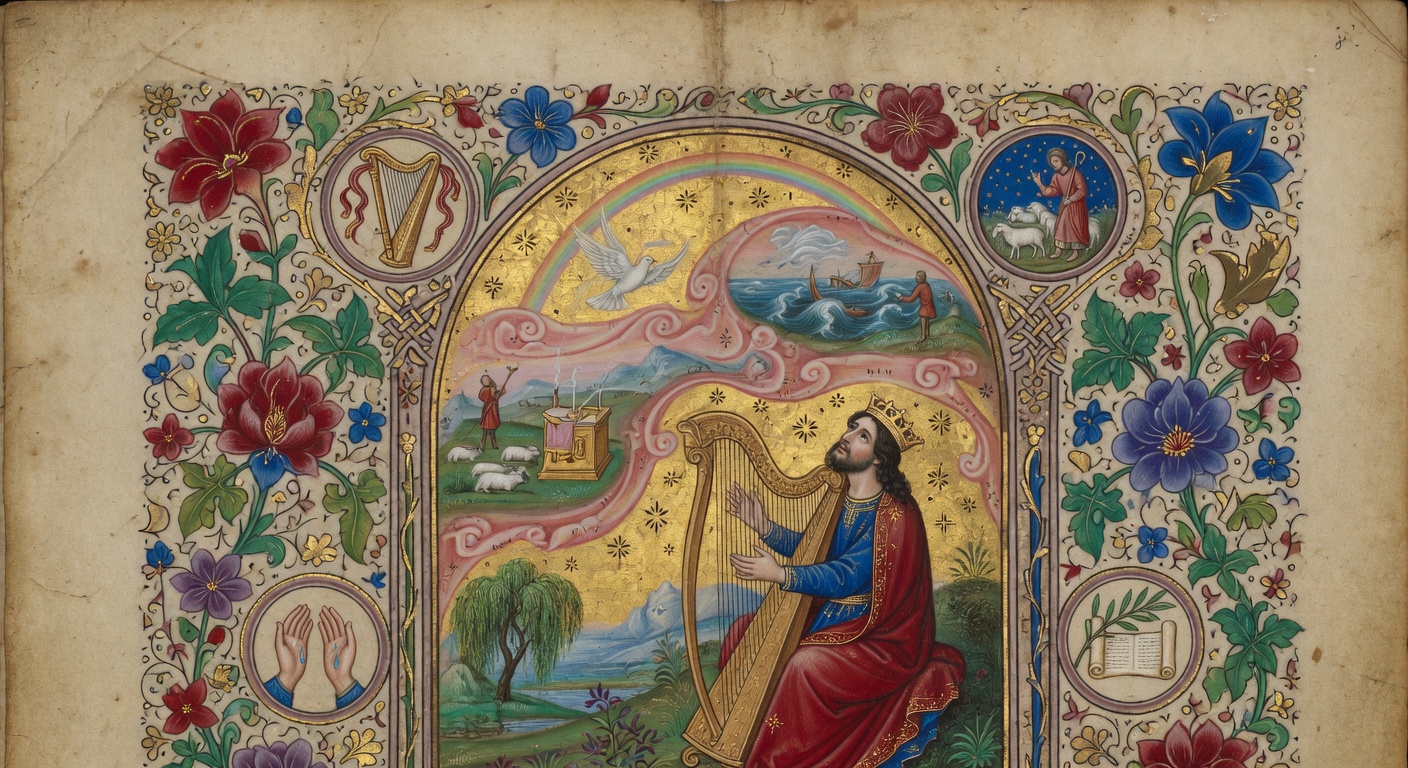
 1AKE HASTE, O GOD, TO DELIVER ME; MAKE HASTE TO HELP ME, O LORD.
2 Let them be ashamed and confounded that seek after my soul: let them be turned backward, and put to confusion, that desire my hurt.
3 Let them be turned back for a reward of their shame that say, Aha, aha.
4 Let all those that seek thee rejoice and be glad in thee: and let such as love thy salvation say continually, Let God be magnified.
5 But I am poor and needy: make haste unto me, O God: thou art my help and my deliverer; O LORD, make no tarrying.
← → arrow keys to navigate chapters · spacebar to play/pause audio
Did You Know?
Psalm 70's superscription 'to bring to remembrance' (ləhazkîr) directly links it to the 'azkarah memorial offering in Leviticus 2, implying liturgical use as a reminder before God during grain offerings.
The psalm is a near-verbatim duplicate of Psalm 40:13-17 yet shows deliberate textual variants, such as swapping 'LORD' for 'God' and adjusting pronouns, illustrating how scribes adapted royal laments for varying cultic settings.
Its imprecation against those shouting 'Aha, aha' employs a precise onomatopoeic taunt formula attested in ancient Near Eastern victory inscriptions, framing the enemies' derision as ritualized mockery rather than casual insult.
By moving from urgent singular petition ('make haste, O God, to deliver me') to plural benediction over 'all those that seek thee,' the psalm models the Davidic king's role as mediator who draws the community into his deliverance.
Positioned immediately after Psalm 69, it creates a deliberate diptych on unjust suffering and vindication, with shared vocabulary of 'shame' and 'poor and needy' that echoes the 'anawim theology running through the Psalter's fifth book.
While fleeing Saul, David sought refuge among the Philistines and feigned madness before King Achish of Gath by scribbling on the city gates and letting saliva run down his beard, successfully avoiding recognition.
Solomon conscripted 30,000 Israelite men for monthly rotations of forced labor in Lebanon to harvest cedar and cypress timber for the temple, while assigning an additional 150,000 Canaanite laborers to quarry and transport stone, reflecting the ancient Near Eastern practice of corvée labor systems.
In the prophetic writings it stands as the center of God's redemptive plan, embodying covenant faithfulness and the expectation of a coming Messiah who would rule from Zion in justice and peace.
Jerusalem sits at about 2,500 feet elevation. Higher than most surrounding areas.
Commentary & Study Notes Jamieson-Fausset-Brown (1871) · Public Domain Verse-by-verse notes on Psalms 70 from the Jamieson-Fausset-Brown Commentary (1871), a classic public-domain work.
Verse-by-verse notes on Psalms 70 from the Jamieson-Fausset-Brown Commentary (1871), a classic public-domain work.