Psalms 79 KJV
A Lament Over Jerusalem
About This Psalm
Jerusalem has fallen. The nations mock. How long until God acts? A prayer from the rubble.
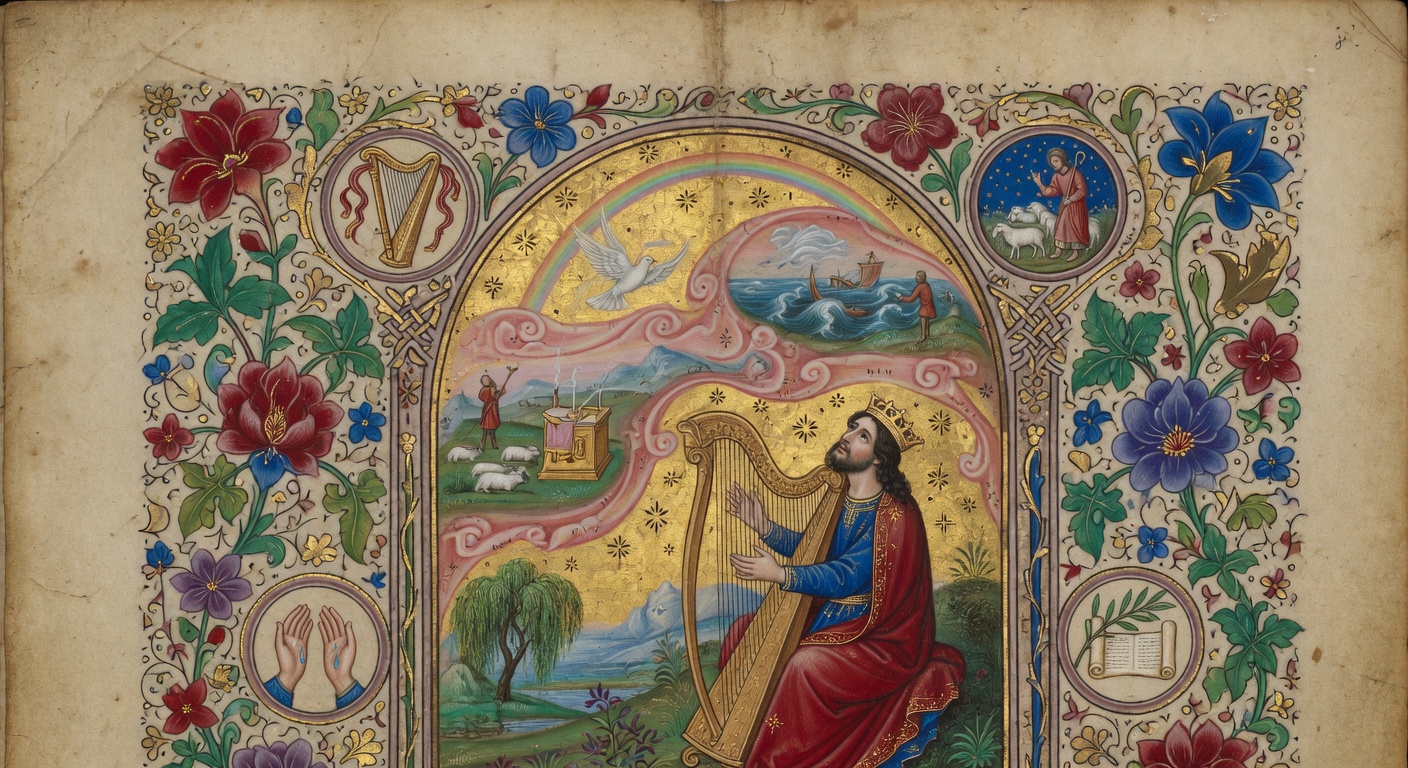
 1 GOD, the heathen are come into thine inheritance; thy holy temple have they defiled; they have laid Jerusalem on heaps.
2 The dead bodies of thy servants have they given to be meat unto the fowls of the heaven, the flesh of thy saints unto the beasts of the earth.
3 Their blood have they shed like water round about Jerusalem; and there was none to bury them.
4 We are become a reproach to our neighbours, a scorn and derision to them that are round about us.
5 How long, LORD? wilt thou be angry for ever? shall thy jealousy burn like fire?
6 Pour out thy wrath upon the heathen that have not known thee, and upon the kingdoms that have not called upon thy name.
7 For they have devoured Jacob, and laid waste his dwelling place.
8 O remember not against us former iniquities: let thy tender mercies speedily prevent us: for we are brought very low.
9 Help us, O God of our salvation, for the glory of thy name: and deliver us, and purge away our sins, for thy name’s sake.
10 Wherefore should the heathen say, Where is their God? let him be known among the heathen in our sight by the revenging of the blood of thy servants which is shed.
11 Let the sighing of the prisoner come before thee; according to the greatness of thy power preserve thou those that are appointed to die;
12 And render unto our neighbours sevenfold into their bosom their reproach, wherewith they have reproached thee, O Lord.
13 So we thy people and sheep of thy pasture will give thee thanks for ever: we will shew forth thy praise to all generations.
← → arrow keys to navigate chapters · spacebar to play/pause audio
Did You Know?
Verse 6 is quoted verbatim in Jeremiah 10:25, forging a direct literary bridge between this lament and the prophetic tradition that interprets national catastrophe as divine response to covenant breach.
The request for sevenfold vengeance in verse 12 deliberately echoes the escalating retribution formula of Genesis 4:15 and 4:24, recasting Cain's mark as a paradigm for how God should now deal with the destroyers of Jerusalem.
Although attributed to Asaph, the psalm's detailed references to an unburied temple mount and defiled sanctuary presuppose the 586 BCE Babylonian destruction, illustrating how later writers adopted the Asaphite superscription for new compositions within an established guild tradition.
The repeated appeal that God act 'for thy name's sake' (v. 9) subordinates Israel's survival to the international reputation of YHWH, a theological move that anticipates later prophetic arguments in Ezekiel 36 about the profanation of the divine name among the nations.
By describing Israel as 'the sheep of thy pasture' (v. 13) immediately after cataloguing heaps of corpses, the psalm juxtaposes pastoral imagery with battlefield horror, forcing a theological tension between God's covenantal care and the visible reality of mass death.
In old age David could not keep warm even under heavy blankets, prompting his officials to bring the young Shunammite Abishag to lie beside him as a human heat source without becoming his wife.
Despite completing the temple, Solomon later built shrines to foreign deities like Ashtoreth, Chemosh, and Molech on the Mount of Olives for his 700 wives and 300 concubines, directly contributing to the kingdom's division after his death.
In the prophetic writings it stands as the center of God's redemptive plan, embodying covenant faithfulness and the expectation of a coming Messiah who would rule from Zion in justice and peace.
Three major world religions consider Jerusalem a holy city.
Commentary & Study Notes Jamieson-Fausset-Brown (1871) · Public Domain (Compare Ps 74:2-7).
Classic verse-by-verse commentary on Psalms 79 from Jamieson, Fausset & Brown (1871). Covers: This psalm, like the seventy-fourth, probably depicts the desolations of the chaldeans (jer 52:12-24). It comprises the usual complaint, prayer, and promised thanks for relief.
- 1
- (Compare Ps 74:2-7).
- 2,3
- (Compare Jer 15:3; 16:4).
Read all 11 notes on Psalms 79 →