Psalms 99 KJV
The Lord Is Holy
About This Psalm
The LORD reigns, let the peoples tremble. Holy, holy, holy. God is both exalted and accessible.
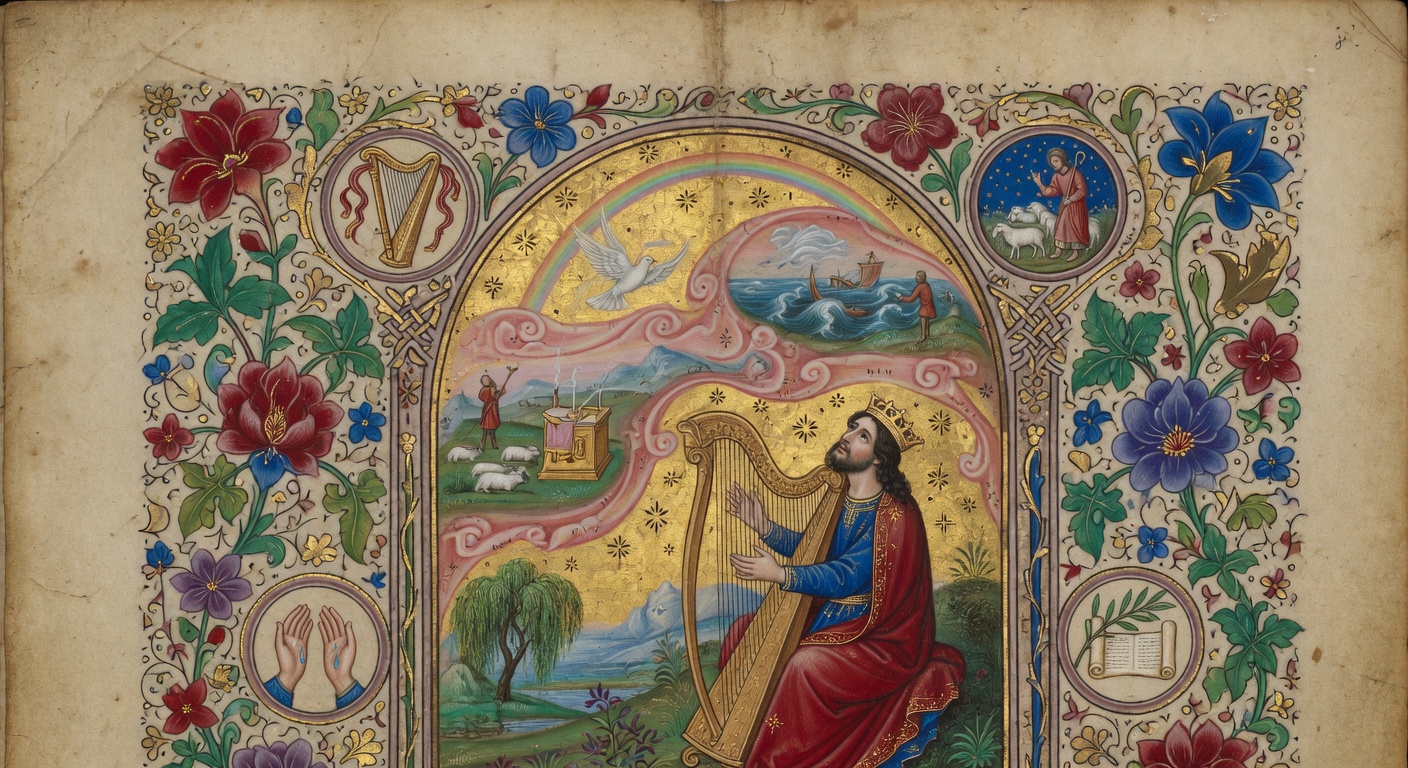
 1he LORD reigneth; let the people tremble: he sitteth between the cherubims; let the earth be moved.
2 The LORD is great in Zion; and he is high above all the people.
3 Let them praise thy great and terrible name; for it is holy.
4 The king’s strength also loveth judgment; thou dost establish equity, thou executest judgment and righteousness in Jacob.
5 Exalt ye the LORD our God, and worship at his footstool; for he is holy.
6 Moses and Aaron among his priests, and Samuel among them that call upon his name; they called upon the LORD, and he answered them.
7 He spake unto them in the cloudy pillar: they kept his testimonies, and the ordinance that he gave them.
8 Thou answeredst them, O LORD our God: thou wast a God that forgavest them, though thou tookest vengeance of their inventions.
9 Exalt the LORD our God, and worship at his holy hill; for the LORD our God is holy.
← → arrow keys to navigate chapters · spacebar to play/pause audio
Did You Know?
The psalm's reference to God 'sitting between the cherubims' evokes the specific iconography of the Ark's mercy seat in the Holy of Holies, implying a temple liturgy where divine kingship was ritually enacted through procession or enthronement rites.
By naming Moses, Aaron, and Samuel together as answered intercessors, it uniquely bridges the lawgiver, priestly, and prophetic offices, portraying God's revelation as mediated through Israel's distinct institutional traditions rather than solely through monarchy.
The paradoxical statement that God 'forgavest them, though thou tookest vengeance of their inventions' alludes to wilderness incidents like the golden calf or Meribah, illustrating a theology where mercy and retributive justice operate simultaneously in covenant history.
Its placement among the enthronement psalms (93-99) creates a deliberate arc from cosmic kingship to Zion-centered holiness, with the triple refrain 'He is holy' functioning as a liturgical anchor that anticipates the Trisagion of Isaiah 6 and later Christian Sanctus.
The call for nations to 'tremble' while Zion rejoices juxtaposes universal theophany motifs (earthquakes, Sinai-like awe) with particular election, reflecting post-exilic efforts to affirm Yahweh's sovereignty amid both Gentile powers and Israel's restored cult.
In old age David could not keep warm even under heavy blankets, prompting his officials to bring the young Shunammite Abishag to lie beside him as a human heat source without becoming his wife.
Despite completing the temple, Solomon later built shrines to foreign deities like Ashtoreth, Chemosh, and Molech on the Mount of Olives for his 700 wives and 300 concubines, directly contributing to the kingdom's division after his death.
This location became the focal point of national worship and divine promises, later extending symbolically to encompass the Temple Mount where Solomon built the house of the Lord.
Three major world religions consider Jerusalem a holy city.
Commentary & Study Notes Jamieson-Fausset-Brown (1871) · Public Domain sitteth... cherubim — (compare 1Sa 4:4; Ps 80:1). tremble... be moved — inspired with fear by His judgments on the wicked.
Classic verse-by-verse commentary on Psalms 99 from Jamieson, Fausset & Brown (1871). Covers: God's government is especially exercised in and for his church, which should praise him for his gracious dealings.
- 1
- sitteth... cherubim — (compare 1Sa 4:4; Ps 80:1). tremble... be moved — inspired with fear by His judgments on the wicked.
- 2
- great in Zion — where He dwells (Ps 9:11).
Read all 6 notes on Psalms 99 →