Beth-shan
Ask about Beth-shan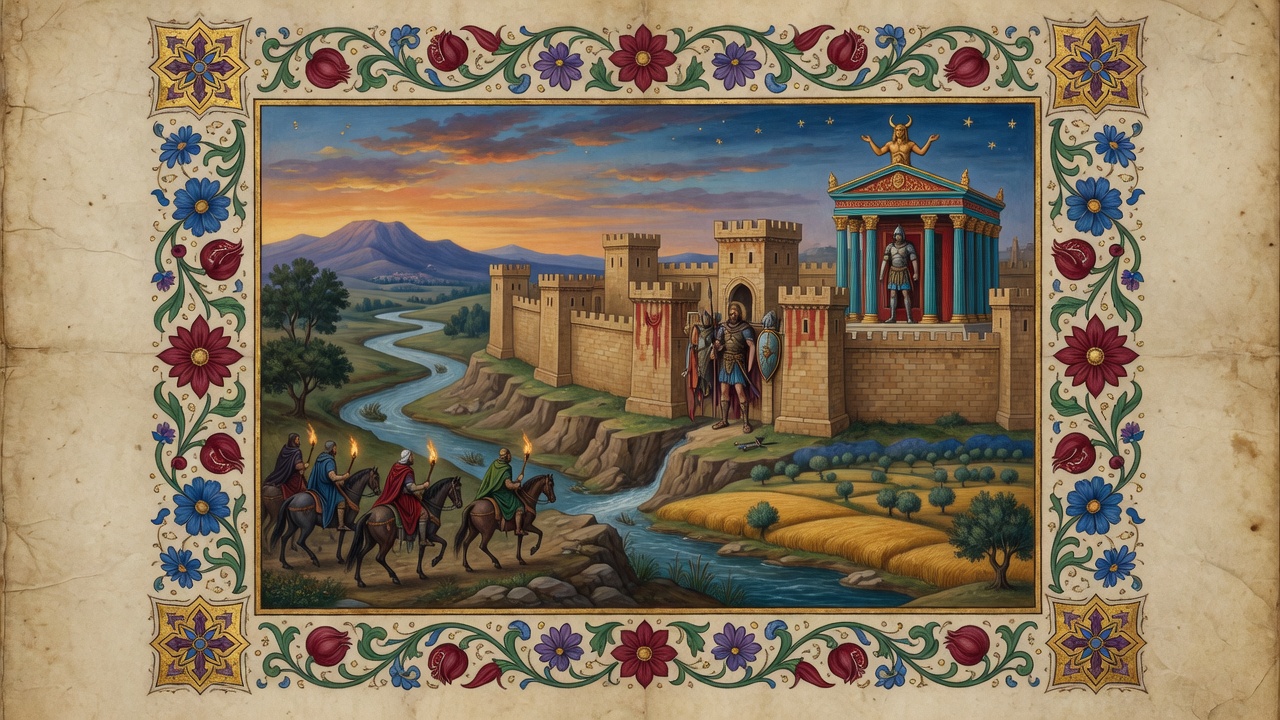
Beth-shan guarded a strategic pass at the junction of the Jordan and Jezreel valleys, remaining in Canaanite hands even after Israel's conquest since the tribe of Manasseh could not fully dispossess its fortified inhabitants. Its most infamous biblical moment came after the battle of Mount Gilboa, when the Philistines, having killed Saul and his sons, fastened Saul's body to the city wall and hung his armor in the temple of Ashtaroth as a public trophy of their victory. The valiant men of Jabesh-gilead, remembering Saul's earlier rescue of their city, traveled through the night to recover the bodies and give them a proper burial, a final act of loyalty that closed out Saul's tragic reign.
Details
- Region
- Northern Israel
- Modern Location
- Beit She'an, Israel
Key Passages
Saul's Body Displayed at Beth-shan
1 Samuel 31:8-10
The Philistines' public humiliation of Saul's body underscores the depth of Israel's defeat at Gilboa and the tragic end of the first king's reign.
 8nd it came to pass on the morrow, when the Philistines came to strip the slain, that they found Saul and his three sons fallen in mount Gilboa.
Jabesh-gilead Recovers the Bodies
1 Samuel 31:11-13
Loyalty repaid across years - the men Saul once rescued now risk their own lives to give him and his sons a dignified burial.
11nd when the inhabitants of Jabeshgilead heard of that which the Philistines had done to Saul;
Did You Know?
Beth-shan guarded the junction of two great valleys, making it one of the most fought-over crossroads in ancient Canaan.
The men of Jabesh-gilead marched all night to recover Saul's body from Beth-shan's wall - repaying a rescue Saul had performed for them forty years earlier.
Roman-era Beth-shan (Scythopolis) became the largest city of the Decapolis, and its ruins include one of the best-preserved theaters in the region.