The Pomegranate

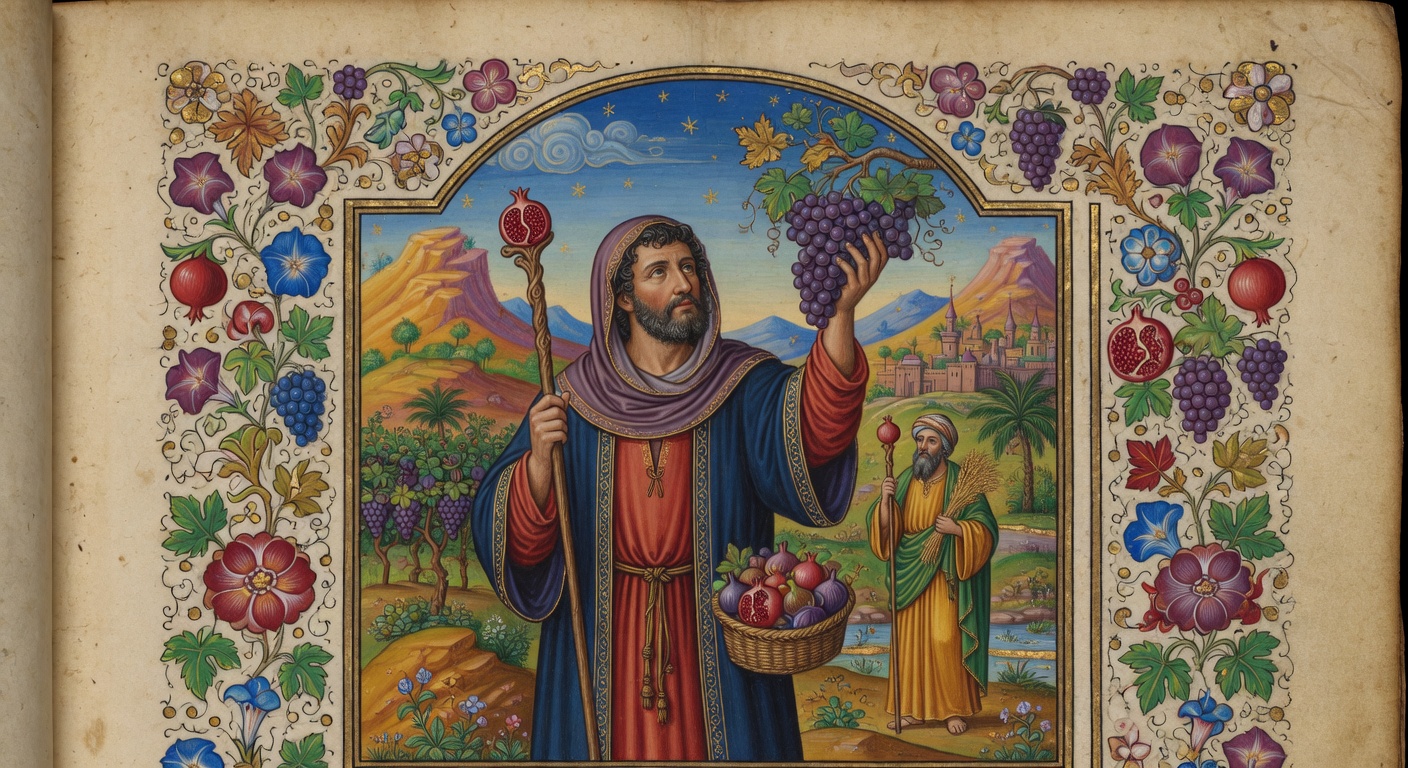
The pomegranate, with its crown-shaped top and many red seeds, was one of the fruits of the Promised Land, and the spies brought pomegranates back from Eshcol along with the great cluster of grapes. God commanded that pomegranates of blue, purple and scarlet alternate with golden bells around the hem of the high priest's robe, and Solomon decorated the capitals of the temple pillars with rows of pomegranates. In the Song of Solomon the fruit is a picture of beauty and love. King Saul once camped under a pomegranate tree at Migron.
Key Passages
Bells and Pomegranates
Exodus 28:33-35
The high priest's robe is hemmed with golden bells and pomegranates, so his ministry before the LORD would be heard.
 33nd beneath upon the hem of it thou shalt make pomegranates of blue, and of purple, and of scarlet, round about the hem thereof; and bells of gold between them round about:
A Land of Pomegranates
Deuteronomy 8:7-8
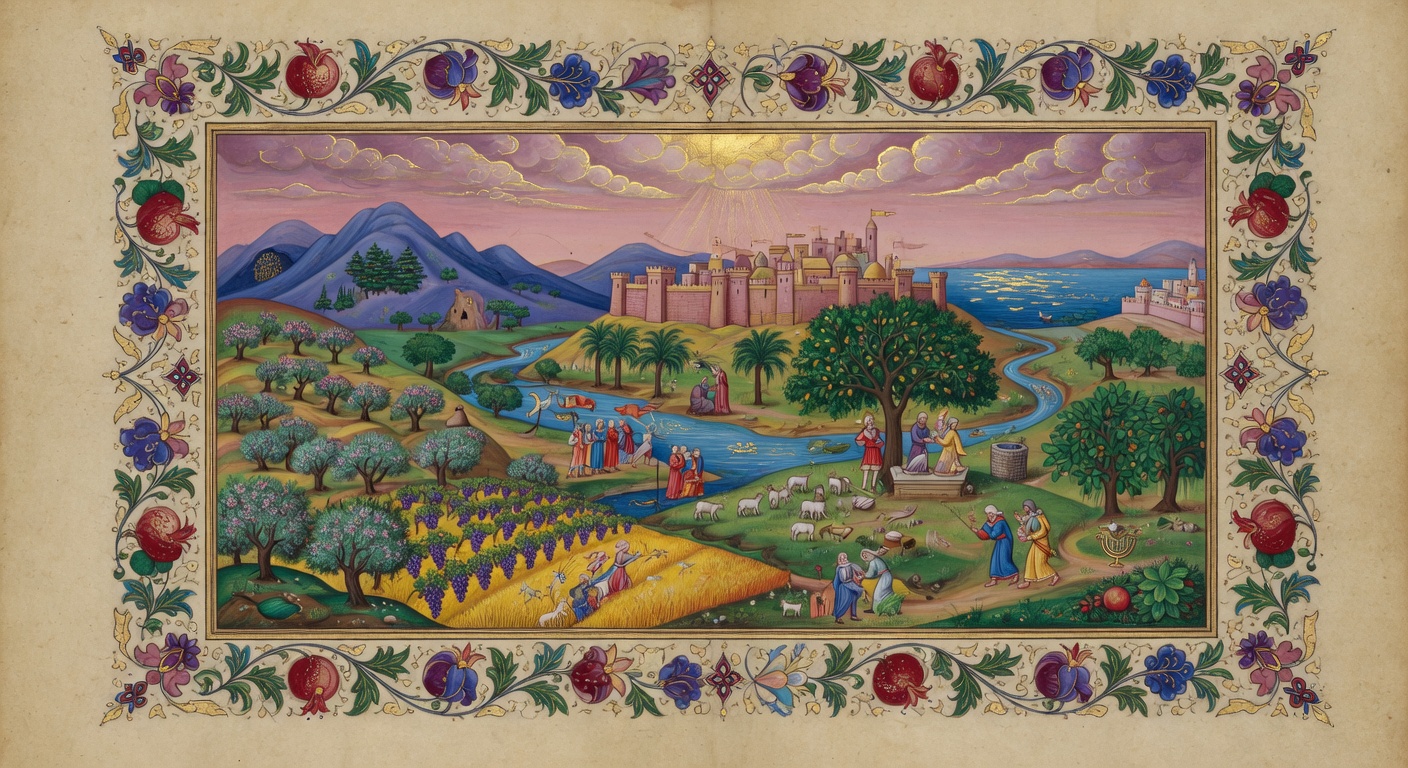
Moses describes the good land God is giving, rich with wheat, barley, vines, figs, pomegranates, olives and honey.
 7or the LORD thy God bringeth thee into a good land, a land of brooks of water, of fountains and depths that spring out of valleys and hills;
Explore Related
Did You Know?
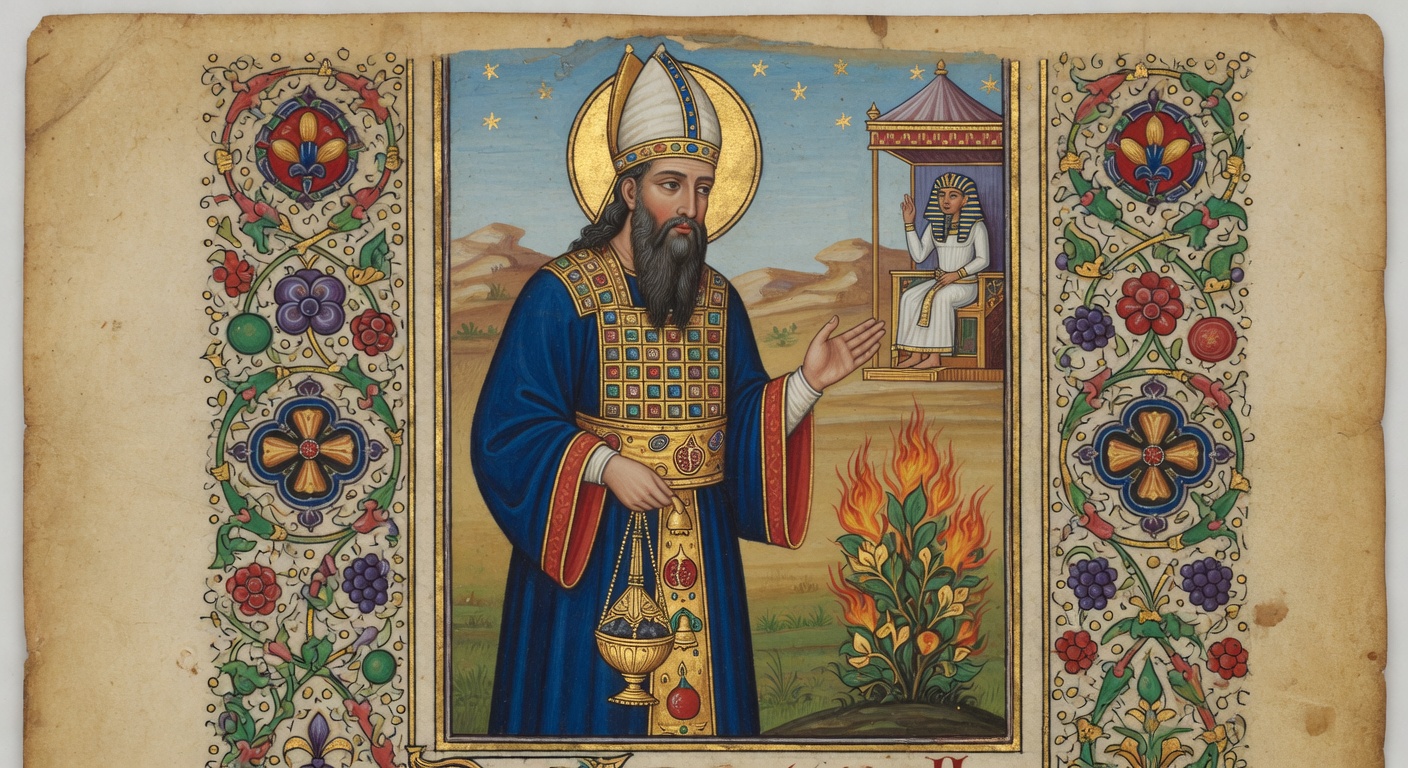
The high priest's robe alternated a golden bell and a pomegranate all around its hem.
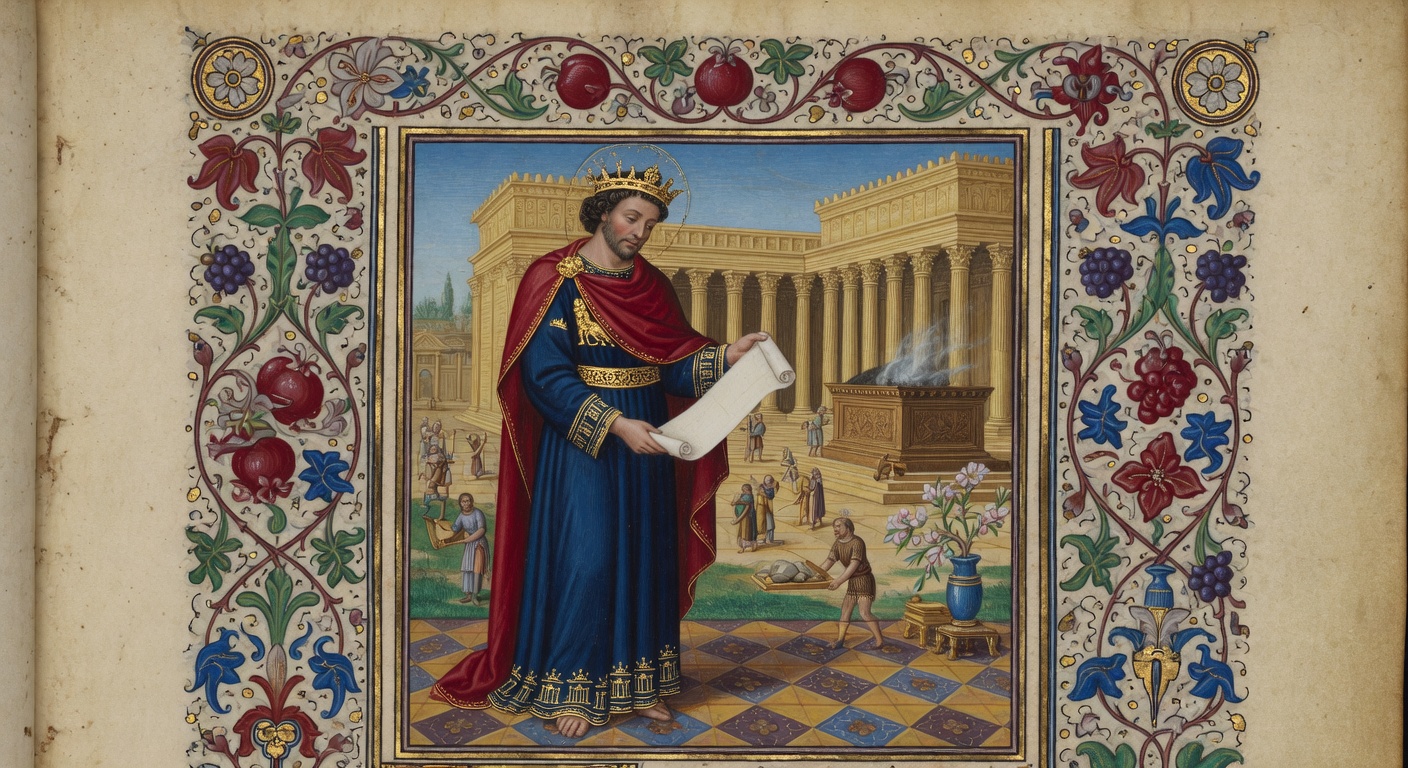
Solomon's temple pillars, Jachin and Boaz, were decorated with rows of pomegranates.
The spies brought pomegranates and figs back from the land along with the cluster of grapes.
Pomegranates are one of seven foods in Deuteronomy's description of the Promised Land.