Joshua
Ask about Joshua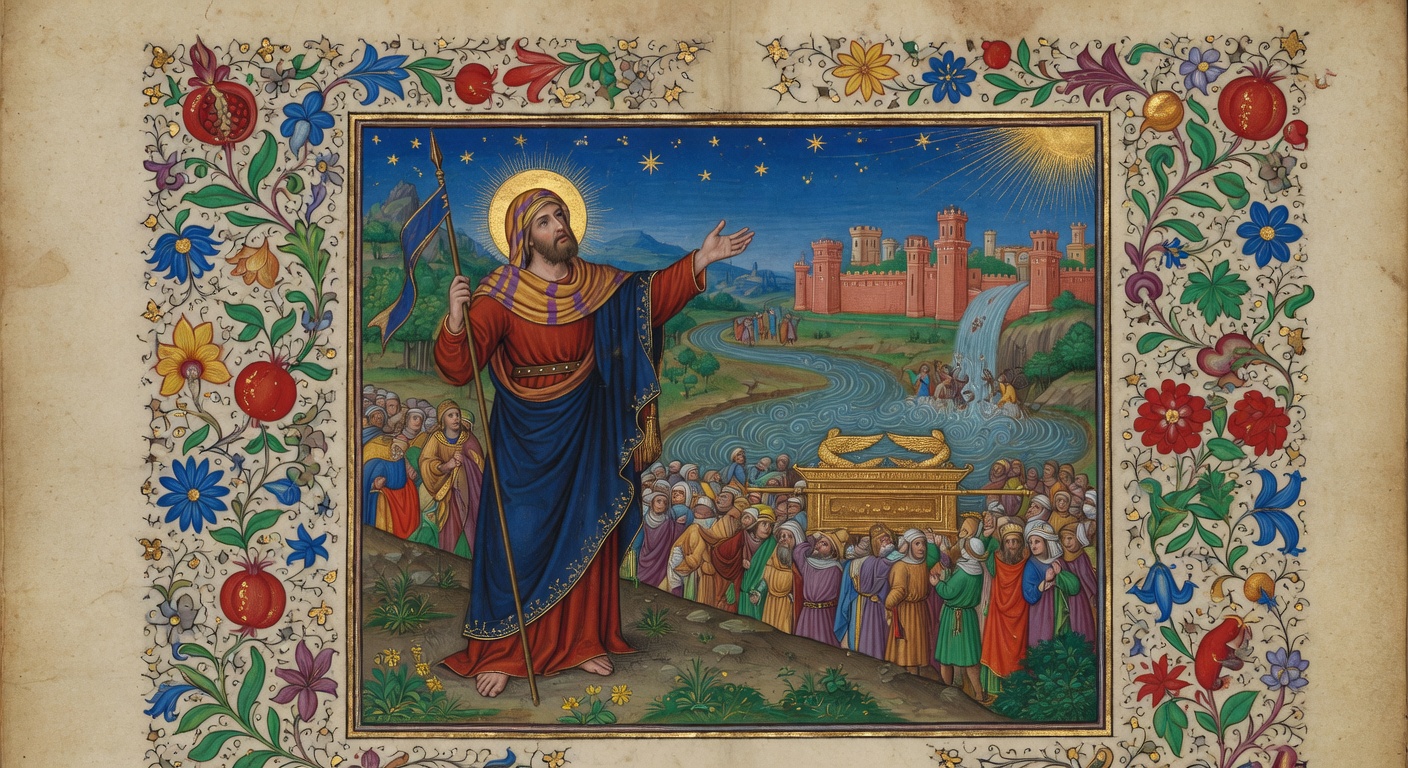
Joshua served as the successor to Moses, guiding the Israelites across the Jordan River into the Promised Land after the death of their leader in the wilderness. He led the military campaigns that resulted in the conquest of Canaan, including the famous battle at Jericho where the city's walls fell after the Israelites marched around them for seven days. Following these victories, Joshua oversaw the division of the land among the twelve tribes of Israel as commanded by God. This narrative in the Book of Joshua underscores the fulfillment of God's covenant promises to Abraham and highlights themes of faith, obedience, and divine intervention in biblical history.
Biography
- Born
- c. 1485 BC, Egypt
- Died
- c. 1375 BC, Timnath-serah, Canaan
- Age
- 110 years
- Occupation
- Military Commander, Leader of Israel
- Tribe
- Ephraim
- Father
- Nun
- Era
- Exodus / Conquest
- Nationality
- Hebrew
- Also Known As
- Hoshea
Family
Did You Know?
Moses renamed his assistant Hoshea to Joshua (meaning "Yahweh saves") before sending him as a spy into Canaan, a change recorded in Numbers 13:16 that signaled his future role as deliverer.
Only Joshua and Caleb survived the forty-year wilderness period among the adults who left Egypt, because they alone trusted God's promise about the land (Numbers 14:30).
Before attacking Jericho, Joshua had all Israelite males circumcised at Gibeath-haaraloth with flint knives, renewing the covenant sign that had been neglected during the wilderness wanderings (Joshua 5:2-9).
Joshua commanded the sun and moon to stand still over Gibeon and Aijalon so the battle against the Amorite coalition could continue until victory, an event preserved in the Book of Jashar (Joshua 10:12-14).
At the covenant ceremony on Mount Ebal, Joshua built an altar and inscribed a copy of the law on stones in the presence of all Israel, fulfilling Moses' earlier instructions (Joshua 8:30-35).
Key Chapters
Key Passages
God's Commission
Joshua 1:1-9
God charges Joshua to be strong and courageous, promising His presence. This commissioning establishes that godly leadership requires both divine empowerment and personal obedience to God's word.
 1ow after the death of Moses the servant of the LORD it came to pass, that the LORD spake unto Joshua the son of Nun, Moses’ minister, saying,
Fall of Jericho
Joshua 6:1-27
The impossible walls fall not by military strategy but by obedient faith - demonstrating that God fights for His people and that victory comes through trusting His unconventional methods.
1ow Jericho was straitly shut up because of the children of Israel: none went out, and none came in.
Farewell Address
Joshua 24:14-28
Joshua's final challenge - 'choose this day whom you will serve' - confronts every generation with the fundamental decision of allegiance that defines one's life and legacy.
14ow therefore fear the LORD, and serve him in sincerity and in truth: and put away the gods which your fathers served on the other side of the flood, and in Egypt; and serve ye the LORD.