Israel's Slavery in Egypt
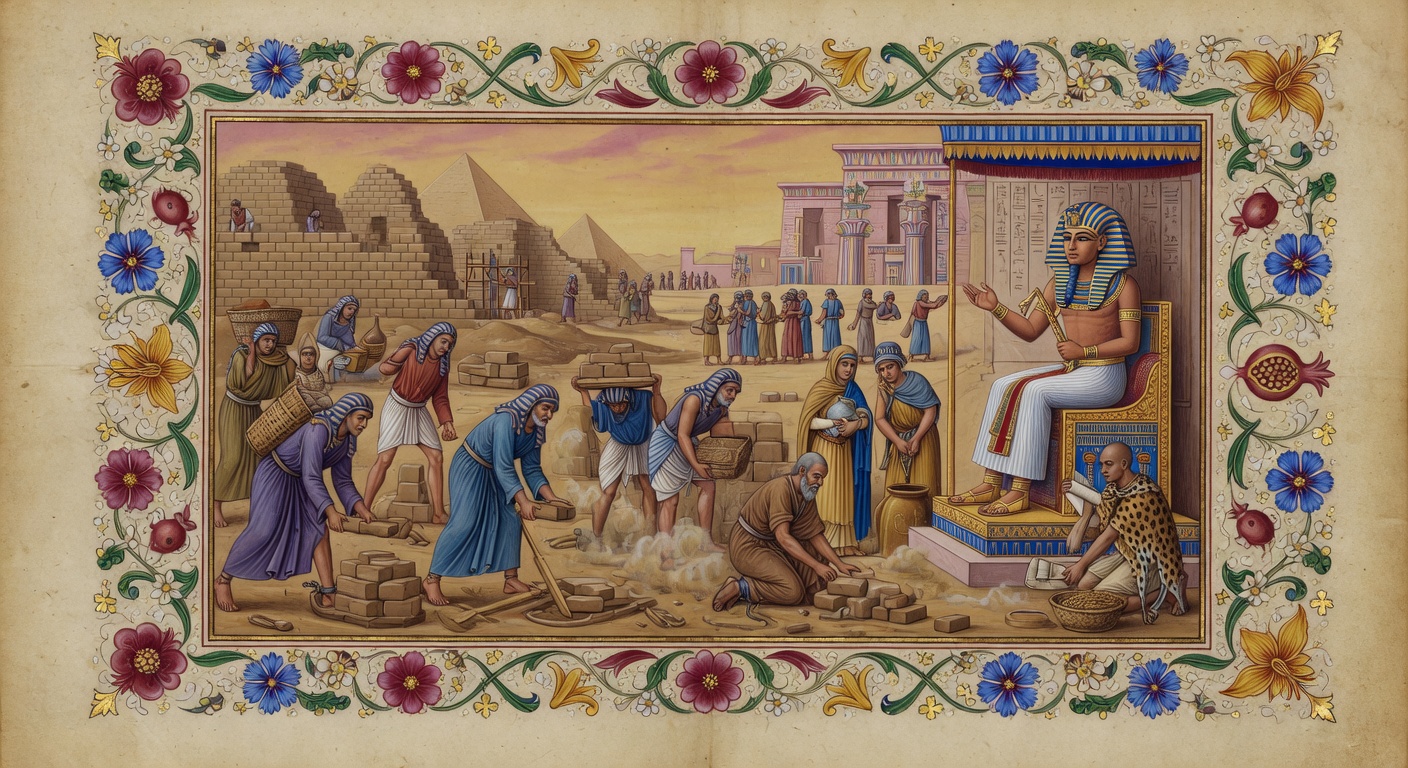
Following the death of Joseph and his generation, a new Pharaoh rose to power in Egypt who had no regard for the contributions of the Israelites' ancestors. Fearing their growing numbers and potential alliance with enemies, he subjected the Hebrews to harsh slavery, forcing them to construct cities and endure brutal labor under oppressive taskmasters. This period of bondage, lasting several centuries, tested the faith of God's people but ultimately highlighted divine faithfulness as God prepared to fulfill His covenant promises through deliverance. The event underscores key biblical themes of suffering, redemption, and God's sovereignty over nations, setting the stage for the Exodus narrative central to Israel's identity and Scripture's message of salvation.
Did You Know?
Fearing their growing numbers and potential alliance with enemies, he subjected the Hebrews to harsh slavery, forcing them to construct cities and endure brutal labor under oppressive taskmasters.
This period of bondage, lasting several centuries, tested the faith of God's people but ultimately highlighted divine faithfulness as God prepared to fulfill His covenant promises through deliverance.
This event is dated to approximately c. 1550-1446 BC in biblical chronology.
This took place at or near Egypt.
Key Passage
Israel's Slavery in Egypt
Exodus 1:8-14
 8ow there arose up a new king over Egypt, which knew not Joseph.
Meanwhile in the World
Egypt is at the height of its New Kingdom power under pharaohs like Thutmose III and Ramesses II. The Hittite Empire controls Anatolia. The Late Bronze Age collapse is approaching. Troy exists as a real city. This is the time of the Amarna letters and international diplomacy.