John on Patmos
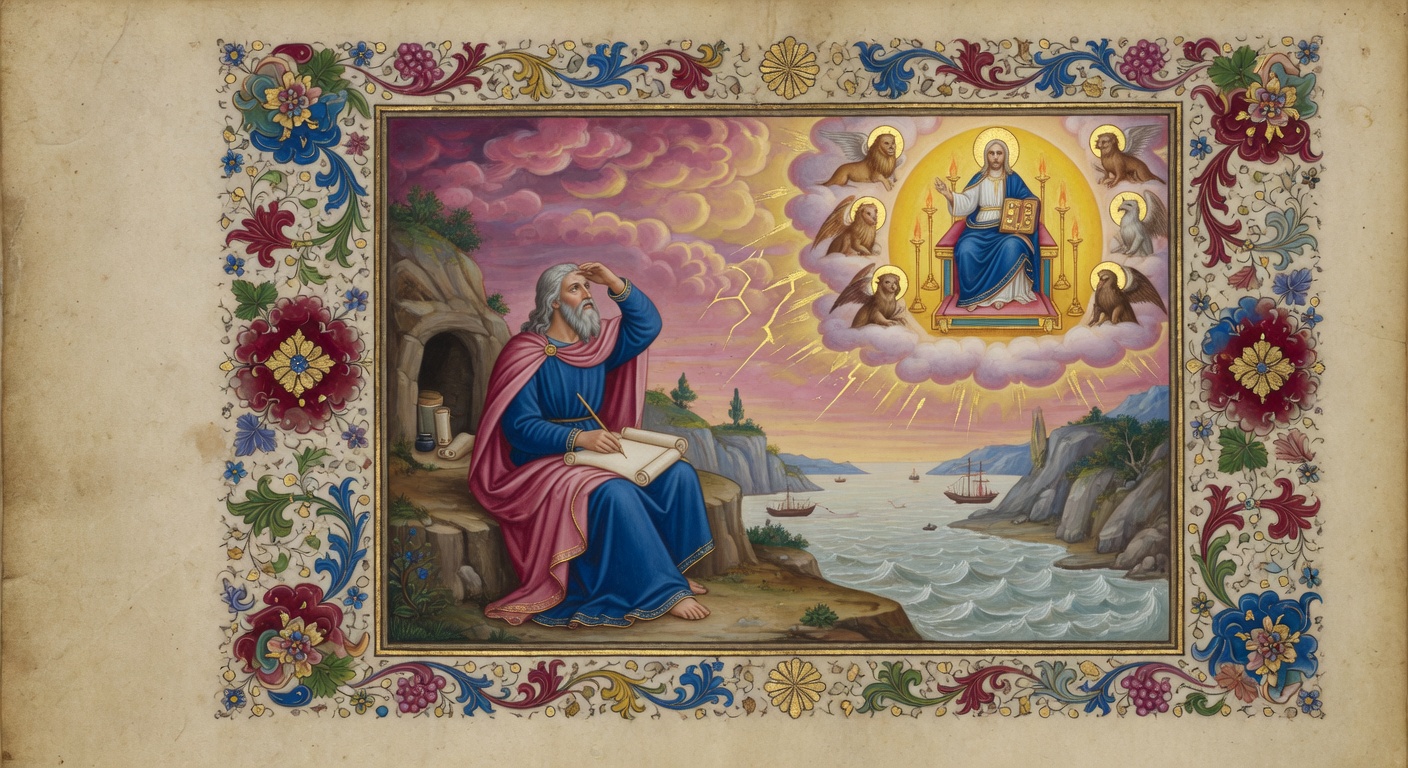
The apostle John was exiled to the island of Patmos during a period of Roman persecution against early Christians for his faithful witness to Jesus Christ. While on the island, John received a series of divine visions revealing future events, including the judgments of God, the triumph of Christ, and the establishment of a new heaven and earth. These visions form the content of the Book of Revelation, the final book of the New Testament canon. The account holds significant importance in Scripture as it provides hope and encouragement to believers facing trials, assuring them of God's ultimate victory over evil.
Did You Know?
While on the island, John received a series of divine visions revealing future events, including the judgments of God, the triumph of Christ, and the establishment of a new heaven and earth.
These visions form the content of the Book of Revelation, the final book of the New Testament canon.
This event is dated to approximately c. AD 95 in biblical chronology.
This took place at or near Patmos.
Key Passage
John on Patmos
Revelation 1:9-20
 9 John, who also am your brother, and companion in tribulation, and in the kingdom and patience of Jesus Christ, was in the isle that is called Patmos, for the word of God, and for the testimony of Jesus Christ.
Meanwhile in the World
The Roman Empire under Nero, Vespasian, and Domitian. Nero persecutes Christians (AD 64). Jerusalem and its temple are destroyed by Rome (AD 70). Pompeii is buried by Vesuvius (AD 79). The Colosseum is built. This is the era of the Pax Romana's later years and increasing imperial cult pressure.
Destruction of the Second Temple (70 AD), rise of rabbinic Judaism