Death of Saul
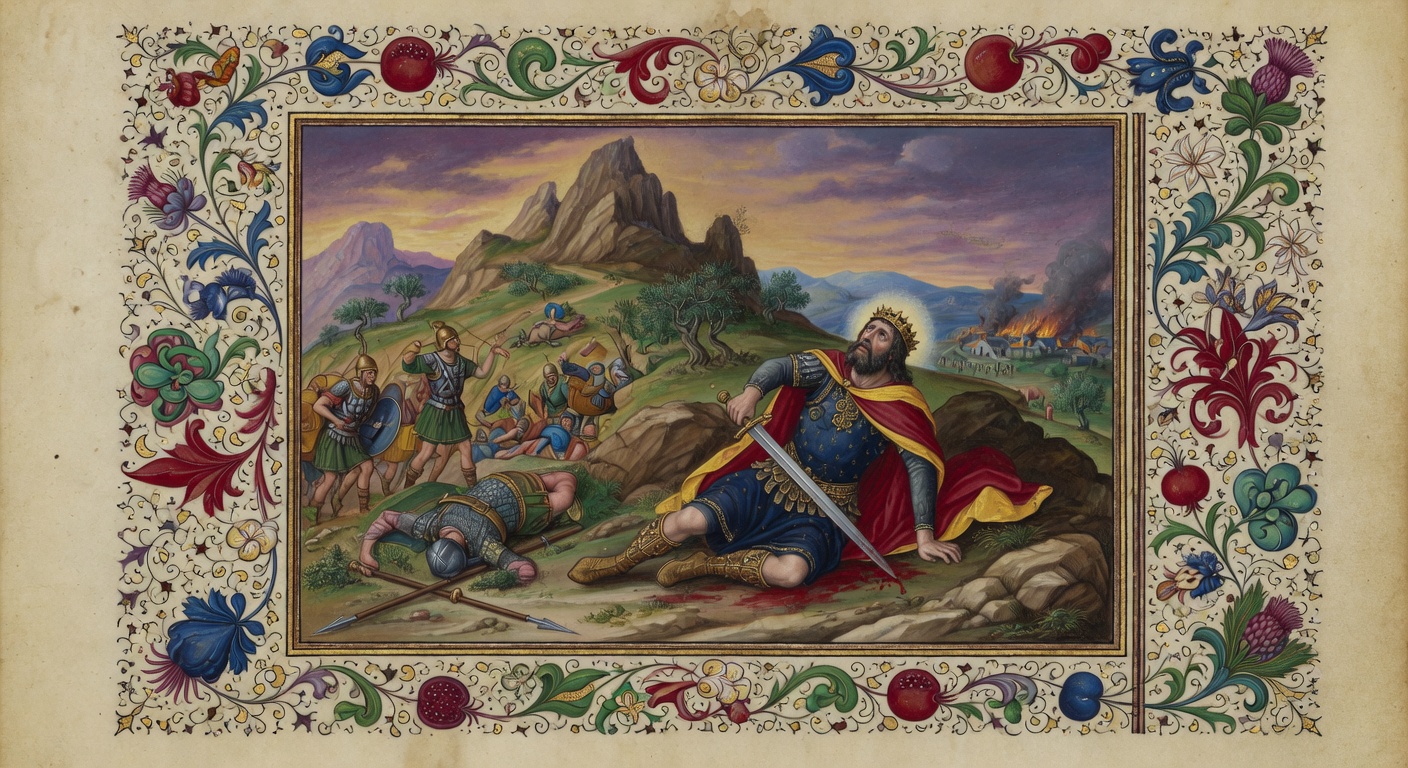
King Saul, the first king of Israel whose reign had been rejected by God due to repeated disobedience, led his army against the Philistines in a decisive battle on Mount Gilboa. As his forces collapsed and his sons were slain, Saul was severely wounded by archers; he then urged his armor-bearer to end his life to prevent capture and mockery, and upon refusal fell on his own sword. This suicide fulfilled earlier prophetic warnings of judgment on Saul and immediately ended his dynasty, allowing David. Already anointed. To unite the tribes and establish the promised royal line. In Scripture the account highlights themes of divine sovereignty, the cost of unfaithfulness, and the transition from one era of leadership to another.
Did You Know?
As his forces collapsed and his sons were slain, Saul was severely wounded by archers; he then urged his armor-bearer to end his life to prevent capture and mockery, and upon refusal fell on his own sword.
This suicide fulfilled earlier prophetic warnings of judgment on Saul and immediately ended his dynasty, allowing David.
This event is dated to approximately c. 1010 BC in biblical chronology.
Key Passage
Death of Saul
1 Samuel 31:1-6
 1ow the Philistines fought against Israel: and the men of Israel fled from before the Philistines, and fell down slain in mount Gilboa.
Meanwhile in the World
Egypt is in decline (Third Intermediate Period). Phoenicia dominates Mediterranean trade. The Greek Dark Age continues. Assyria is rising in Mesopotamia. Homer may be composing the Iliad and Odyssey. This is the era of the great Phoenician alphabet spreading.