What language did Jesus speak?
Jesus most likely spoke Aramaic as his everyday language, as shown by the Aramaic words the Gospels preserve, such as "Talitha cumi" (Mark 5:41). He also knew Hebrew, the language of the Scriptures, and may have spoken some Greek.
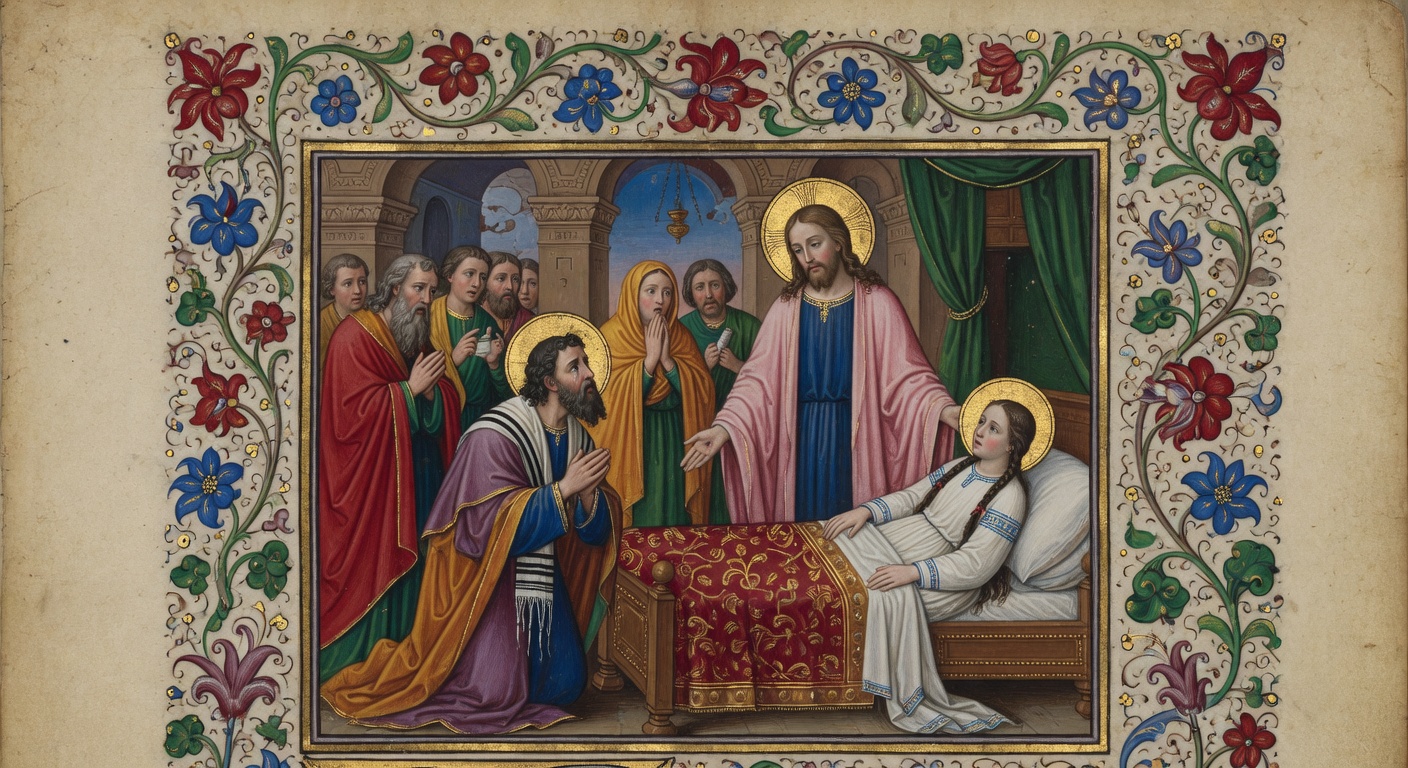
In first-century Galilee and Judea, the everyday language of Jewish people was Aramaic, a close relative of Hebrew that had spread across the Near East and was widely used by Jews after the Babylonian exile. The Gospels, though written in Greek, preserve several of Jesus' actual Aramaic words, usually followed by a translation. Raising Jairus's daughter, he said, "Talitha cumi; which is, being interpreted, Damsel, I say unto thee, arise" (Mark 5:41). Healing a deaf man, he said, "Ephphatha, that is, Be opened" (Mark 7:34). In Gethsemane he prayed, "Abba, Father" (Mark 14:36), and on the cross he cried, "Eloi, Eloi, lama sabachthani?" (Mark 15:34). He gave Simon the Aramaic name Cephas, "which is by interpretation, A stone" (John 1:42), and Mary Magdalene called him "Rabboni" (John 20:16). Jesus also knew Hebrew, the language of the Scriptures, since he read from the scroll of Isaiah in the Nazareth synagogue (Luke 4:16-17). Greek was the common trade language of the Roman East, and many scholars think Jesus may have used some Greek, perhaps with Gentiles or with Pilate, though the Gospels do not say so directly. The sign on his cross was written "in Hebrew, and Greek, and Latin" (John 19:20), a snapshot of the languages heard in Jerusalem at the time. When the New Testament mentions "the Hebrew tongue" (as in Acts 21:40), many scholars think it may sometimes mean Aramaic, the everyday speech of the Hebrew people in that era.
Key Passages
Talitha cumi
Mark 5:4141 And he took the damsel by the hand, and said unto her, Talitha cumi; which is, being interpreted, Damsel, I say unto thee, arise.
Eloi, Eloi, lama sabachthani
Mark 15:3434 And at the ninth hour Jesus cried with a loud voice, saying, Eloi, Eloi, lama sabachthani? which is, being interpreted, My God, my God, why hast thou forsaken me?
Jesus reads from the book of Esaias
Luke 4:16-1716 And he came to Nazareth, where he had been brought up: and, as his custom was, he went into the synagogue on the sabbath day, and stood up for to read. 17 And there was delivered unto him the book of the prophet Esaias. And when he had opened the book, he found the place where it was written,
Related People
More Bible Facts & Background Questions
Explore more Bible questions & answers, or read the full passage in context on the reading pages.