Leviticus 3 KJV
The Peace Offering
The Peace Offering
The peace offering uniquely permits both male and female animals without blemish, a flexibility absent from most other Levitical sacrifices and reflecting its purpose in establishing communal fellowship rather than exclusive consecration.
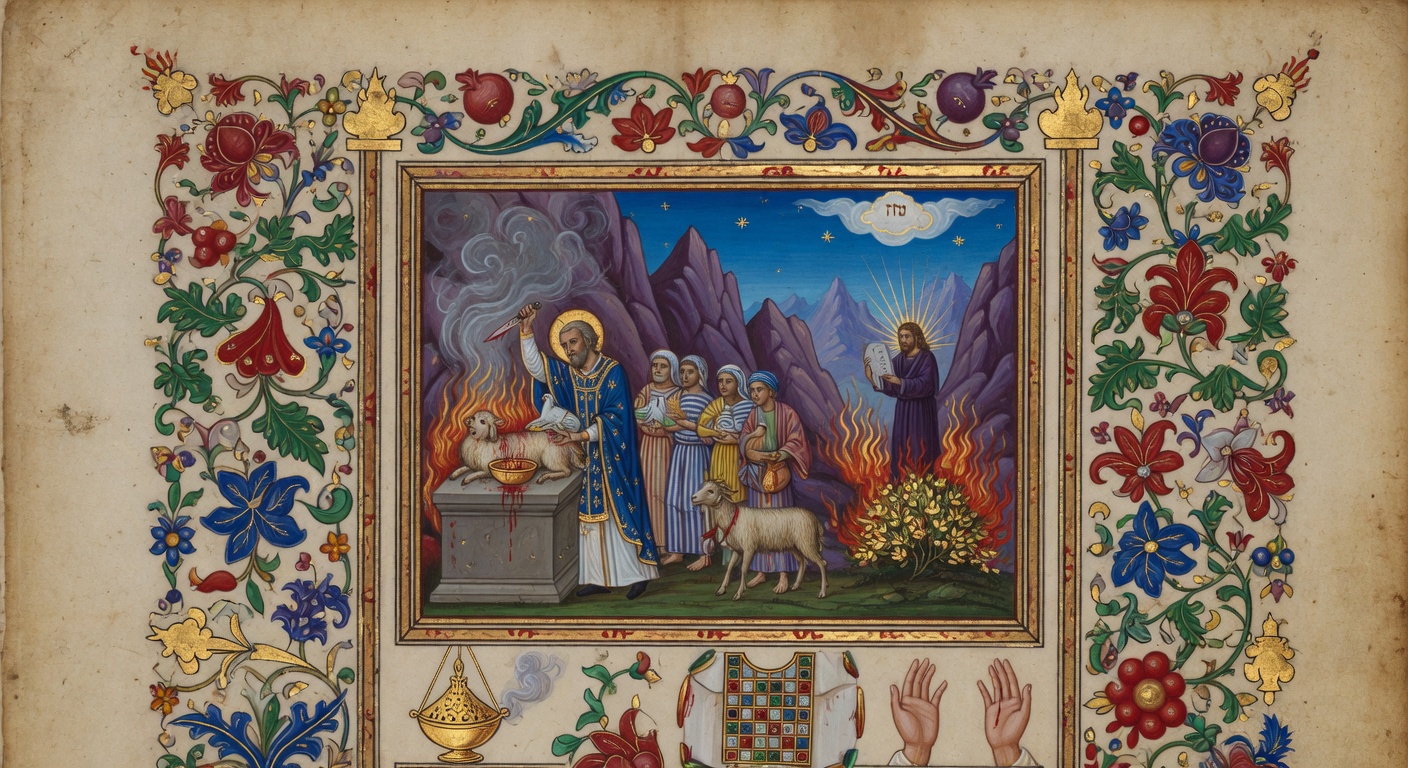
 1nd if his oblation be a sacrifice of peace offering, if he offer it of the herd; whether it be a male or female, he shall offer it without blemish before the LORD.
2 And he shall lay his hand upon the head of his offering, and kill it at the door of the tabernacle of the congregation: and Aaron’s sons the priests shall sprinkle the blood upon the altar round about.
3 And he shall offer of the sacrifice of the peace offering an offering made by fire unto the LORD; the fat that covereth the inwards, and all the fat that is upon the inwards,
4 And the two kidneys, and the fat that is on them, which is by the flanks, and the caul above the liver, with the kidneys, it shall he take away.
5 And Aaron’s sons shall burn it on the altar upon the burnt sacrifice, which is upon the wood that is on the fire: it is an offering made by fire, of a sweet savour unto the LORD.
6 And if his offering for a sacrifice of peace offering unto the LORD be of the flock; male or female, he shall offer it without blemish.
7 If he offer a lamb for his offering, then shall he offer it before the LORD.
8 And he shall lay his hand upon the head of his offering, and kill it before the tabernacle of the congregation: and Aaron’s sons shall sprinkle the blood thereof round about upon the altar.
9 And he shall offer of the sacrifice of the peace offering an offering made by fire unto the LORD; the fat thereof, and the whole rump, it shall he take off hard by the backbone; and the fat that covereth the inwards, and all the fat that is upon the inwards,
10 And the two kidneys, and the fat that is upon them, which is by the flanks, and the caul above the liver, with the kidneys, it shall he take away.
11 And the priest shall burn it upon the altar: it is the food of the offering made by fire unto the LORD.
12 And if his offering be a goat, then he shall offer it before the LORD.
13 And he shall lay his hand upon the head of it, and kill it before the tabernacle of the congregation: and the sons of Aaron shall sprinkle the blood thereof upon the altar round about.
14 And he shall offer thereof his offering, even an offering made by fire unto the LORD; the fat that covereth the inwards, and all the fat that is upon the inwards,
15 And the two kidneys, and the fat that is upon them, which is by the flanks, and the caul above the liver, with the kidneys, it shall he take away.
16 And the priest shall burn them upon the altar: it is the food of the offering made by fire for a sweet savour: all the fat is the LORD’s.
17 It shall be a perpetual statute for your generations throughout all your dwellings, that ye eat neither fat nor blood.
← → arrow keys to navigate chapters · spacebar to play/pause audio
Did You Know?
The peace offering uniquely permits both male and female animals without blemish, a flexibility absent from most other Levitical sacrifices and reflecting its purpose in establishing communal fellowship rather than exclusive consecration.
Specific internal fats. Including the kidneys, the caul above the liver, and for sheep the entire fatty tail. Are mandated for burning, drawing on ancient Near Eastern views of fat as the richest essence reserved exclusively for the deity.
Blood is applied by sprinkling round about the altar rather than poured at its base, visually enacting an encompassing circle of reconciliation that distinguishes this rite from the sin or burnt offerings.
The chapter closes by embedding a perpetual statute against consuming any fat or blood, transforming the sacrificial procedure itself into an enduring dietary and theological boundary that later shaped kosher observance.
Goats receive the same altar treatment as oxen and sheep, yet the text omits any reference to the fat tail for goats, subtly acknowledging differences in Levantine livestock anatomy while maintaining ritual uniformity.
Moses' marriage to a Cushite woman sparked familial opposition from Miriam and Aaron, resulting in Miriam's temporary affliction with leprosy as divine punishment, underscoring tensions over ethnic intermarriage in the wilderness period.
Following the deaths of his sons Nadab and Abihu for offering unauthorized fire, Aaron was instructed to remain silent and not mourn publicly, emphasizing the sacred boundaries separating priestly duties from personal grief.
He stood beside Moses during the public commissioning of Joshua as successor, receiving the Urim and Thummim authority that allowed him to seek divine guidance for Israel's leaders after Moses' death.
Moses spent 40 days on Mount Sinai. Twice.
Commentary & Study Notes Jamieson-Fausset-Brown (1871) · Public Domain if his oblation be a sacrifice of peace offering — "Peace" being used in Scripture to denote prosperity and happiness generally, a peace offering was a voluntary tribute of gratitu…
Classic verse-by-verse commentary on Leviticus 3 from Jamieson, Fausset & Brown (1871). Covers: The peace offering of the herd.
- 1
- if his oblation be a sacrifice of peace offering — "Peace" being used in Scripture to denote prosperity and happiness generally, a peace offering was a voluntary tribute of gratitude for health or other benefits. In this view it was eucharistic, being a token of thanksgiving for benefits already received, or it was sometimes votive, presented in prayer for benefits wished for in the future. of the herd — This kind of offering being of a festive character, either male or female, if without blemish, might be used, as both of them were equally good for food, and, if the circumstances of the offerer allowed it, it might be a calf.
- 2
- he shall lay his hand upon the head of his offering — Having performed this significant act, he killed it before the door of the tabernacle, and the priests sprinkled the blood round about upon the altar.
Read all 6 notes on Leviticus 3 →