Malachi 1 KJV
The Lord's Love for Israel
The Lord's Love for Israel
The chapter's declaration of God's hatred for Esau and the perpetual desolation of Edom serves as a theological counterpoint to Israel's election, illustrating divine sovereignty over nations in a post-exilic context where Edom's territory had been encroached upon by Nabatean Arabs.
 1he burden of the word of the LORD to Israel by Malachi.
2 I have loved you, saith the LORD. Yet ye say, Wherein hast thou loved us? Was not Esau Jacob’s brother? saith the LORD: yet I loved Jacob,
3 And I hated Esau, and laid his mountains and his heritage waste for the dragons of the wilderness.
4 Whereas Edom saith, We are impoverished, but we will return and build the desolate places; thus saith the LORD of hosts, They shall build, but I will throw down; and they shall call them, The border of wickedness, and, The people against whom the LORD hath indignation for ever.
5 And your eyes shall see, and ye shall say, The LORD will be magnified from the border of Israel.
6 A son honoureth his father, and a servant his master: if then I be a father, where is mine honour? and if I be a master, where is my fear? saith the LORD of hosts unto you, O priests, that despise my name. And ye say, Wherein have we despised thy name?
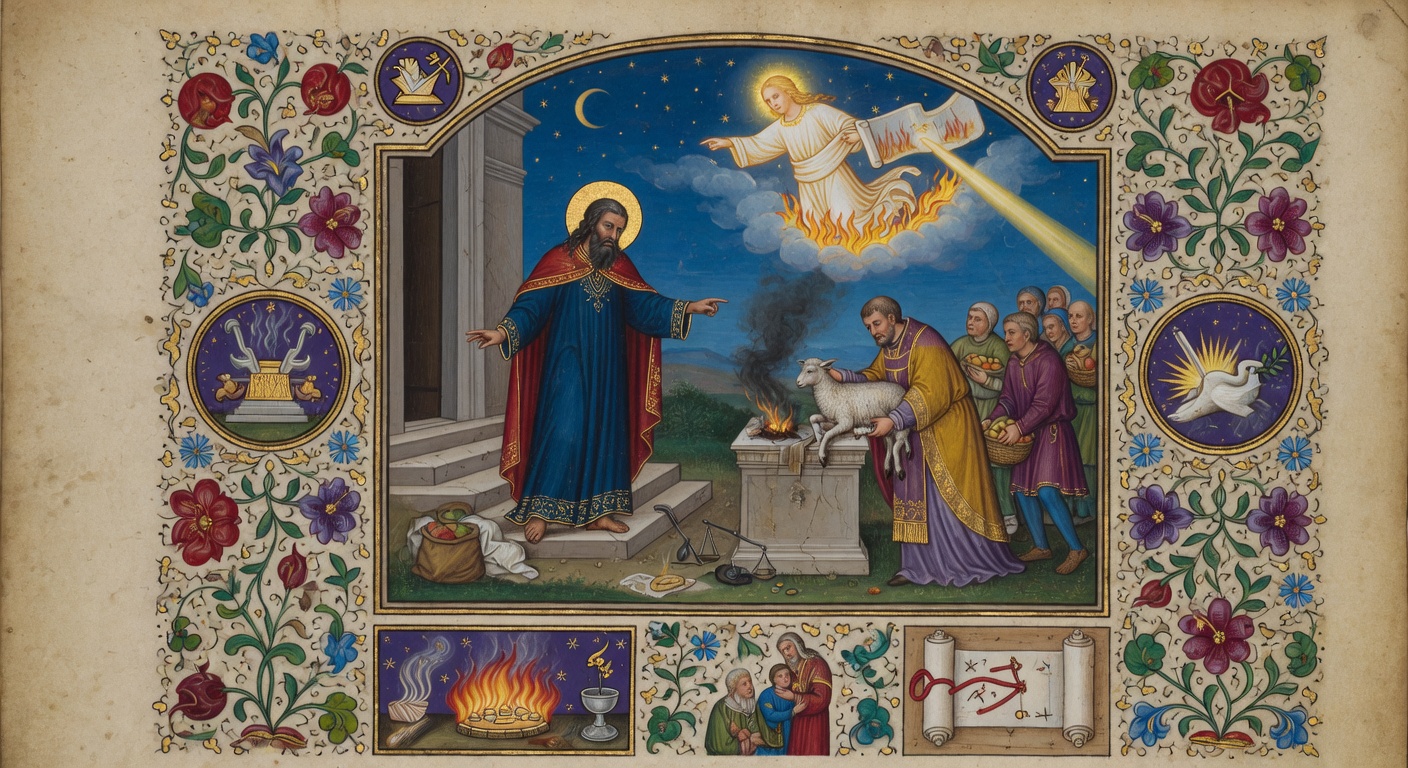
7 Ye offer polluted bread upon mine altar; and ye say, Wherein have we polluted thee? In that ye say, The table of the LORD is contemptible.
8 And if ye offer the blind for sacrifice, is it not evil? and if ye offer the lame and sick, is it not evil? offer it now unto thy governor; will he be pleased with thee, or accept thy person? saith the LORD of hosts.
9 And now, I pray you, beseech God that he will be gracious unto us: this hath been by your means: will he regard your persons? saith the LORD of hosts.
10 Who is there even among you that would shut the doors for nought? neither do ye kindle fire on mine altar for nought. I have no pleasure in you, saith the LORD of hosts, neither will I accept an offering at your hand.
11 For from the rising of the sun even unto the going down of the same my name shall be great among the Gentiles; and in every place incense shall be offered unto my name, and a pure offering: for my name shall be great among the heathen, saith the LORD of hosts.
12 But ye have profaned it, in that ye say, The table of the LORD is polluted; and the fruit thereof, even his meat, is contemptible.
13 Ye said also, Behold, what a weariness is it! and ye have snuffed at it, saith the LORD of hosts; and ye brought that which was torn, and the lame, and the sick; thus ye brought an offering: should I accept this of your hand? saith the LORD.
14 But cursed be the deceiver, which hath in his flock a male, and voweth, and sacrificeth unto the LORD a corrupt thing: for I am a great King, saith the LORD of hosts, and my name is dreadful among the heathen.
← → arrow keys to navigate chapters · spacebar to play/pause audio
Did You Know?
The chapter's declaration of God's hatred for Esau and the perpetual desolation of Edom serves as a theological counterpoint to Israel's election, illustrating divine sovereignty over nations in a post-exilic context where Edom's territory had been encroached upon by Nabatean Arabs.
The priests' offering of blind and lame sacrifices is framed not merely as ritual negligence but as a profound dishonoring of the covenant with Levi, echoing the zealous intervention of Phinehas in Numbers 25 while inverting it to show how the same priestly line now profanes what it once defended.
Malachi 1:11's vision of incense and a pure offering rising to God's name among the Gentiles from east to west functions as an eschatological reversal of Israel's exclusive cult, prefiguring the inclusion of non-Israelites without requiring temple pilgrimage or circumcision.
The comparison of unacceptable offerings to gifts a Persian governor would refuse embeds the prophecy in the administrative realities of Achaemenid Yehud, where local priests navigated both Mosaic purity laws and expectations of tribute to imperial officials.
By calling the temple altar 'the table of the Lord,' the text employs rare domestic imagery that subtly equates sacrificial worship with covenant fellowship, a motif later developed in New Testament eucharistic language while exposing the priests' contempt as a rupture in divine-human communion.
The final verse of Malachi warns that God will strike the land with a curse if Elijah's message is not heeded, making it the only Old Testament book to conclude on such a note of judgment.
Before his birth, John leaped in his mother Elizabeth's womb upon hearing Mary's greeting, an event interpreted as the unborn prophet recognizing the presence of the Messiah (Luke 1:41-44).
The city has been destroyed at least twice, besieged 23 times, and captured 44 times.
Edom was the nation descended from Esau, the brother of Jacob, and was located southeast of the Dead Sea in the rugged hill country of Seir.
Commentary & Study Notes Jamieson-Fausset-Brown (1871) · Public Domain burden — heavy sentence. to Israel — represented now by the two tribes of Judah and Benjamin, with individuals of the ten tribes who had returned with the Jews from Babylon. So "Is…
Classic verse-by-verse commentary on Malachi 1 from Jamieson, Fausset & Brown (1871). Covers: God's love: Israel's ingratitude: the priests' mercenary spirit: a gentile spiritual priesthood shall supersede them.
- 1
- burden — heavy sentence. to Israel — represented now by the two tribes of Judah and Benjamin, with individuals of the ten tribes who had returned with the Jews from Babylon. So "Israel" is used, Ezr 7:10. Compare 2Ch 21:2, "Jehoshaphat king of Israel," where Judah, rather than the ten tribes, is regarded as the truest representative of Israel (compare 2Ch 12:6; 28:19). Malachi — see Introduction. God sent no prophet after him till John the Baptist, the forerunner of Christ, in order to enflame His people with the more ardent desire for Him, the great antitype and fulfiller of prophecy.
- 2
- I have loved you — above other men; nay, even above the other descendants of Abraham and Isaac. Such gratuitous love on My part called for love on yours. But the return ye make is sin and dishonor to Me. This which is to be supplied is left unexpressed, sorrow as it were breaking off the sentence [MENOCHIUS], (De 7:8; Ho 11:1). Wherein hast thou loved us? — In painful contrast to the tearful tenderness of God's love stands their insolent challenge. The root of their sin was insensibility to God's love, and to their own wickedness. Having had prosperity taken from them, they imply they have no tokens of God's love; they look at what God had taken, not at what God had left. God's love is often least acknowledged where it is most manifested. We must not infer God does not love us because He afflicts us. Men, instead of referring their sufferings to their proper cause, their own sin, impiously accuse God of indifference to their welfare [MOORE]. Thus Mal 1:1-4 form a fit introduction to the whole prophecy. Was not Esau Jacob's brother? — and so, as far as dignity went, as much entitled to God's favor as Jacob. My adoption of Jacob, therefore, was altogether by gratuitous favor (Ro 9:13). So God has passed by our elder brethren, the angels who kept not their first estate, and yet He has provided salvation for man. The perpetual rejection of the fallen angels, like the perpetual desolations of Edom, attests God's severity to the lost, and goodness to those gratuitously saved. The sovereign eternal purpose of God is the only ground on which He bestows on one favors withheld from another. There are difficulties in referring salvation to the election of God, there are greater in referring it to the election of man [MOORE]. Jehovah illustrates His condescension and patience in arguing the case with them.
Read all 14 notes on Malachi 1 →