Psalms 30 KJV
Thanksgiving for Healing
About This Psalm
Joy after mourning. Weeping may last for a night, but joy comes in the morning. A psalm for anyone coming out of a dark season.
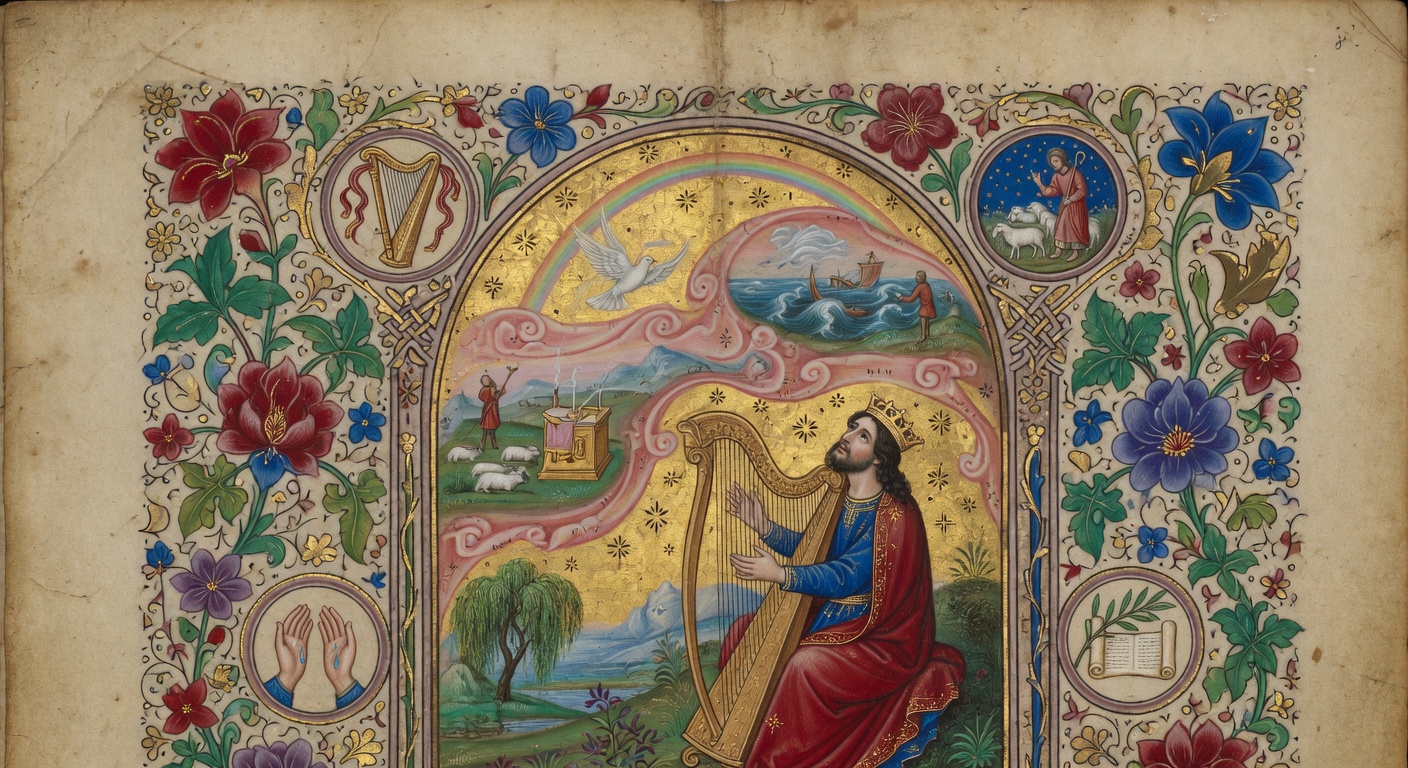
 1 will extol thee, O LORD; for thou hast lifted me up, and hast not made my foes to rejoice over me.
2 O LORD my God, I cried unto thee, and thou hast healed me.
3 O LORD, thou hast brought up my soul from the grave: thou hast kept me alive, that I should not go down to the pit.
4 Sing unto the LORD, O ye saints of his, and give thanks at the remembrance of his holiness.
5 For his anger endureth but a moment; in his favour is life: weeping may endure for a night, but joy cometh in the morning.
6 And in my prosperity I said, I shall never be moved.
7 LORD, by thy favour thou hast made my mountain to stand strong: thou didst hide thy face, and I was troubled.
8 I cried to thee, O LORD; and unto the LORD I made supplication.
9 What profit is there in my blood, when I go down to the pit? Shall the dust praise thee? shall it declare thy truth?
10 Hear, O LORD, and have mercy upon me: LORD, be thou my helper.
11 Thou hast turned for me my mourning into dancing: thou hast put off my sackcloth, and girded me with gladness;
12 To the end that my glory may sing praise to thee, and not be silent. O LORD my God, I will give thanks unto thee for ever.
← → arrow keys to navigate chapters · spacebar to play/pause audio
Did You Know?
Traditionally recited on Hanukkah's first day, its superscription about dedicating David's house aligns personal restoration with themes of temple rededication after desecration.
Verse 3's imagery of God bringing the soul up from the grave draws on ancient Near Eastern views of Sheol, portraying healing as a reversal of descent into the pit where praise ceases.
The link to 2 Samuel 24 ties the psalm to David's census plague at Araunah's threshing floor, where the site of halted judgment later becomes the temple mount, merging individual and national healing.
Verse 5's declaration that anger lasts a moment but favor endures for life offers a covenantal theology distinguishing temporary divine discipline from enduring mercy, echoed in prophetic reversals like Hosea.
The transition from singular thanksgiving to the plural summons for saints to sing in verse 4 models how personal deliverance in Israelite worship expands into corporate liturgy affirming God's faithfulness.
While fleeing Saul, David sought refuge among the Philistines and feigned madness before King Achish of Gath by scribbling on the city gates and letting saliva run down his beard, successfully avoiding recognition.
Solomon conscripted 30,000 Israelite men for monthly rotations of forced labor in Lebanon to harvest cedar and cypress timber for the temple, while assigning an additional 150,000 Canaanite laborers to quarry and transport stone, reflecting the ancient Near Eastern practice of corvée labor systems.
This location became the focal point of national worship and divine promises, later extending symbolically to encompass the Temple Mount where Solomon built the house of the Lord.
Jerusalem sits at about 2,500 feet elevation. Higher than most surrounding areas.
Commentary & Study Notes Jamieson-Fausset-Brown (1871) · Public Domain lifted me up — as one is drawn from a well (Ps 40:2).
Classic verse-by-verse commentary on Psalms 30 from Jamieson, Fausset & Brown (1871). Covers: Literally, "a psalm-song"--a composition to be sung with musical instruments, or without them--or, "song of the dedication," &c. Specifying the particular character of the psalm. Some suppose that of David should be connected with the name of the composition, and not with "house"; And refer for the occasion to the selection of a site for the temple (1ch 21:26-30; 22:1). But "house" is never used absolutely for the temple, and "dedication" does not well apply to such an occasion. Though the phrase in the hebrew, "dedication of the house of David," is an unusual form, yet it is equally unusual to disconnect the name of the author and the composition. As a "dedication of David's house" (as provided, de 20:5), the scope of the psalm well corresponds with the state of repose and meditation on his past trials suited to such an occasion (2sa 5:11; 7:2). For beginning with a celebration of God's delivering favor, in which he invites others to join, he relates his prayer in distress, and God's gracious and prompt answer.
- 1
- lifted me up — as one is drawn from a well (Ps 40:2).
- 2
- healed me — Affliction is often described as disease (Ps 6:2; 41:4; 107:20), and so relief by healing.
Read all 10 notes on Psalms 30 →