Psalms 62 KJV
Rest in God Alone
About This Psalm
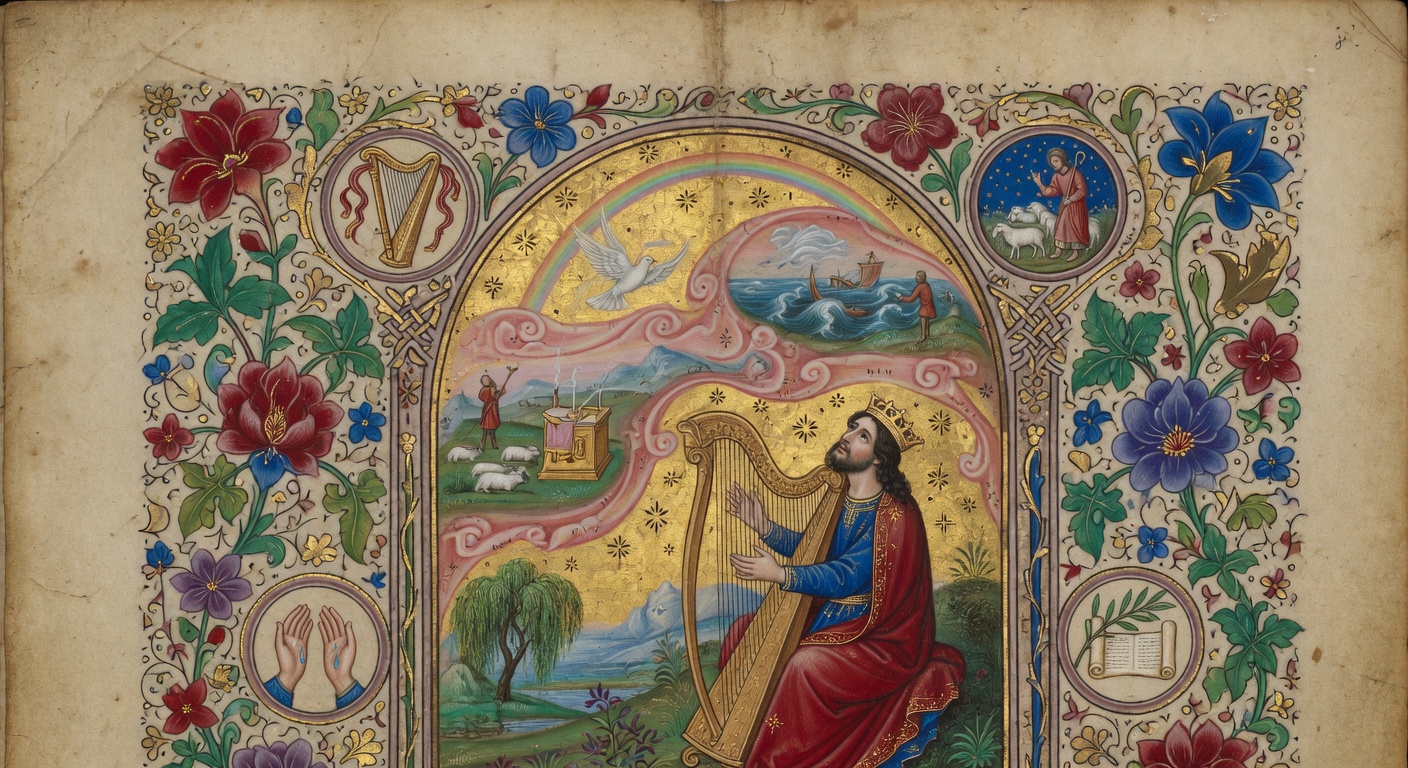
My soul waits in silence for God alone. In a noisy world, choosing to be still and trust. Power belongs to God.
 1ruly my soul waiteth upon God: from him cometh my salvation.
2 He only is my rock and my salvation; he is my defence; I shall not be greatly moved.
3 How long will ye imagine mischief against a man? ye shall be slain all of you: as a bowing wall shall ye be, and as a tottering fence.
4 They only consult to cast him down from his excellency: they delight in lies: they bless with their mouth, but they curse inwardly. Selah.
5 My soul, wait thou only upon God; for my expectation is from him.
6 He only is my rock and my salvation: he is my defence; I shall not be moved.
7 In God is my salvation and my glory: the rock of my strength, and my refuge, is in God.
8 Trust in him at all times; ye people, pour out your heart before him: God is a refuge for us. Selah.
9 Surely men of low degree are vanity, and men of high degree are a lie: to be laid in the balance, they are altogether lighter than vanity.
10 Trust not in oppression, and become not vain in robbery: if riches increase, set not your heart upon them.
11 God hath spoken once; twice have I heard this; that power belongeth unto God.
12 Also unto thee, O Lord, belongeth mercy: for thou renderest to every man according to his work.
← → arrow keys to navigate chapters · spacebar to play/pause audio
Did You Know?
The superscription dedicates the psalm to Jeduthun, one of three Levitical music leaders appointed by David, indicating it was crafted for a specific guild of temple performers rather than general use.
Verse 9's imagery of humanity placed 'in the balance' and found lighter than vanity echoes Egyptian judgment scales and anticipates later apocalyptic weighing motifs, framing social status as cosmically insignificant.
The double refrain in verses 2 and 6 creates a chiastic envelope around the central warning against trusting in oppression or riches, forcing the reader to experience the very 'waiting' the psalm advocates.
Its rejection of both 'low degree' and 'high degree' men as equally unreliable offers a subtle critique of ancient patronage systems, presenting radical dependence on God as the only stable alternative to political alliances.
The psalm's language of God as 'rock' and 'refuge' links it intertextually to the Song of Moses in Deuteronomy 32, transforming a national covenant hymn into an individual's personal declaration of trust amid betrayal.
Jonathan sealed his covenant with David by giving him his royal robe, armor, sword, bow, and belt, ritually transferring symbols of kingship despite being Saul's heir.
Solomon's throne, overlaid with gold and ivory, featured six steps flanked by twelve lions symbolizing the tribes of Israel and incorporated a calf-shaped seat back, making it a unique artifact unmatched by any other royal throne of the era.
The New Testament further develops this imagery to portray the heavenly Jerusalem where believers gather to the living God.
Jerusalem sits at about 2,500 feet elevation. Higher than most surrounding areas.
Commentary & Study Notes Jamieson-Fausset-Brown (1871) · Public Domain waiteth — literally, "is silent," trusts submissively and confidently as a servant.
Classic verse-by-verse commentary on Psalms 62 from Jamieson, Fausset & Brown (1871). Covers: To jeduthun--(see on ps 39:1, title). The general tone of this psalm is expressive of confidence in God. Occasion is taken to remind the wicked of their sin, their ruin, and their meanness.
- 1
- waiteth — literally, "is silent," trusts submissively and confidently as a servant.
- 2
- The titles applied to God often occur (Ps 9:9; 18:2). be greatly moved — (Ps 10:6). No injury shall be permanent, though devised by enemies.
Read all 12 notes on Psalms 62 →