Psalms 63 KJV
Thirsting for God in the Desert
About This Psalm
Thirsting for God in a dry wilderness. Early morning devotion when your soul is parched. Better than life itself.
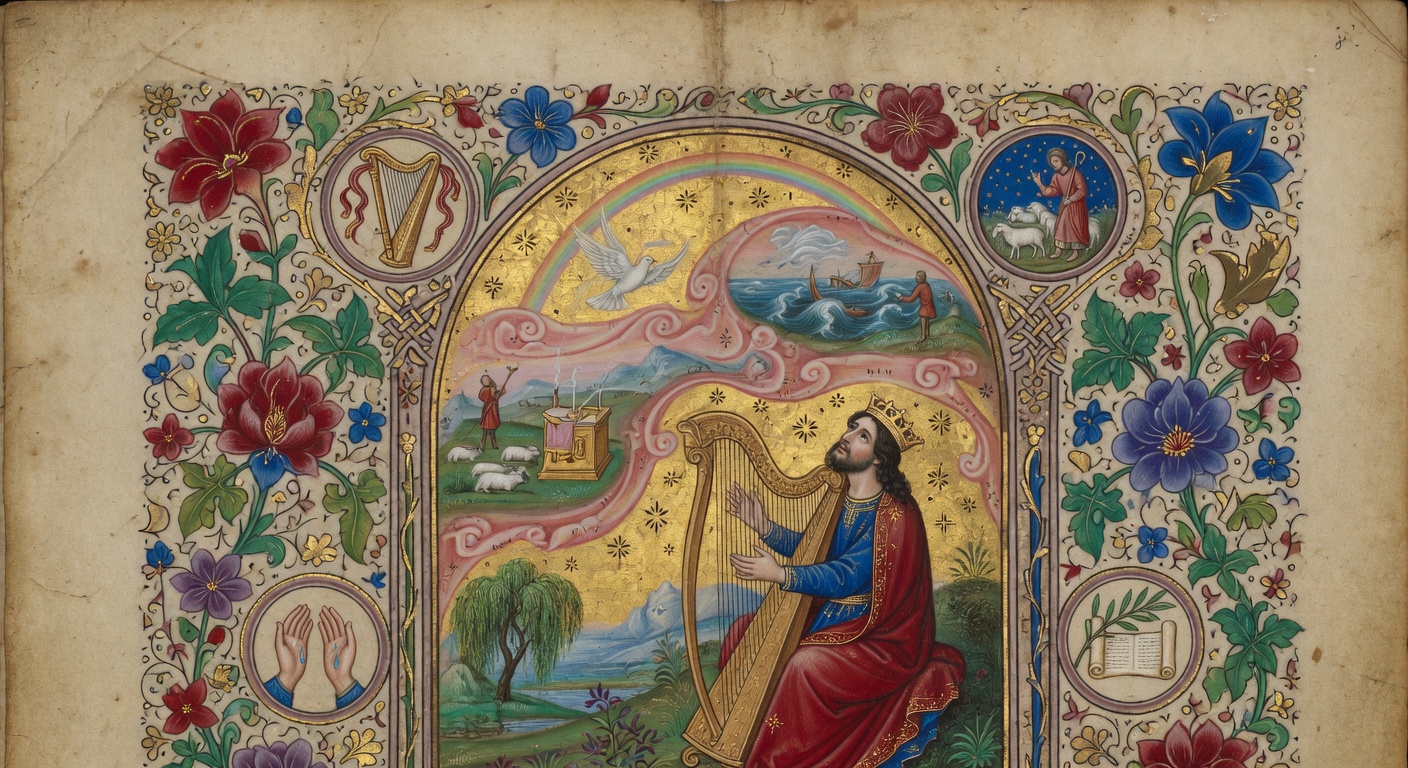
 1 God, thou art my God; early will I seek thee: my soul thirsteth for thee, my flesh longeth for thee in a dry and thirsty land, where no water is;
2 To see thy power and thy glory, so as I have seen thee in the sanctuary.
3 Because thy lovingkindness is better than life, my lips shall praise thee.
4 Thus will I bless thee while I live: I will lift up my hands in thy name.
5 My soul shall be satisfied as with marrow and fatness; and my mouth shall praise thee with joyful lips:
6 When I remember thee upon my bed, and meditate on thee in the night watches.
7 Because thou hast been my help, therefore in the shadow of thy wings will I rejoice.
8 My soul followeth hard after thee: thy right hand upholdeth me.
9 But those that seek my soul, to destroy it, shall go into the lower parts of the earth.
10 They shall fall by the sword: they shall be a portion for foxes.
11 But the king shall rejoice in God; every one that sweareth by him shall glory: but the mouth of them that speak lies shall be stopped.
← → arrow keys to navigate chapters · spacebar to play/pause audio
Did You Know?
The psalm's opening thirst imagery in a waterless desert deliberately echoes the Exodus rock-water miracle and manna provision, recasting national wilderness deliverance as an individual's ongoing spiritual hunger for God.
Verse 11's unexpected shift to 'the king shall rejoice' embeds a royal self-reference that situates the poem during David's fugitive period yet affirms his reigning status, creating tension between present exile and covenantal kingship.
The phrase 'my soul followeth hard after thee' (v. 8) employs a rare Hebrew hunting term usually reserved for pursuing game, inverting predator-prey language to depict the psalmist as the one relentlessly tracking God.
References to seeing God 'in the sanctuary' (v. 2) while physically in the wilderness presuppose a visionary or remembered temple encounter, underscoring that authentic worship transcends physical location in pre-exilic Israelite theology.
The closing imprecation that the wicked become 'a portion for foxes' (v. 10) draws on ancient Near Eastern curse formulas in which jackals scavenging battlefields symbolized total divine abandonment and unburied shame.
David twice spared Saul's life in the wilderness, once cutting off a piece of his robe in the En Gedi cave and later removing his spear and water jug while he slept, demonstrating restraint amid pursuit.
The Queen of Sheba traveled roughly 1,200 miles from her Arabian kingdom with a caravan of camels carrying spices, gold, and stones to test Solomon's wisdom with riddles, then exchanged lavish gifts including 120 talents of gold that funded further temple adornments.
This location became the focal point of national worship and divine promises, later extending symbolically to encompass the Temple Mount where Solomon built the house of the Lord.
Three major world religions consider Jerusalem a holy city.
Commentary & Study Notes Jamieson-Fausset-Brown (1871) · Public Domain early... seek thee — earnestly (Isa 26:9). The figurative terms — dry and thirsty — literally, "weary," denoting moral destitution, suited his outward circumstances. soul — and — f…
Classic verse-by-verse commentary on Psalms 63 from Jamieson, Fausset & Brown (1871). Covers: The historical occasion referred to by the title was probably during absalom's rebellion (compare 2sa 15:23, 28; 16:2). David expresses an earnest desire for God's favor, and a confident expectation of realizing it in his deliverance and the ruin of his enemies.
- 1
- early... seek thee — earnestly (Isa 26:9). The figurative terms — dry and thirsty — literally, "weary," denoting moral destitution, suited his outward circumstances. soul — and — flesh — the whole man (Ps 16:9, 10).
- 2
- The special object of desire was God's perfections as displayed in his worship (Ps 27:4).
Read all 9 notes on Psalms 63 →