Psalms 85 KJV
A Prayer for Revival
About This Psalm
A prayer for national revival. Mercy and truth meet together; righteousness and peace kiss. The gospel in one verse.
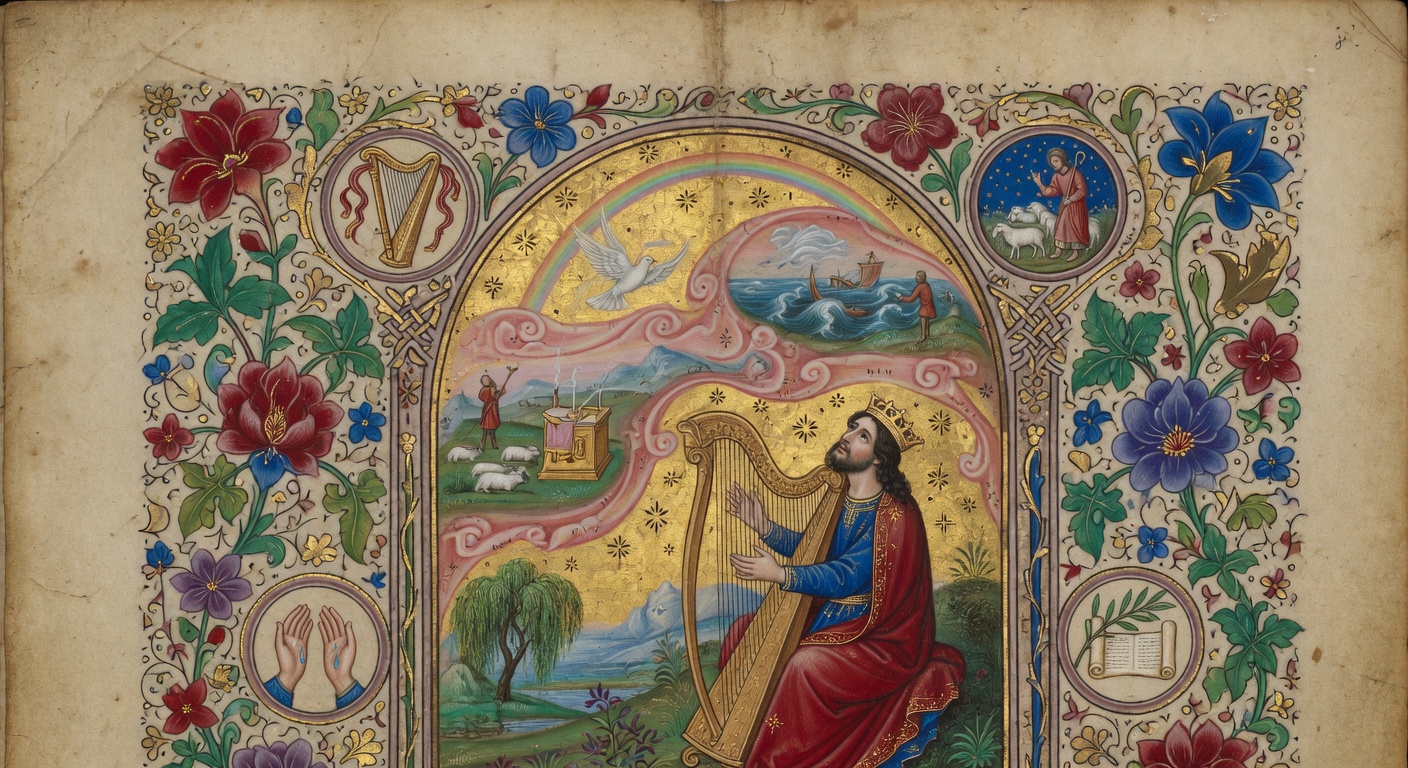
 1ord, thou hast been favourable unto thy land: thou hast brought back the captivity of Jacob.
2 Thou hast forgiven the iniquity of thy people, thou hast covered all their sin. Selah.
3 Thou hast taken away all thy wrath: thou hast turned thyself from the fierceness of thine anger.
4 Turn us, O God of our salvation, and cause thine anger toward us to cease.
5 Wilt thou be angry with us for ever? wilt thou draw out thine anger to all generations?
6 Wilt thou not revive us again: that thy people may rejoice in thee?
7 Shew us thy mercy, O LORD, and grant us thy salvation.
8 I will hear what God the LORD will speak: for he will speak peace unto his people, and to his saints: but let them not turn again to folly.
9 Surely his salvation is nigh them that fear him; that glory may dwell in our land.
10 Mercy and truth are met together; righteousness and peace have kissed each other.
11 Truth shall spring out of the earth; and righteousness shall look down from heaven.
12 Yea, the LORD shall give that which is good; and our land shall yield her increase.
13 Righteousness shall go before him; and shall set us in the way of his steps.
← → arrow keys to navigate chapters · spacebar to play/pause audio
Did You Know?
Attributed to the sons of Korah, the psalm uniquely embeds a divine oracle in verses 8-13, where the psalmist shifts from communal petition to prophetic audition, modeling how temple musicians could mediate God's direct word of peace to Israel.
The striking personification in verse 10 of mercy and truth meeting while righteousness and peace kiss draws on ancient Near Eastern treaty imagery, portraying covenant restoration as an interpersonal reconciliation among divine attributes rather than mere abstract harmony.
Likely composed in the early post-exilic era, the psalm's plea that God 'revive us again' aligns with the historical tension of returned exiles facing crop failure and opposition, framing agricultural renewal as the tangible sign of forgiven iniquity.
The progression from recalling past national deliverances in verses 1-3 to envisioning righteousness going before God as a forerunner in verse 13 subtly echoes the wilderness traditions of the ark leading Israel, reapplying exodus motifs to future eschatological salvation.
Theologically, the chapter presents revival not as human initiative but as God's sovereign decision to 'speak peace,' with the condition that His people not 'turn again to folly,' highlighting the fragile interplay between divine grace and human fidelity in sustaining covenant blessing.
While fleeing Saul, David sought refuge among the Philistines and feigned madness before King Achish of Gath by scribbling on the city gates and letting saliva run down his beard, successfully avoiding recognition.
Solomon conscripted 30,000 Israelite men for monthly rotations of forced labor in Lebanon to harvest cedar and cypress timber for the temple, while assigning an additional 150,000 Canaanite laborers to quarry and transport stone, reflecting the ancient Near Eastern practice of corvée labor systems.
In the prophetic writings it stands as the center of God's redemptive plan, embodying covenant faithfulness and the expectation of a coming Messiah who would rule from Zion in justice and peace.
The city has been destroyed at least twice, besieged 23 times, and captured 44 times.
Commentary & Study Notes Jamieson-Fausset-Brown (1871) · Public Domain captivity — not necessarily the Babylonian, but any great evil (Ps 14:7).
Classic verse-by-verse commentary on Psalms 85 from Jamieson, Fausset & Brown (1871). Covers: On the ground of former mercies, the psalmist prays for renewed blessings, and, confidently expecting them, rejoices.
- 1
- captivity — not necessarily the Babylonian, but any great evil (Ps 14:7).
- 2,3
- (Compare Ps 32:1-5).
Read all 10 notes on Psalms 85 →